
What Is a Bottleneck in Business and How to Find It in Your Team
A bottleneck is the point in a process where work arrives faster than it can be handled, so unfinished work builds up and delays the steps that follow. In business, it can be an overloaded reviewer, a client approval stage or a specialist whose availability limits what the team can deliver.
A bottleneck in business is the point in a process where work arrives faster than it can be handled, so unfinished work builds up and delays the steps that follow. In business, it can be an overloaded reviewer, a client approval stage or a specialist whose availability limits what the team can deliver.
Consider an agency that produces six sets of campaign assets a day. Its art director can review four. The queue grows by two sets each day, even though the designers meet their targets. Hiring another designer would increase production without increasing the number of approved assets reaching clients.
This guide explains how to identify bottlenecks in a team, test their causes and improve delivery. We then show how to gather the relevant task, workload and time data in if.team. The agency and all numbers in the examples are hypothetical.
Bottleneck meaning: what is a bottleneck in business?
The word comes from the neck of a bottle, which restricts how quickly liquid can leave it. In a workflow, the important relationship is between demand and capacity: how much work reaches a step compared with how much that step can process.
Every asset package in our agency needs review. Design output alone therefore does not determine how much approved work reaches clients. Making design faster would mainly create more work waiting for approval.
A slow task is not necessarily a bottleneck
A technical drawing may take three days to prepare, while a review takes an hour. That does not automatically make drafting the bottleneck. Several people may prepare drawings in parallel while one reviewer handles all of them.
Look for a recurring restriction on the whole workflow, rather than simply its longest individual task. A single late response may be a temporary disruption. A queue that keeps growing across several normal work cycles suggests a capacity problem.
Tasks also vary in size. Ten adaptations of an approved design are not equivalent to ten new concepts. Compare similar work, or include an estimate of the effort required, before drawing conclusions from task counts.
Bottleneck vs. constraint
A constraint is anything that limits a system’s result. It may be market demand, a policy or a scarce resource. A bottleneck usually refers more specifically to insufficient capacity at a point in the workflow.
The distinction matters because adding capacity will not solve every problem. If an owner must approve all quotes, including routine ones, the limiting factor may be the approval rule. Giving account managers a clear decision limit could be more useful than hiring an assistant to chase the owner.
Common types of business bottlenecks
| Type | What you notice | Example | First question to investigate |
|---|---|---|---|
| Resource bottleneck | Several projects wait for the same specialist | One engineer reviews every integration | Which reviews actually require that expertise? |
| Approval bottleneck | Completed work cannot move forward | A client reviews assets once a week | Who decides, when and against which criteria? |
| Policy bottleneck | Routine decisions queue with a manager | Every discount requires owner approval | Which decisions can be delegated within limits? |
| Access or tool restriction | Available staff cannot start the work | Only one administrator can publish a site | Are permissions and a backup owner in place? |
| Supplier bottleneck | Several deliverables depend on an external party | A contractor cannot supply renders on time | Can the scope or handover schedule change? |
| Rework | The same items repeatedly return to the queue | Reviewers give conflicting instructions | Are requirements and feedback consolidated? |
These are possible causes, not a diagnosis. A specialist or approval stage becomes a bottleneck only when it restricts the flow of work that matters to the business.
How to identify bottlenecks in a business process
Choose one outcome to follow, such as an approved asset package delivered to a client. Starting with every process in the company makes it harder to distinguish the causes.
Map the handovers
A Kanban board can make the handovers visible. Give review and client approval separate statuses so waiting work does not disappear into one broad “In progress” column.
Write down the actual steps: agreed brief, design, internal review, client approval and final files. Identify who hands work over, who accepts it and what must be included.
Add the routes back. If a client changes the copy after internal review, the package returns to both the designer and art director. Those repeat reviews consume capacity even if the production plan only counts new work.
Compare arrivals with completions
Over a five-day week, the agency submits 30 sets and reviews 20. With an empty starting queue, no rework and equally sized sets, 10 remain at the end of the week.
Real projects rarely behave that neatly. Separate new concepts from adaptations and note any returned work. The aim is to understand the imbalance, not to turn a rough count into an employee performance score.
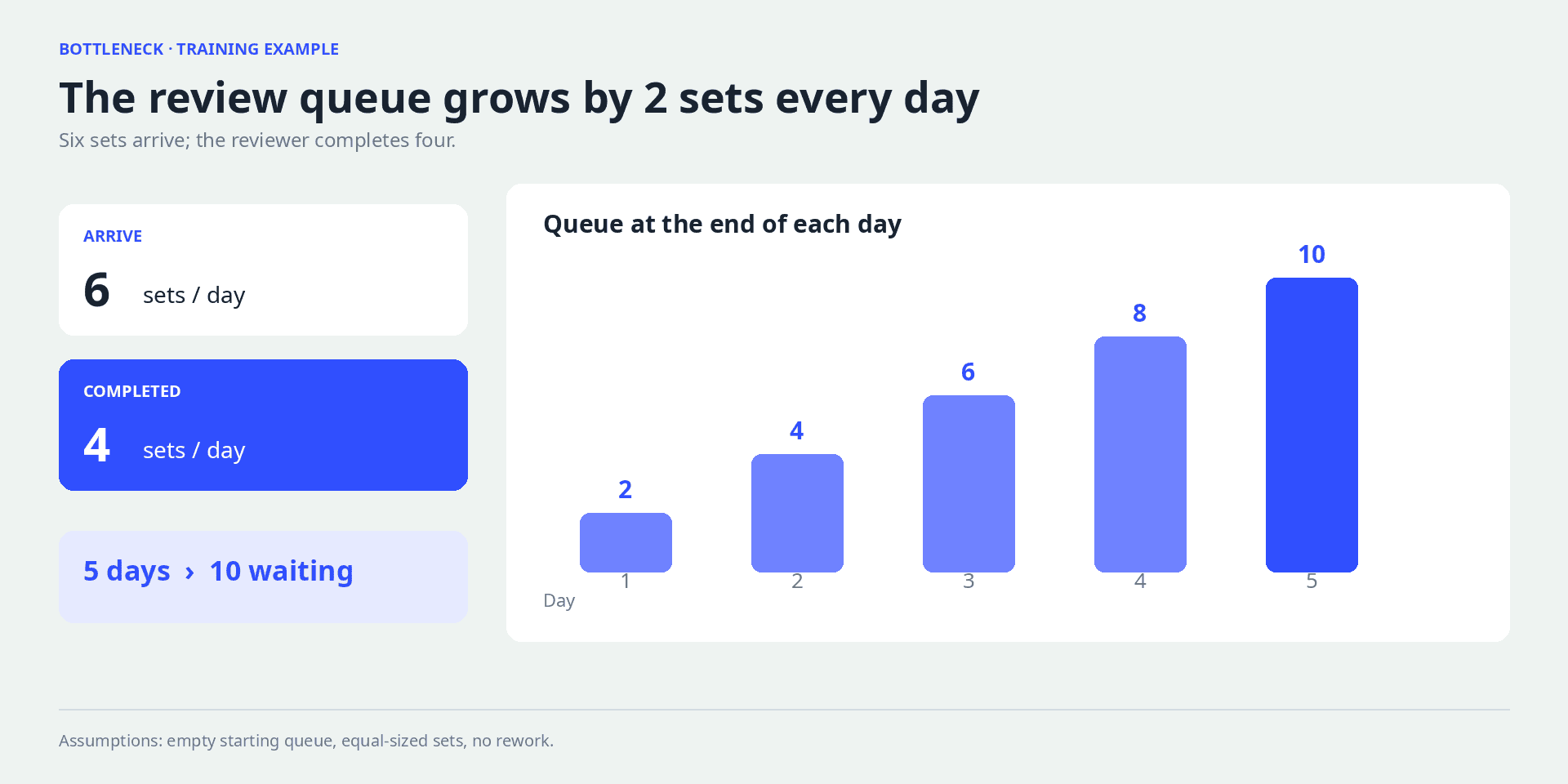
The queue grows by two sets a day, leaving ten waiting for review after five days.
Measure waiting as well as effort
Suppose design takes four hours and review takes 30 minutes, but the client receives the package four days later. A time report explains the effort; it does not explain the four-day elapsed time.
Record the handover and decision dates alongside the time entries:
| Item | Sent for review | Decision received | Review time logged | Reason for waiting |
|---|---|---|---|---|
| Campaign assets | Monday, noon | Wednesday, 3 p.m. | 30 minutes | Reviewer working on other projects |
Use consistent calendar rules. Subtracting working hours from calendar days without accounting for nights and weekends produces misleading numbers. Start by establishing where the item waited and why.
The project time-tracking guide explains how to record effort consistently. To assess how a delayed review affects later tasks, map the dependencies on a Gantt chart before agreeing a revised deadline.
Check the reviewer’s actual availability
A plan that assigns 12 review hours to someone with four available hours is already overloaded. Include meetings, leave and commitments to other projects.
Also inspect the batch size. The art director might have capacity every day but receive all the work on Friday afternoon. A different handover schedule could improve delivery without increasing headcount.
Full utilization alone is not proof of a bottleneck. You need evidence that other work waits for this resource and that the wait limits the final result.
Turn the observations into a testable explanation
“The art director is too busy” does not explain the cause. A more useful hypothesis is: “Review is delayed because the art director has to find the right files and return packages with technical errors.” You can test that by preparing files before handover and comparing the result.
If complete packages wait for days even though each review takes half an hour, investigate the review schedule first. Choose the change that addresses what the records show.
Bottleneck analysis: what to measure before changing the process
Start with a shared task list and handover dates. Agree on what counts as finished. “Ready for the designer to hand over,” “approved by the art director” and “accepted by the client” are different events. If one manager counts the first and another counts the last, their numbers cannot tell you whether the process improved.
Define the work item and the process boundaries
In our agency example, one item is a complete set of banners produced against an agreed brief. For the review stage, measurement starts when the full set is submitted and ends when the art director makes a decision. You can also measure the whole journey from an accepted brief to client delivery. Keep those intervals separate and give each a clear name.
A queue may contain both adaptations of an existing design and entirely new concepts. Split those into useful categories before comparing completion counts. Finishing five adaptations one day and one complex concept the next does not mean productivity fell fivefold. Look at volume, waiting and returns within comparable types of work.
Define what makes a submission ready: the correct files, the current brief and a named owner. Incomplete requests still need visibility, but they can sit in a distinct “Information needed” state. Otherwise, missing inputs may look like a shortage of reviewers. Include that state when assessing the overall time clients wait.
Use four flow metrics together
The Kanban Guide defines four basic measures: work in progress, throughput, work item age and cycle time. Here is how they apply within our review boundary:
| Measure | What we count | What it helps us ask |
|---|---|---|
| Work in progress, WIP | Submitted sets that have not received a decision, including work currently being reviewed | How much work has this stage already taken on? |
| Throughput | Sets receiving a decision per day or week | How much work actually moves through the stage? |
| Work item age | Time from submission to the present for an unfinished set | Which open items have been waiting unusually long? |
| Cycle time | Time from submission to the decision for a finished set | How long does passage through this stage take? |
The waiting queue and WIP are not necessarily the same count. WIP includes the set currently on the reviewer’s screen; the queue may include only sets waiting for attention. Record the distinction so two people do not produce different totals for the same day.
Read completed cycle times alongside the age of unfinished work. A team might close four straightforward sets quickly while a difficult fifth set waits for a second week. The average for completed work looks healthy because the difficult item is absent from it. Inspect the oldest open items and identify the decision or input each needs.
A measurement boundary is also a management choice. If internal review gets faster but client approval gets slower, a chart limited to internal review will miss the problem. Keep a separate end-to-end measure for the result the client receives.
Calculate how long the existing queue will take to clear
Continue the hypothetical example. Ten sets remain after five days, and six new sets arrive each day. Assuming comparable work and no repeat reviews, different completion rates produce different outcomes:
| Sets completed per day | Effect on the existing queue | Position after five working days |
|---|---|---|
| 4 | Two more sets accumulate each day | 20 sets remain |
| 6 | The queue stops growing | The original 10 sets remain |
| 8 | Two sets of the old queue clear each day | The old queue has cleared |
For this simplified plan, divide the initial queue by the difference between the daily completion and arrival rates: 10 ÷ (8 − 6) = 5 days. The difference must be positive. This is a planning estimate for clearing accumulated work, not a promised turnaround for each individual item.
The calculation separates stabilization from recovery. Six reviews a day prevent further growth. Reducing the old queue requires temporary spare capacity or fewer new arrivals. Once it clears, check whether the normal flow is sustainable without overtime.
Do not quietly assume that an extra reviewer immediately provides full capacity. The person may need access, context and guidance, and the art director may spend time checking their first decisions. Include that handover in the recovery plan.
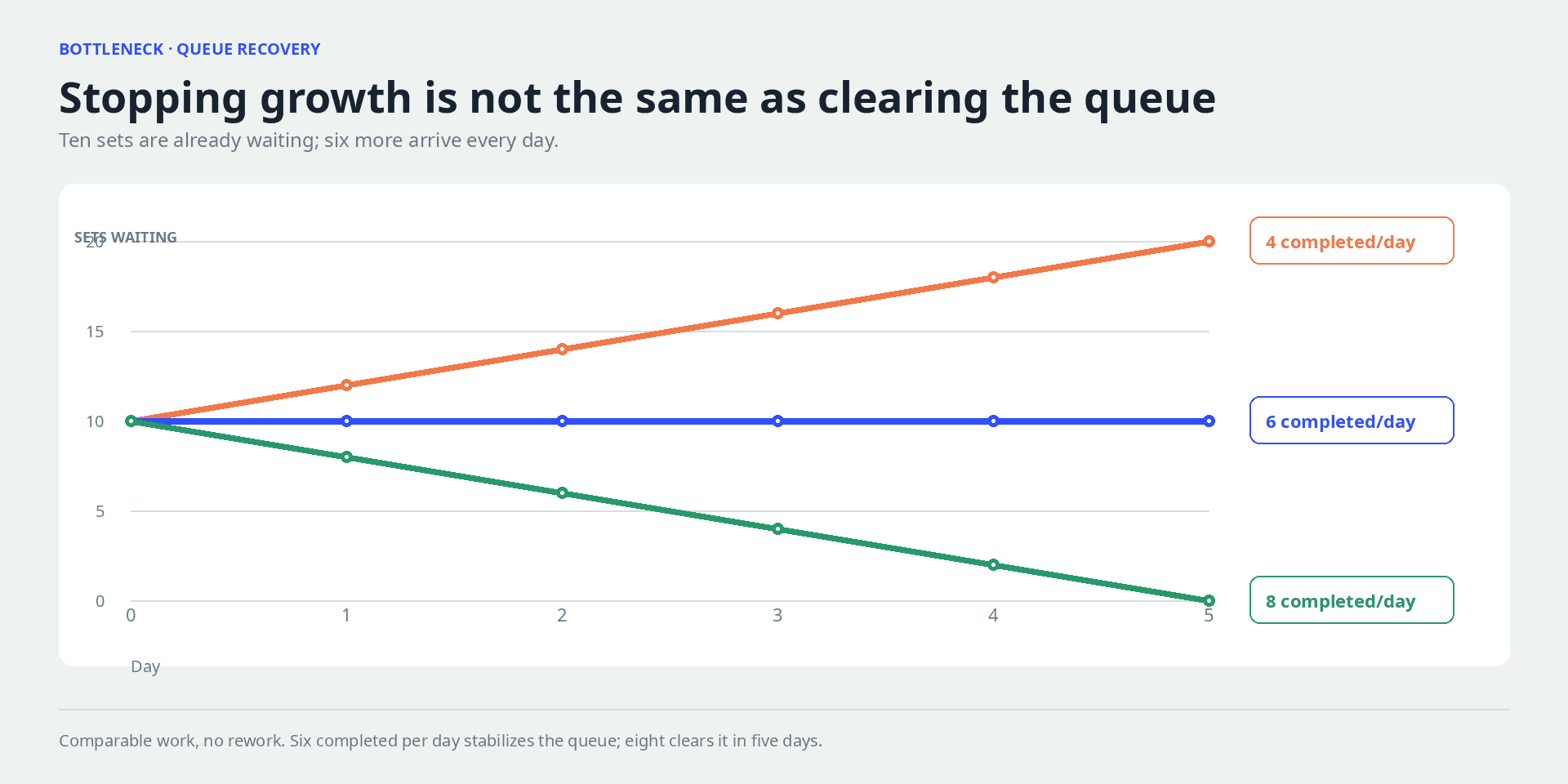
With six sets arriving each day, the existing queue shrinks only when more than six sets are completed.
Look for bursts hidden by daily averages
An average of six arrivals per day can describe six every day or thirty on Friday. The weekly total is identical, but waiting and reviewer availability are not.
Inspect the days and times of handover. Work submitted late in the evening may not receive attention until the following day. If finished sets are held for a single weekly batch, they wait even while review capacity is available. Try handing over completed units sooner while keeping enough context for a useful decision.
Leave room for variation: a difficult concept, an urgent correction or an absence. A schedule that assigns every available minute has no room to absorb those events. Choose that allowance from the variability in your own work rather than importing a universal utilization target.
If the deadline belongs to a particular campaign, label it explicitly. A queue that is acceptable for routine work may be unacceptable for a launch tomorrow. The manager needs both the normal sequencing rule and a controlled way to handle exceptions.
How to fix a bottleneck: the five focusing steps
The Theory of Constraints provides a sequence for identifying and improving the constraint that limits a system. TOCICO’s introduction explains the wider approach. Here is how the five steps apply to our hypothetical agency.
For a written explanation of each step, see Goldratt Research Labs’ introduction to TOC.
1. Identify the constraint
We have completed this step: following work from brief to delivery revealed a growing queue before internal review. The next question is whether changing that stage will help clients receive approved work sooner.
2. Make better use of the existing capacity
Remove work that does not need the art director’s expertise. Each package arrives with the current version, agreed brief and a single list of questions. Designers check technical requirements beforehand.
This protects time for decisions only the reviewer can make. Relying on permanent overtime would leave the underlying problem intact.
3. Coordinate the rest of the workflow around it
Agree how much work may wait for review and how priorities are chosen. When the queue reaches that limit, help complete existing work: resolve unclear requirements, prepare exports or finish revisions.
These limits on work in progress are often called WIP limits. Set them for your process and adjust them using actual results. The purpose is to avoid uncontrolled accumulation while keeping useful work available for review.
4. Increase capacity where necessary
If the changes are insufficient, train a second reviewer, delegate routine approvals to a senior designer or add specialist capacity. You now have evidence for the decision: what is waiting, how much there is and which skills it requires.
Delegation needs acceptance criteria. Otherwise, the second reviewer may send everything back to the art director and add another handover.
5. Reassess the flow
Suppose internal review now handles six sets per day, but the client approves three. The next issue is the client’s availability and approval process.
After each change, count the packages clients receive, how long delivery takes and how much rework is needed. Those measures show whether the whole process has improved.
How to tell whether the change worked
Start with one intervention. For a week, have designers check file sizes and naming before submitting work. Compare arrivals, completed reviews, waiting time and rework with a normal week, allowing for differences in complexity.
If technical errors fall but the queue keeps growing, test a second change: two scheduled review windows each day. Changing the checklist, schedule and staffing together would make it difficult to tell which change helped.
A queue shrinks only when completions exceed new arrivals. If six packages now arrive and six are reviewed each day, the queue stops growing; the ten packages already waiting do not disappear. Clearing that backlog needs a temporary increase in review capacity or a reduction in incoming work.
Judge the final outcome at client delivery. A faster internal review achieves little if every package then waits a week for client approval.
Common mistakes when removing a business bottleneck
Speeding up the stage before the queue
A new template lets designers produce eight sets a day instead of six. If review still completes four, clients do not receive twice as much finished work. The queue grows faster, with more versions, more follow-up messages and more switching between assignments.
Judge the improvement by completed delivery. The designer’s saved time could help prepare complete submissions, resolve technical problems or finish revisions. For that to happen, managers must make it acceptable to finish existing work instead of constantly starting new assignments.
Treating every request as urgent
When every project manager asks for priority, the art director spends time choosing and switching. Older work repeatedly moves to the back. A visible queue therefore needs an explicit selection rule.
For example, complete routine submissions can follow arrival order, with an exception for a launch date that cannot move. The manager requesting an exception names the reason and the work that will move as a result. Urgency then becomes a decision about a scheduling trade-off rather than a label applied to every card.
Track how often exceptions occur. If most of the week consists of exceptions, the team may have a planning or commitment problem. Adding another priority label will not resolve it.
Removing checks instead of reducing avoidable rework
If faster internal review leads to more client-reported errors, some work has simply moved outside the measured process. Compare accepted outputs and returns as well as review speed.
Separate execution errors, incomplete briefs, new client requirements and subjective revisions. They require different responses. Training a designer will not fix a process in which a new approver joins after every approval and reopens the decision.
Decide which technical checks can be standardized and which judgments need an experienced specialist. A checklist should prepare the work for review, not pretend that every creative decision can be reduced to a tick box.
Blaming the person where the queue becomes visible
A senior specialist may be where work accumulates because company rules direct every small decision to them. They also attend meetings and receive incomplete requests. Replacing that specialist may reproduce the same queue around someone new.
List the decisions that need their expertise and the boundaries within which others can act. Identify one person who accepts each result, plus the people who provide input. For more on assigning those roles, see our RACI matrix guide. The purpose is a clearer handover, not another layer of approval.
Run a small bottleneck test over two weeks
Two weeks is an illustrative pilot length for a daily stream of banner work. If the team completes one complex engagement each month, observation should cover its normal delivery cycle instead.
On the first day, choose one workflow and an owner for the investigation. Agree on the work item, start and finish events, and reasons for returns. Keep recording simple enough for the team to sustain. A large spreadsheet that nobody updates is less useful than a short list with reliable timestamps.
During the first week, record arrivals, completions, the remaining queue and the oldest open item each day. Note unusual conditions: absence, a large batch or an unplanned correction. At the end of the week, review the records with the people doing the work and select one cause to test.
During the second week, change one rule. For example, accept a review submission only after its technical checklist is complete. Keep the measurement boundaries unchanged. If work moves into “Information needed” instead, show that queue too; it still affects the client.
Finish with a short decision record: what changed, what happened to client delivery, what the team will keep and when it will review the result again. Note limitations such as a small sample, a different mix of assignments or an overtime day. The next manager should be able to understand the conclusion, not just see a green indicator.
A useful pilot can disprove the original explanation. If complete submissions still wait despite daily review slots, investigate the actual review effort and available expertise. That is progress: the next change is based on a narrower, better-supported problem.
Bottleneck examples in service businesses
Architecture. Drawings wait for the lead architect, although many returns concern formatting. A preliminary checklist catches those issues before specialist review. The architect still checks the design decisions.
Software services. One senior engineer reviews every change. The team identifies routine changes another developer can review and reserves specialist attention for complex integrations. Quality controls remain explicit.
Agency sales. A quote is ready, but even a standard discount requires the owner’s approval. The agency defines decision limits and exceptions. Account managers handle routine offers; the owner handles unusual commercial terms.
In each example, the useful intervention changes a specific handover or rule. “Work faster” gives the team no comparable instruction.
How to investigate a team bottleneck in if.team
The screenshots below show the interface with separate demo data.
if.team connects task status, planned work and recorded hours. These records help you test a hypothesis. They do not remove the need to ask participants what caused the delay.
Make review a visible stage
In the Admin Panel, open Tasks and Projects Settings and define the stages needed for your process. Our example uses “In progress,” “Internal review,” “Client approval” and “Done.”
Task statuses become columns on the Kanban board. Show assignees and deadlines on cards, and review the relevant projects together. A board restricted to one client can hide the art director’s other commitments.
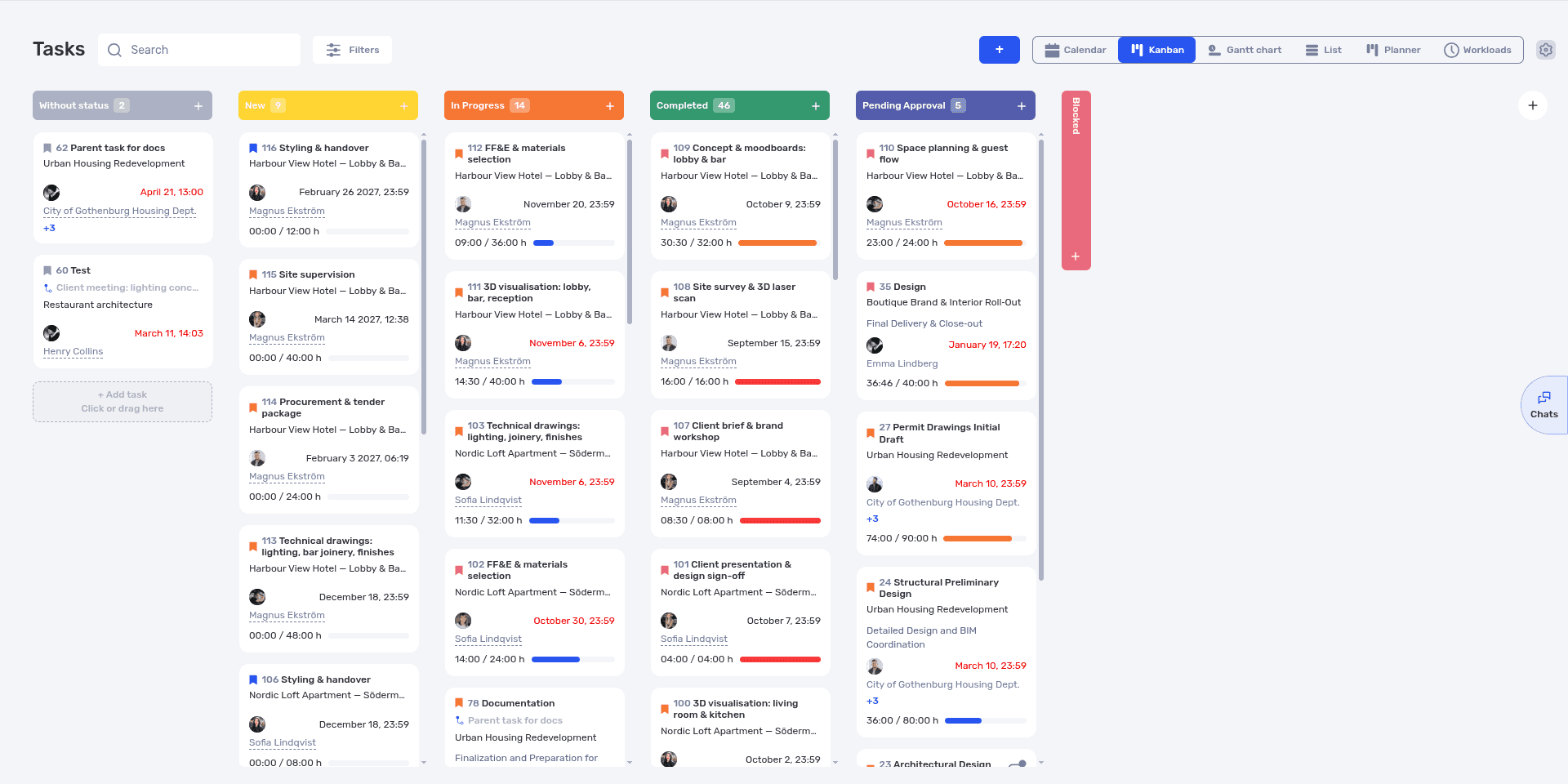
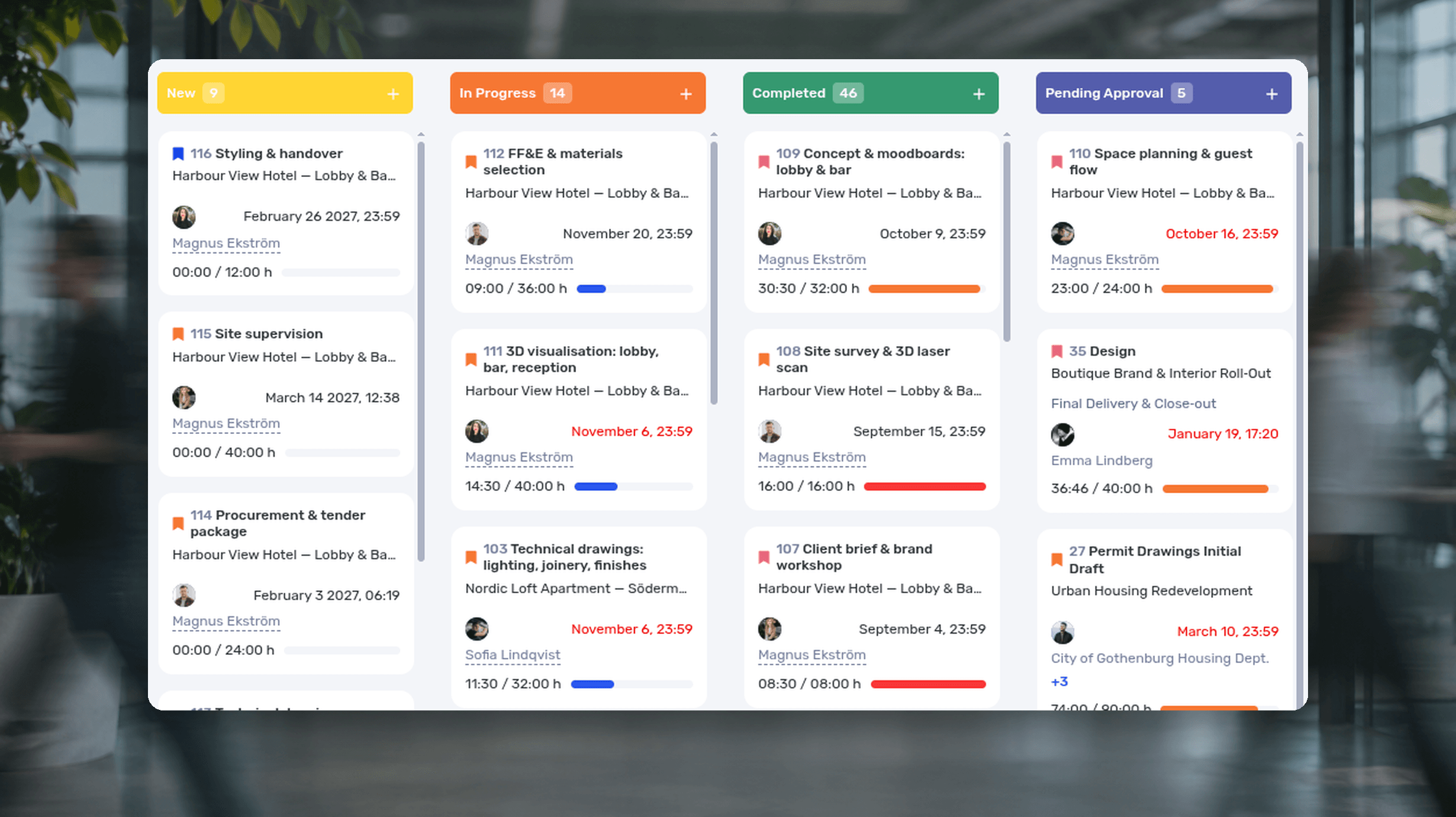
The Pending Approval column brings together tasks awaiting a decision, with assignees and deadlines on the cards.
Check planned work separately from time already logged
Open the Work Calendar and select “Work Time Planning.” Choose the period and employee. Click a day’s cell to open the employee’s tasks, planned hours, progress and deadlines.
Compare those commitments with the person’s working days and confirmed leave. Missing or outdated task estimates will make the plan less useful.
For recorded effort, open Tasks and select Workload. Choose the week, then group by member to review the art director’s logged hours or by task to inspect a particular package. Open an entry to see its duration and comment.
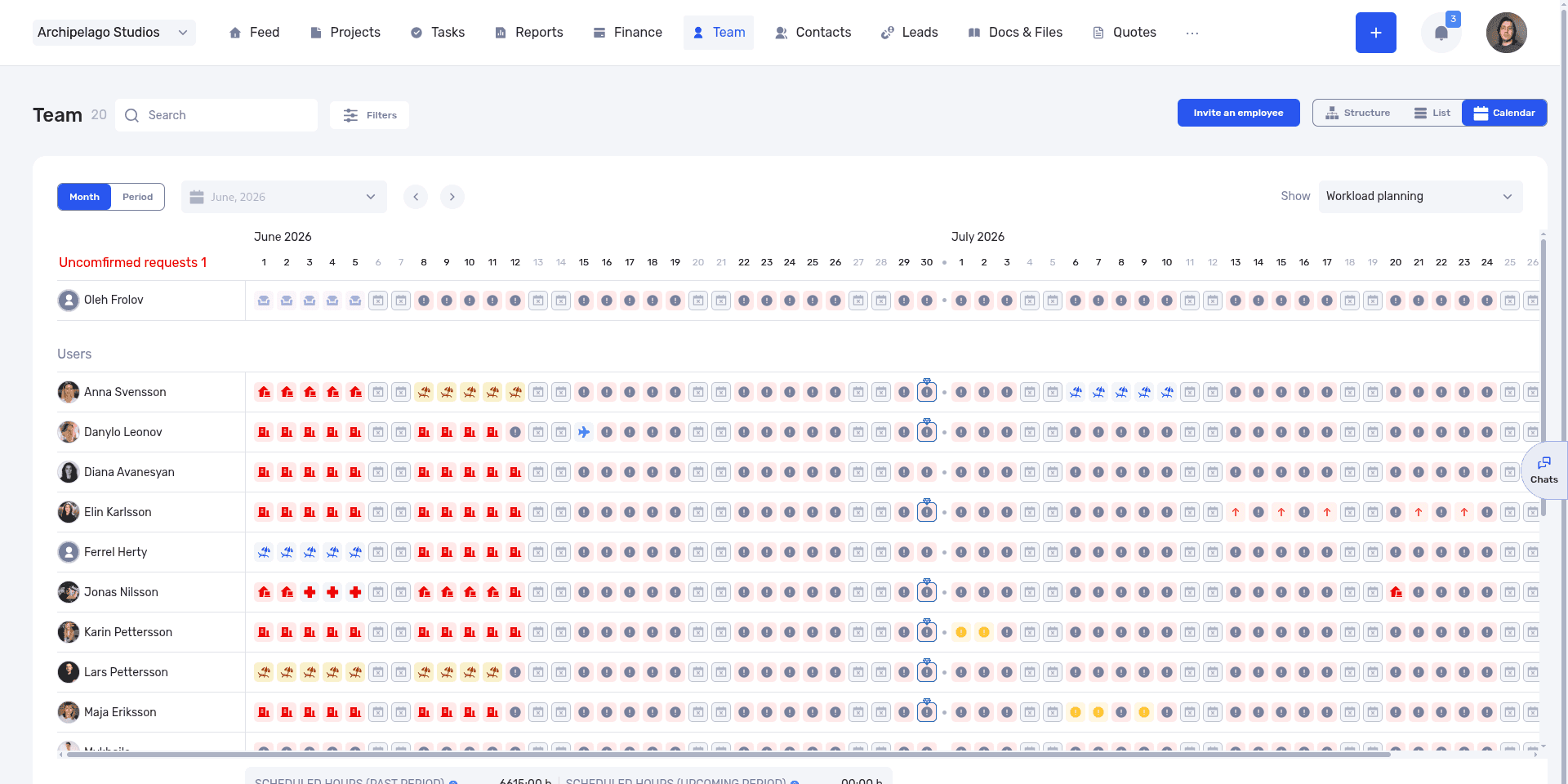
Workload planning shows the team’s workday status and absences on a shared calendar.
Record handovers and decisions
Agree how the team records the time an item was handed over and the time a decision arrived. Keep this information with the task.
For example, record “Ready for review” and the reviewer’s decision in the task. Compare those timestamps with logged effort: a 30-minute review may follow two days of waiting.
Keep a small observation log
For selected sets, record submission and decision dates, logged effort and the reason for any return. Start with unusually old items, then include ordinary completed work for comparison.
A separate table linked to the tasks is enough. This is a manual investigation method, not a claim that if.team automatically reports time in every status. The result should identify specific handovers for the team to review.
Review returned work
A task status can carry a rework flag. Tasks passing through it contribute to quality statistics in Reports, as described in Tasks and Projects Settings.
Open the underlying tasks before interpreting the count. Returns can reflect errors, incomplete briefs or new client requirements. They are not interchangeable explanations.
Turn the finding into a rule
Document who prepares each package, what they check and when the reviewer receives it. Set a date to compare the queue and completed output again.
Pixready’s case study shows how this works in practice: department filtering on the Kanban board helps managers follow work across projects.
To try the approach on your own process, start an if.team trial or book a demo.
Frequently asked questions
What does bottleneck mean?
A bottleneck is a point where available capacity is insufficient for the work arriving, causing a queue and restricting flow. In a team, it might be a review or approval stage that cannot keep pace with production.
What is a bottleneck in project management?
It is a capacity restriction that delays project work, such as a specialist shared across several projects or an approval stage with limited availability. A delayed task is not automatically a bottleneck; check its effect on the wider flow.
What is an example of a bottleneck in a team?
Five designers prepare assets that one art director must approve. If the designers consistently submit more than the art director can review, the approval queue grows even when design work finishes on schedule.
How do you identify a bottleneck?
Follow a deliverable through the process. Compare arrivals, completions, queue age, waiting time and rework at each stage. Test a small change and check whether overall delivery improves.
Can you remove a bottleneck without hiring?
Sometimes. Better handovers, smaller batches, delegated routine decisions and protected review time can free existing capacity. Extra staffing may still be necessary if demand exceeds the capacity available after those changes.
Is a bottleneck the same as a constraint?
Not exactly. A constraint can be any factor limiting a system’s result, including demand or a policy. A bottleneck usually describes a capacity restriction within the flow of work.
Author
Vladyslav ChesnokovPublished
Feb 17, 2026
More articles to read
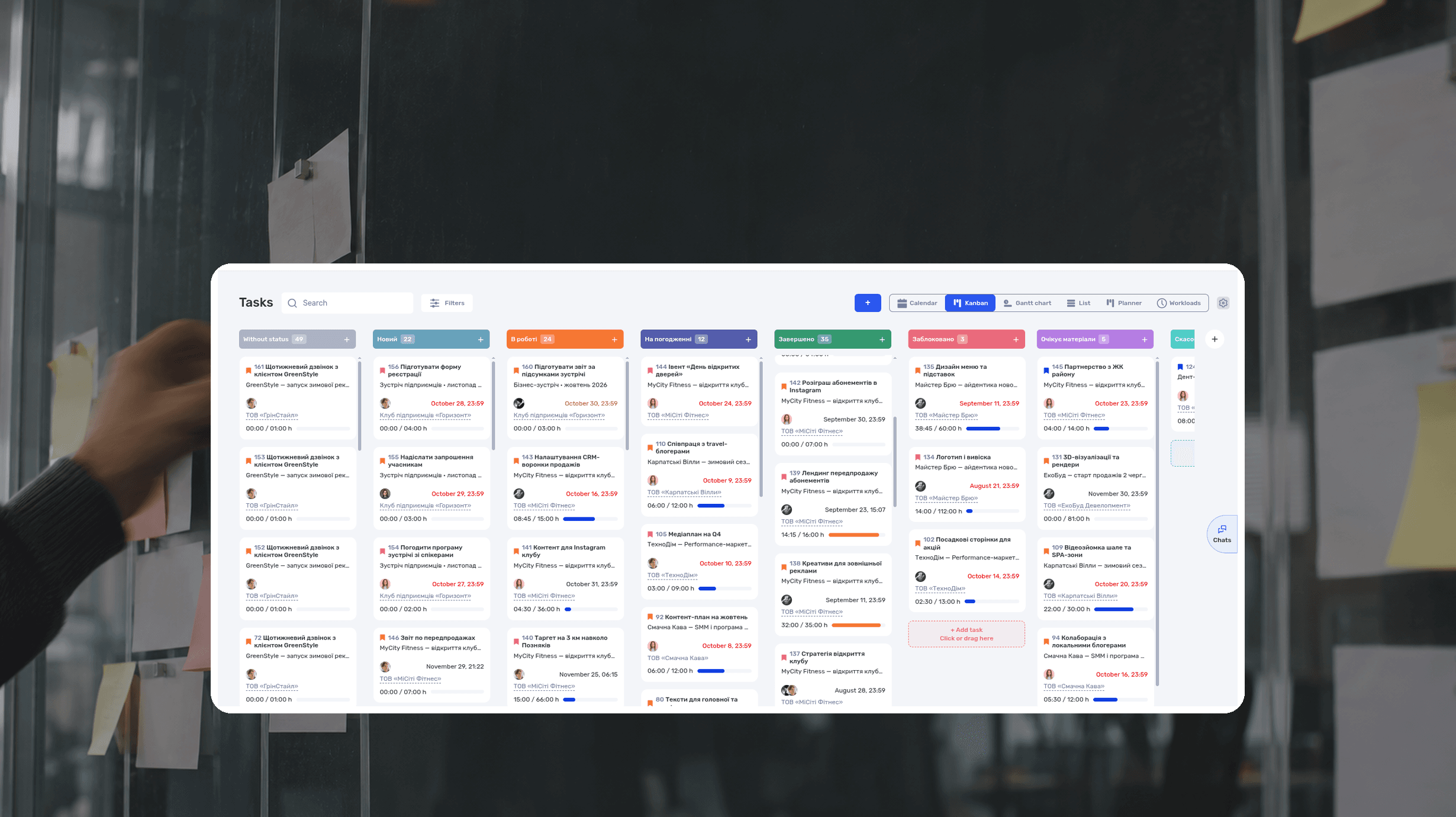
What Is a Kanban Board? Definition, Examples, Setup
A Kanban board is a visual workflow tool that represents work as cards moving through columns. The columns show each stage of the process, while work-in-progress limits control how many items a team handles at once. The board makes blocked work, queues, and delays visible.
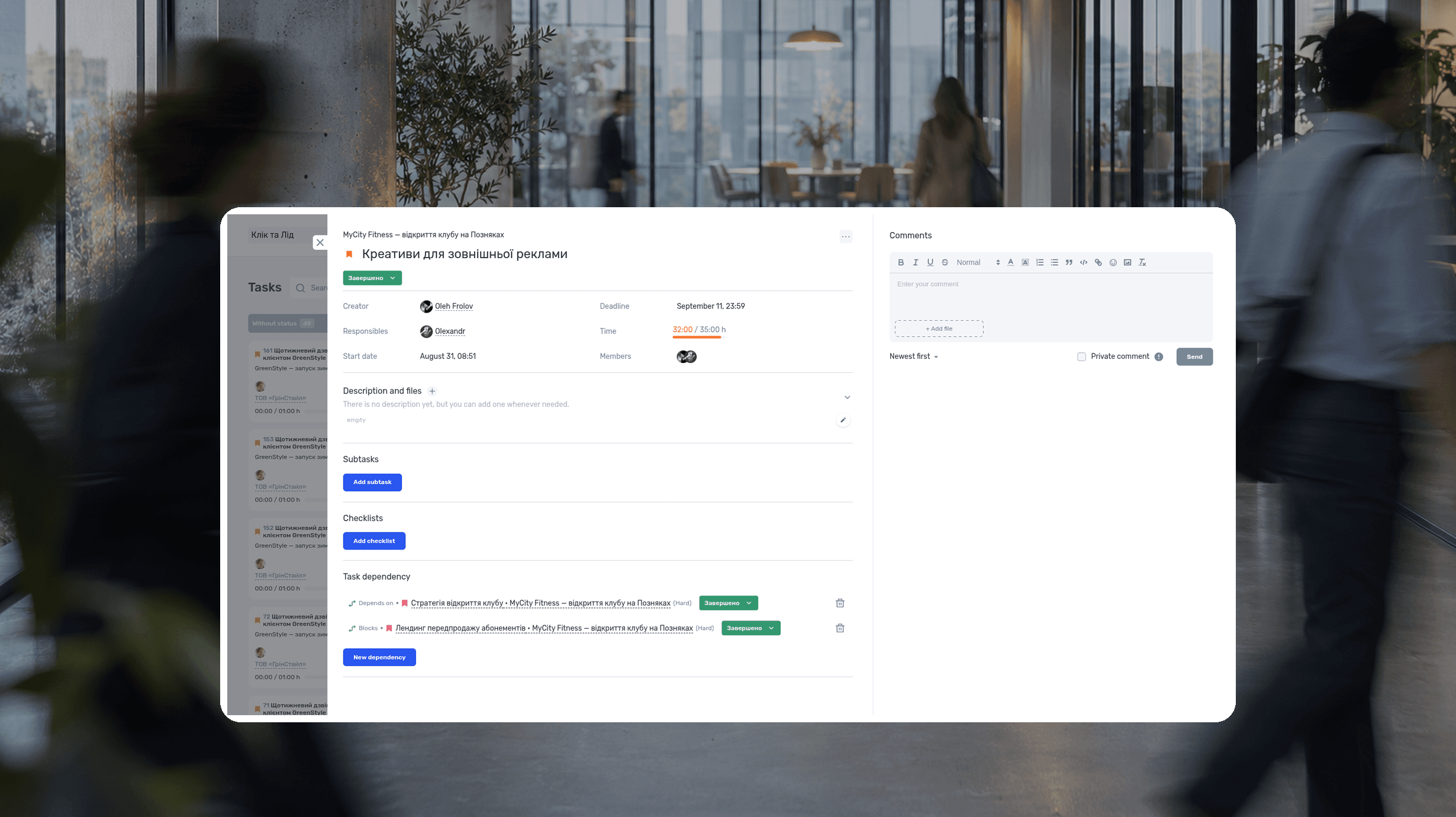
RACI Matrix: Definition, Free Template and Example
A RACI matrix is a table that shows who does the work on a project, who accepts the result, who gives input, and who gets updates. The name comes from the four roles: Responsible, Accountable, Consulted, Informed. Rows are deliverables or decisions, columns are people or roles.
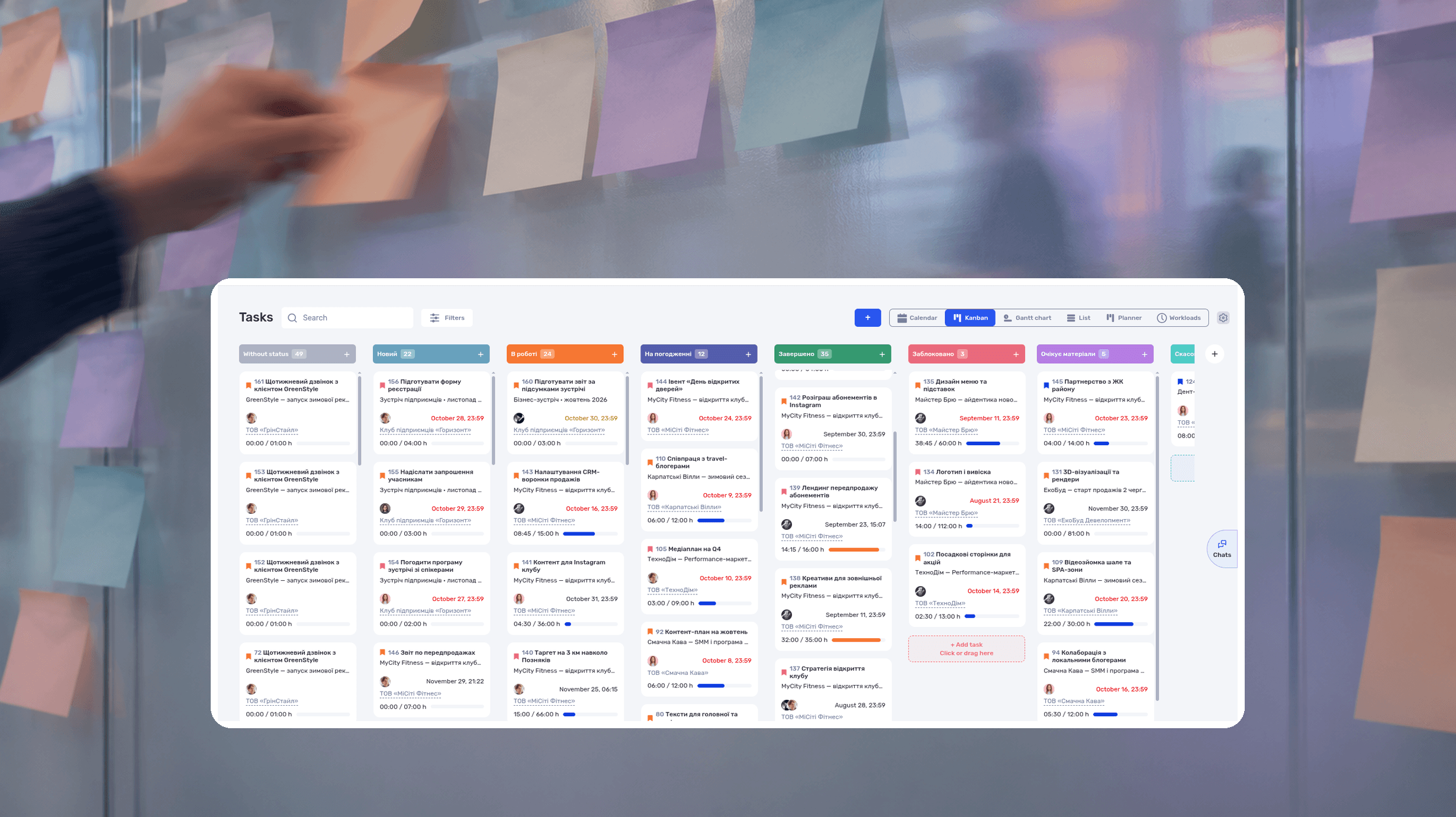
Agile Methodology: What It Is, Principles, Example
Agile methodology is an approach to project management in which a team delivers results in short cycles, shows them to the client and adjusts the plan based on feedback. Instead of one big six-month plan, agile project management works in a series of small, tested steps.
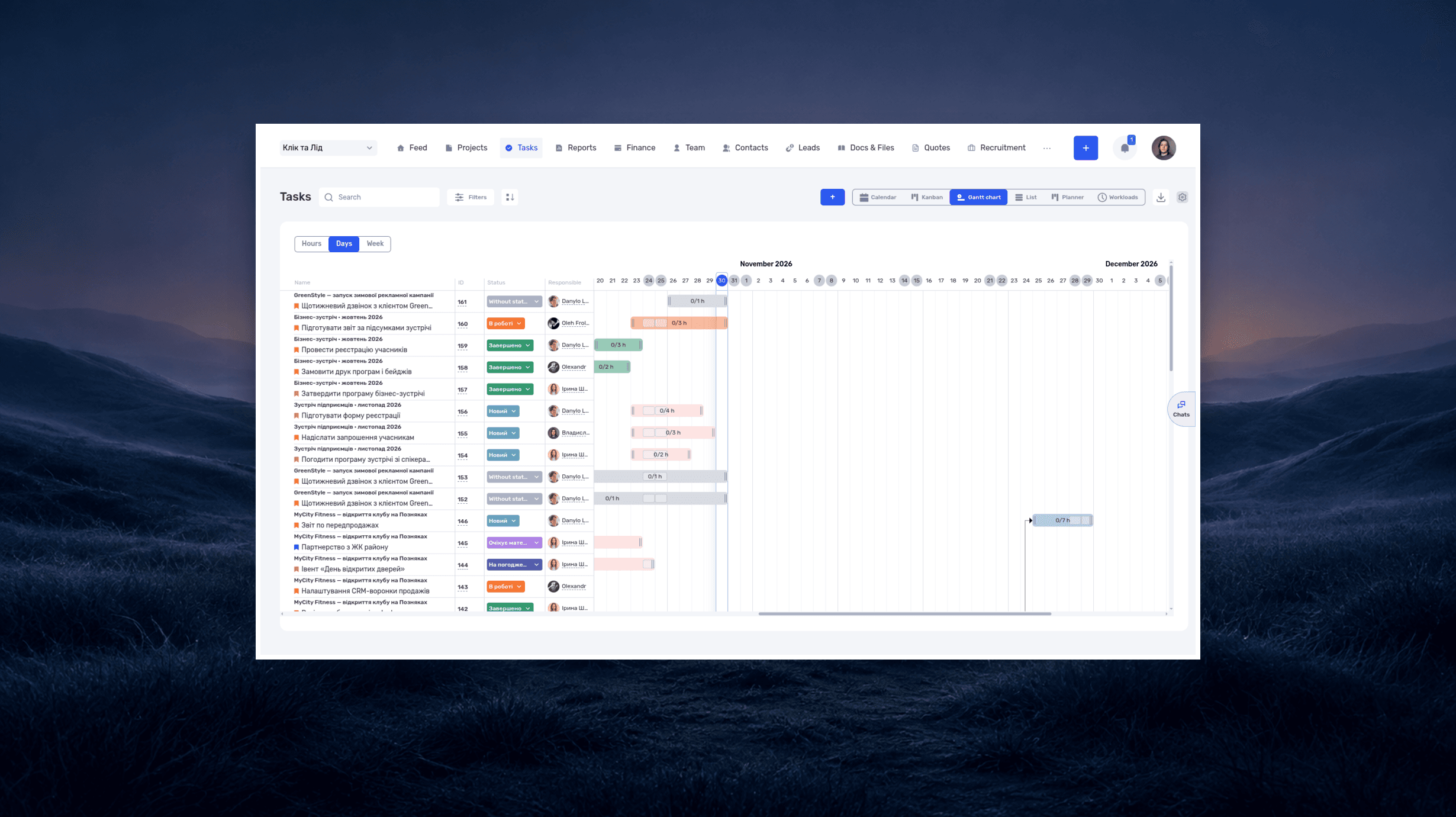
What is a deadline? How to set and meet realistic deadlines
Why six hours of work can take several days—and how to build a schedule around availability, review, and revisions. With a practical if.team walkthrough.
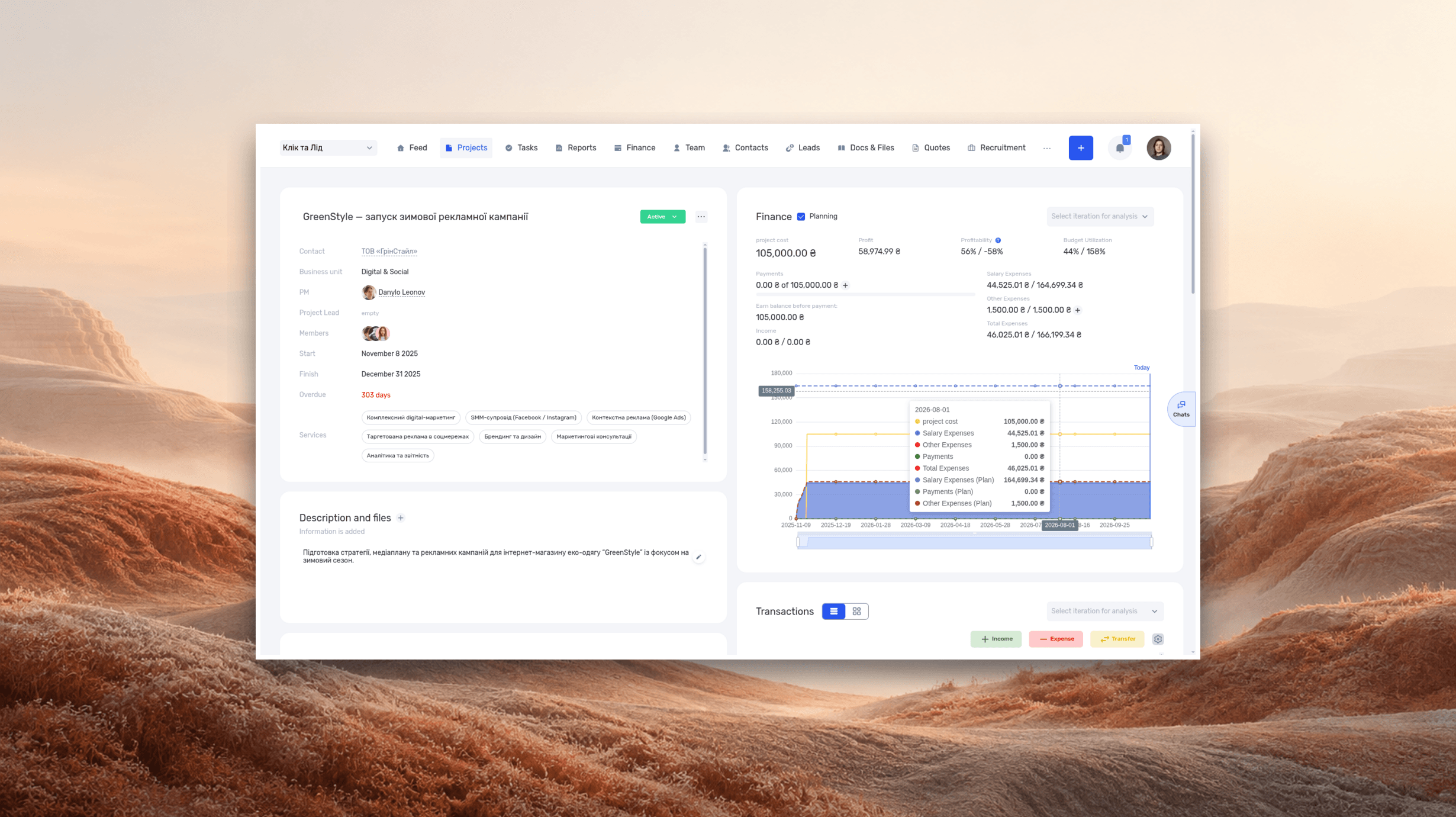
ERP systems explained—what they do and when your business needs one
See how ERP connects sales, delivery, and finances, with a worked example and a practical walkthrough in if.team.
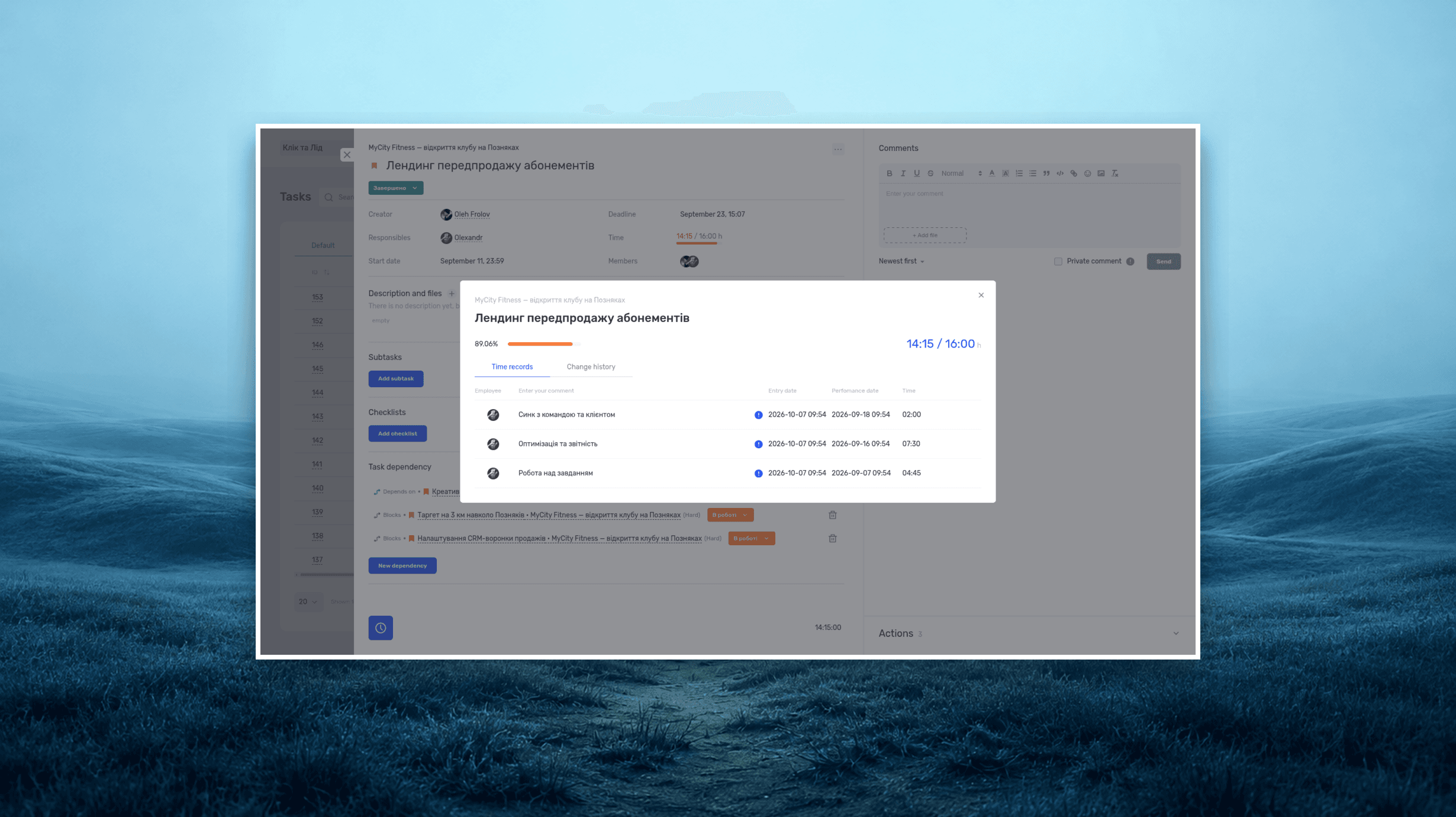
Project time tracking — how to track team hours and costs
A practical guide to recording project hours, understanding overruns, and calculating team costs, with a worked example and a walkthrough in if.team.
See if.team in action for your company
We’ll show how projects, team time and finances connect in one system, using your processes as an example.