
Alternative to Asana in 2025: The Best Project Management Tools
More and more businesses are looking for an alternative to Asana in 2025. Asana is a very popular project management tool that works well for teams needing extensive features and flexible customization options. However, for beginners, the interface can seem complicated, and the cost isn’t always…

More and more businesses are looking for an alternative to Asana in 2025. Asana is a very popular project management tool that works well for teams needing extensive features and flexible customization options. However, for beginners, the interface can seem complicated, and the cost isn’t always affordable for small businesses.
At the same time, platforms like if.team offer an easier start and more budget-friendly plans, making them attractive for small teams or businesses with limited budgets. They focus on quick onboarding, automating routine tasks, and convenient localization.
When choosing between Asana and if.team, it’s important to consider your team size, feature needs, and budget to find the best fit for your business.
Why people look for an alternative to Asana

Asana is a great project management service with many features. But for some, especially small companies and freelancers, it can feel complicated. Getting started requires time to learn the instructions, which isn’t always convenient or fast.
That’s why sometimes people want to find alternatives to Asana. Let’s look at what issues might come up and which services might suit different users better. This will make it easier to pick what really works for you.
Complex interface
The service has a lot of functions, so beginners often find it hard to quickly figure things out. You can’t just open the app and start working right away — it takes time to understand how everything works.
The interface may seem confusing, especially if you haven’t used similar tools before. This means spending time learning, setting things up, and searching for the right options.
For many, this becomes a barrier, and they want something simpler and more intuitive. A good service should help users get started quickly and only then offer advanced features once they’re comfortable.
High cost
As your team grows, the subscription price goes up too. And it’s not always justified — not every business can afford such expenses.
This often raises doubts about whether it’s worth using the service at all, especially on a tight budget. Many look for options that provide the needed functionality at a more reasonable price.
So for many, it’s important that the service is not only convenient but also financially viable, especially when scaling the team.
Limited localization
For many Ukrainian and European companies, the lack of full localization is a real challenge. Often, you have to hire someone fluent in English or spend a lot of time figuring out where and what is in the service.
Even basic settings and working with features can become difficult due to the language barrier. This slows down workflows and adds unnecessary hassle. The team spends time not on main tasks but on understanding the interface and instructions.
That’s why many companies look for platforms with full localization — interface, documentation, and support in their native language. This makes work much easier and more comfortable and speeds up onboarding new users.
Lack of full financial integration
Asana mostly focuses on tasks. It has templates for financial processes, but no automatic billing or CRM. Because of this, it’s not as versatile as platforms like if.team, which combine many business functions in one.
Many users seek an alternative to Asana to manage their projects more easily and efficiently. The ideal platform should combine task management, finance, and automatic reporting.
It’s important not just to say something is missing but to explain why it’s inconvenient. For example, if.team automatically creates invoices, acts, and reports — no complicated setup or third-party services needed. This greatly simplifies work.
What matters in a project management tool
To pick a convenient alternative to Asana, it’s important to understand which features truly help in everyday work.
Full financial integration matters
Nowadays, quick registration is standard for any service. But real value isn’t just opening an account — it’s getting help using the system.
With if.team, the team doesn’t get left alone after signup. We help you get started, show how to use the tools, support data migration from other platforms like monday, Asana, or others. We also customize the system to your business needs.
Thanks to this support, getting started is stress-free, and your team begins working efficiently faster.
Time tracking and billing
Tracking work hours and automatic billing are essential for many professional services. Ideally, a tool should offer:
- Time tracking per task
- Automatic invoice generation
- Integration with payment systems
- Reports on time spent and profitability
- Flexible pricing settings for clients
These features are critical for effective project management.
CRM and client management
Built-in CRM in Asana alternatives lets you control the full cycle — from lead to payment — without switching platforms. An integrated CRM should include:
- Collecting and storing contacts
- History of communications and orders
- Setting deal statuses and stages
- Automatic reminders for important events
- Sync with email and other tools
This simplifies communication and reduces the risk of losing important info.
Reporting and analytics
Automatic reports help make decisions based on real data. For well-informed choices, you need clear analytics. Ideally:
- Automatic daily/weekly reports
- Data visualization with charts
- Breakdown by clients, projects, and tasks
- Export to Excel, PDF, and other formats
- Profitability and team workload analysis
Reports provide clear insights into processes and help plan ahead.
Localization
Support for Ukrainian, English, and other languages is crucial for comfortable work in local business environments. Interface language matters daily. Ideally:
- Ukrainian — for local market
- English — for international teams
- Easy language switching
- Translation not only of interface but also system messages
- Support for dates and formats according to language
This makes the platform convenient for teams across countries.
Flexible pricing and scalability
Choosing a pricing plan should fit your business size. The best alternatives to Asana scale easily, as small projects often grow into real businesses. Ideally:
- Plans for freelancers, teams, and companies
- Easy upgrades or downgrades
- Additional features as needed
- Secure data storage and migration
- Support for many users without losing speed
This ensures smooth work both for small businesses and large projects.
Comparison of popular tools: if.team, ClickUp, Wrike, Trello
To make the search for an alternative to Asana in project management truly fair, we decided to compare the key features of popular services among business owners. These include if.team, ClickUp, Wrike, and Trello.
Ease of start and interface
if.team has an intuitive interface, allowing new users to start working almost immediately after registration. There’s no need for lengthy tutorials or videos — all buttons are clearly labeled, the structure is logical, and navigation is simple. This is especially valuable for small teams wanting to save time on onboarding.
By comparison, ClickUp and Wrike often cause difficulties due to a cluttered interface and many hidden features that aren’t always intuitive. Trello, on the other hand, is very simple but functionally limited.
Time tracking and billing
In if.team, time tracking and billing are core features. Each task automatically records the time spent, which is immediately used for generating invoices, timesheets, and reports. This is convenient for freelancers, agencies, and service companies — you can see who worked how much and what needs to be paid.
ClickUp offers this only through third-party plugins or integrations. Wrike and Trello either have very limited time tracking or none at all, so external services are needed.
CRM and client management
if.team combines CRM and project management in one system. You can maintain a client database, store communication history, issue invoices, create tasks, and see all interactions with each client without switching tools. This reduces errors, speeds up work, and improves customer service.
ClickUp and Trello lack a CRM module — it can only be added via integrations that are sometimes unstable. Wrike provides partial client base support but without full financial tracking or automation.
Reporting and analytics
if.team offers reporting through adaptive templates customizable to your needs: project profitability, team workload, deadline compliance — all displayed in clear charts and tables. You choose what to see in each report, gaining a real picture of efficiency.
ClickUp, Wrike, and Trello either charge extra for analytics or offer limited capabilities, often insufficient for management decisions.
Localization
if.team is fully adapted to the Ukrainian market: interface in Ukrainian, document templates in familiar formats, support for local paperwork. This removes language and legal barriers, especially for companies working with government or local clients. English support is also included, enabling smooth collaboration with international partners.
ClickUp, Wrike, and Trello offer limited or partial localization — some interface elements remain in English, which can be inconvenient.
Pricing flexibility
if.team offers pricing plans that scale with your company: you don’t pay upfront for features you don’t need but can easily add them as you grow. Plans are transparent, with no hidden limits or “per user” fees.
Wrike’s pricing starts high, with key tools often available only in premium packages. ClickUp and Trello have free plans but limit important features like analytics, automation, and integrations.
If you need a tool that’s ready to use right away, requires no extra plugins, and combines all main processes in one interface — if.team is a truly effective alternative to Asana. It’s not just a project manager but a complete system for running your business.
Advantages of if.team in detail
The best alternatives to Asana combine maximum functionality with ease of use. if.team is a great example of such a platform — and it also offers the following advantages.
Automation of routine tasks
if.team reduces the workload on your team through automation. The system fills out timesheets, generates financial documents, and sends reminders — all automatically. This saves time and reduces errors.
Transparent financial management
The platform tracks not only expenses but also income, helping you monitor profitability per client. Reports update in real time, making decision-making faster and easier.
Stress-free scalability
No matter the size of your team, if.team adapts. Users don’t experience slowdowns or the need to switch to other tools as the business grows.
How to choose among the best alternatives to Asana
If you’re looking for a strong alternative to Asana in 2025, pay attention to a few key factors:
- Easy onboarding and intuitive interface When everything works from the first click, your team spends less time adjusting and more time doing. A smooth start means faster execution from idea to result.
- All-in-one functionality The ideal solution should cover everything — task planning, finances, client management. The fewer external tools needed, the more control you have.
- Automation of repetitive actions Don’t waste time on what the system can handle. Auto-reports, invoices, and reminders should all work without extra clicks.
- Localization that fits your reality Language, document formats, currency settings — small things that matter a lot in daily work.
- Flexible pricing and scalable plans From startup to enterprise — it’s easier when your tool grows with you and doesn’t make you pay for features you don’t need yet.
if.team offers all of this — a platform where you can manage tasks, clients, and finances in one space.
if.team is the best alternative to Asana
If you’re searching for an alternative to Asana in 2025, choose a platform that lets you:
- Get started quickly without training — intuitive interface and optional help from support managers
- Unify all processes in one place — use a single platform for everything in your workflow
- Automate repetitive tasks — reduce manual work and boost overall efficiency
- Manage finances transparently — set up payments and track budget burn with clear tools
- Scale effortlessly — as your business grows, you won’t need to look for another platform
if.team is one of the best all-in-one services that meet these requirements. It’s an alternative to Asana that helps businesses stay focused on what matters most — quality work and profit.
Author
Vladyslav ChesnokovPublished
Jun 18, 2025
More articles to read
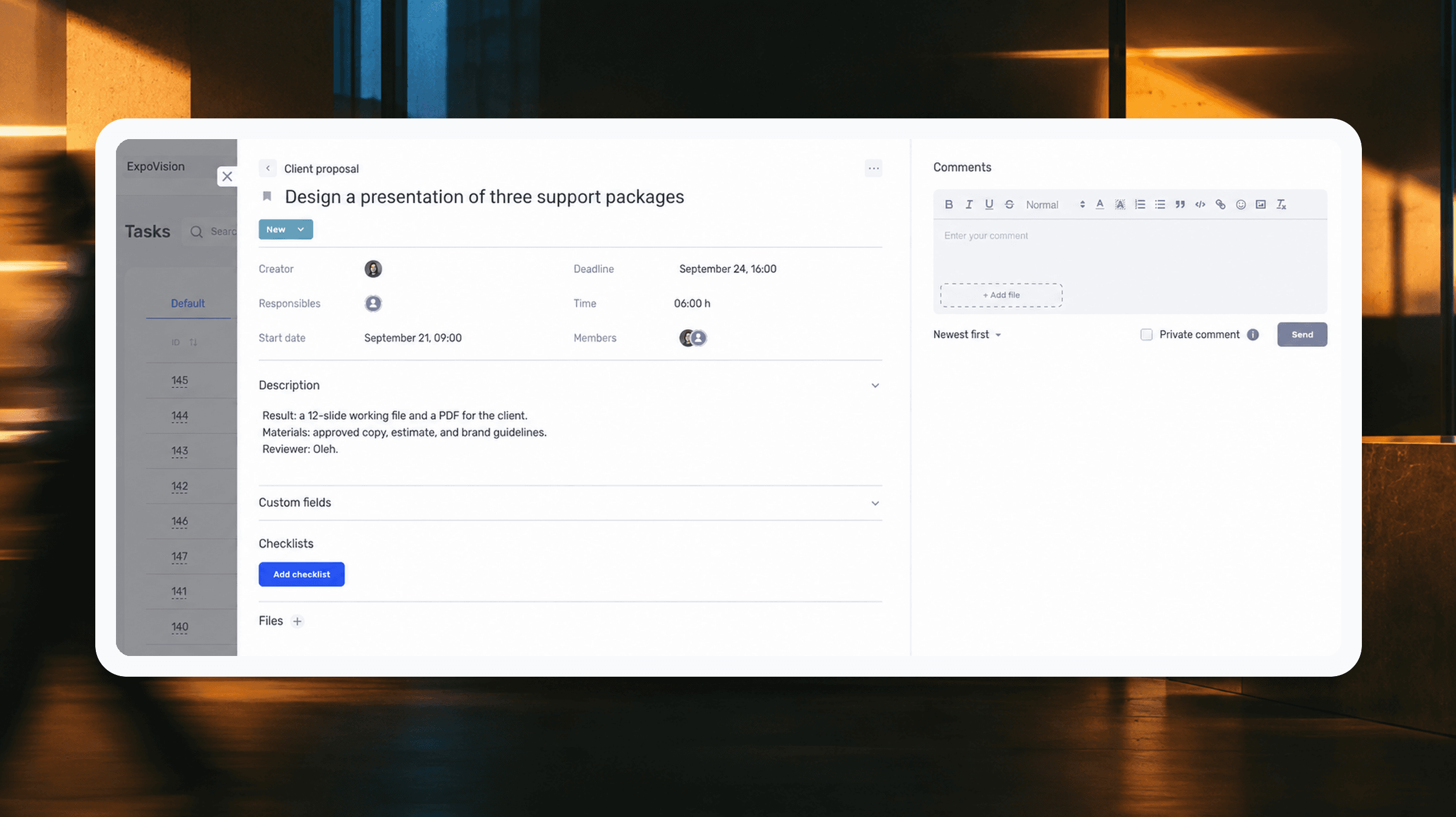
How to assign tasks to your team: from briefing to tracking completion
We break down how to assign tasks so they actually get done: what a brief must contain, how to word the result and the deadline, who takes ownership and how to check completion. With an example, an acceptance checklist and a template for running the task in if.team from start to finish.
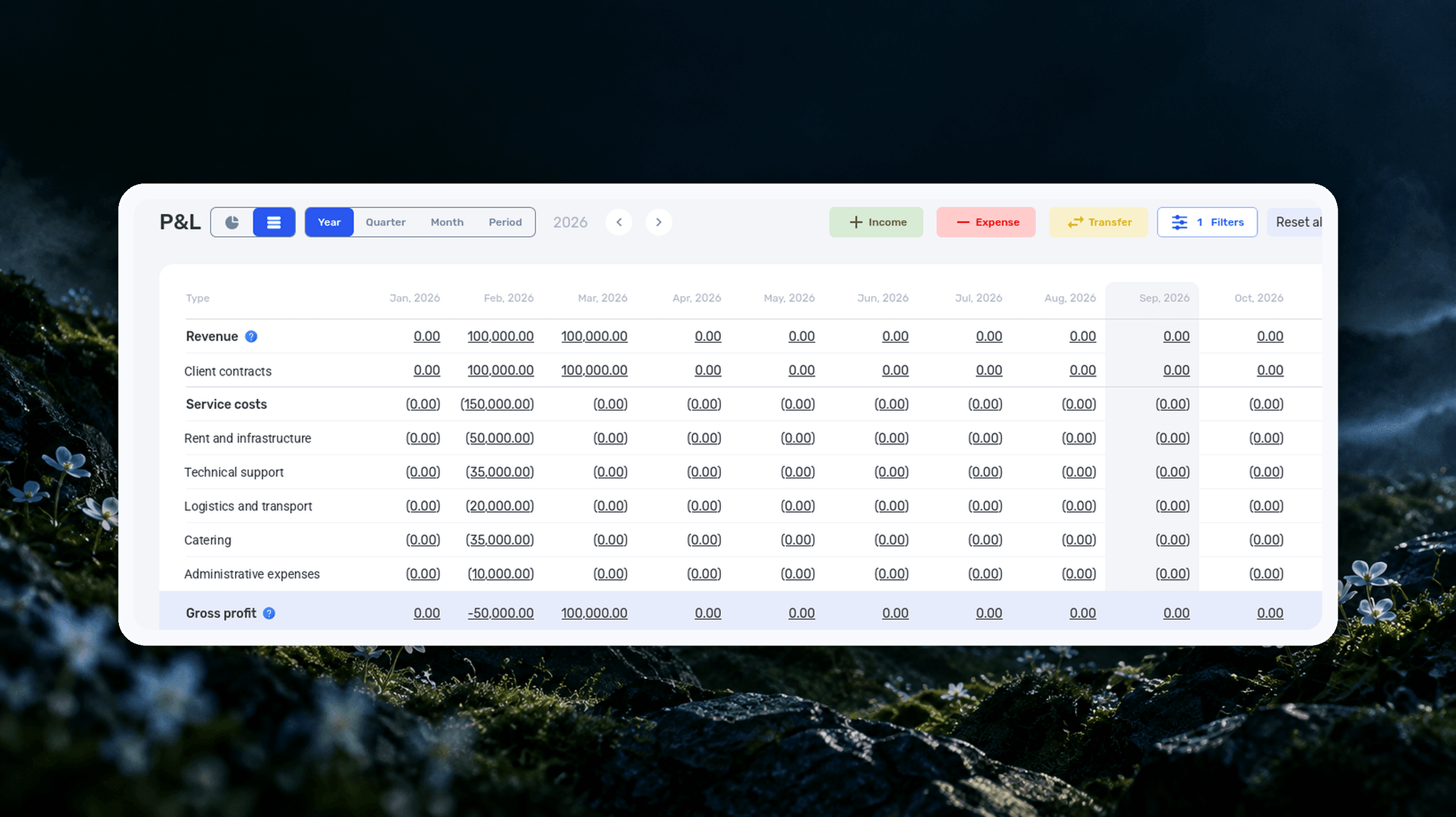
Profit and Loss Statement (P&L): What It Is, How to Prepare and Analyze It
We explain what a profit and loss statement is, how it differs from Cash Flow, and why profit is not the same as the cash left in your account. We break down the P&L structure from revenue to net profit, walk through a calculation for a service company and show how to build your first report.

What Is a KPI in Simple Terms, What It’s For, and How to Evaluate It
What is a KPI in simple terms? It’s one number or several numbers that show whether you’re actually moving toward a specific goal. Not how many actions you took, but whether a result appeared. A KPI isn’t for reporting. It’s for managing work. You look at the indicator and understand what exactly…

What a Bottleneck Is in Business and How to Identify It
A bottleneck in business is the point where a process actually slows down. Not formally, but in reality. This is where tasks pile up, waiting time increases, and the entire system starts working more slowly than it could. It can be a specific person who physically cannot handle the workload. It…

RACI Matrix: Simple Explanation, How It Works, and Use Cases
The RACI matrix helps teams quickly agree on who does what in a project: who performs the work, who is accountable for the final result, who provides expertise, and who needs to receive updates. When these roles are defined upfront, it becomes easier to align decisions and coordinate actions.…

Gantt chart: what it is, why you need it, and how to build a simple working format
In this guide, we’ll break down what this format is, the types of Gantt charts, how to work with them, and how to build a simple online version. No fancy terms or unnecessary decoration. Only what helps you plan.
Start your free 7-day trial
No credit card required. Get full access to all features and see how if.team can transform your team's workflow.