
How to delegate tasks: what to hand off and how to stay in control
To delegate tasks well, hand over not just the work but the right to make decisions within it. A manager who doesn't delegate becomes a bottleneck: the team waits for answers, tasks stall, and the manager has no time left for clients, hiring and growing the business.
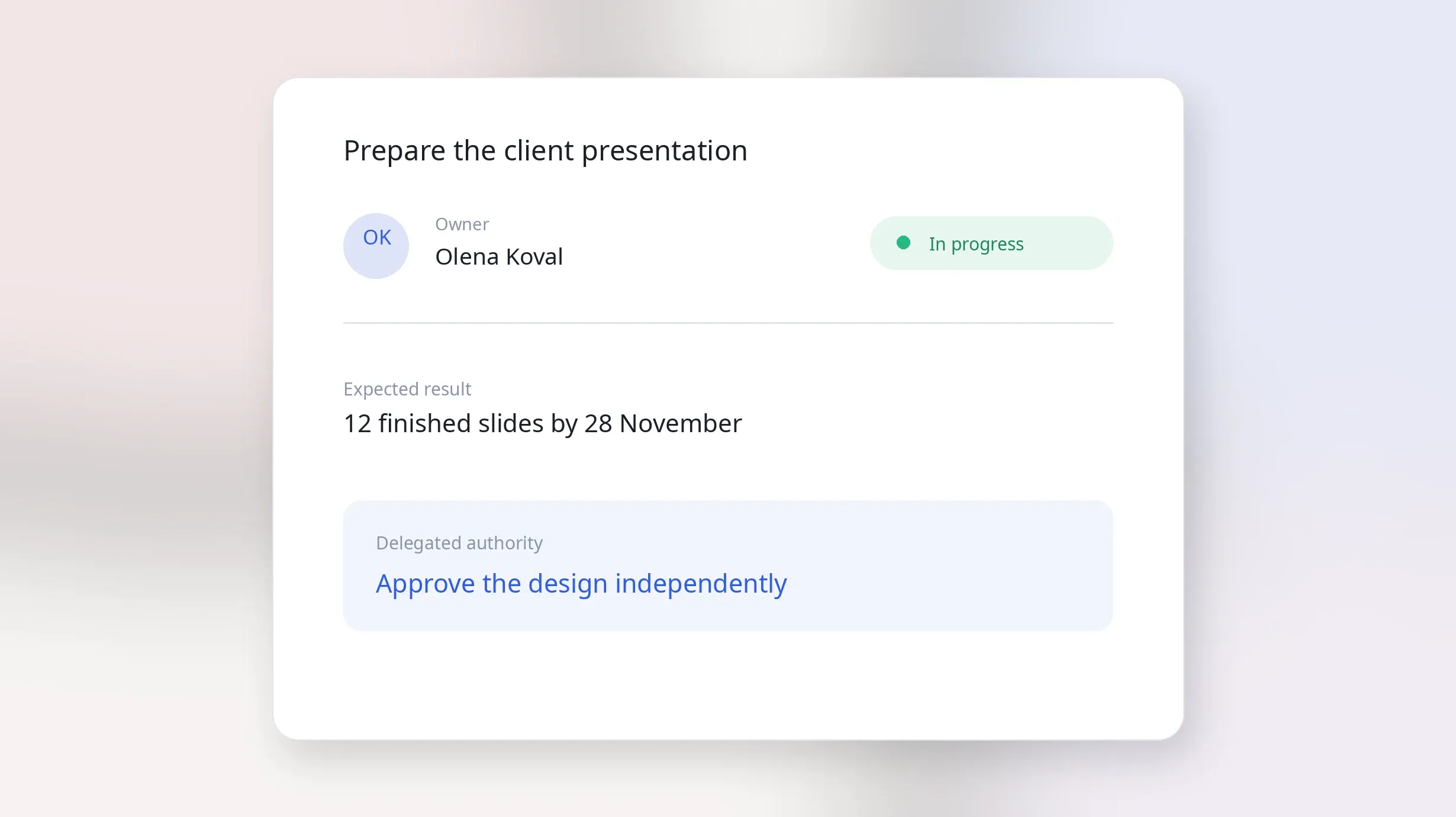
To delegate tasks well, hand over not just the work but the right to make decisions within it. A manager who doesn't delegate becomes a bottleneck: the team waits for answers, tasks stall, and the manager has no time left for clients, hiring and growing the business.
This guide is for small business owners, department heads, team leads and project managers — anyone who feels that "nothing moves without me." We'll cover:
- what delegation is and how it differs from assigning a task;
- which tasks to delegate and which to keep, with an exercise to audit your week;
- whom to delegate to and how to adapt your style to their experience;
- five levels of authority and six steps to hand off a task;
- how to stay in control without micromanaging;
- common mistakes and how to tell delegation is working;
- how to run delegation in a task manager, using if.team as an example.
Examples in this guide are illustrative.
Quick access: copy the delegation brief template in Google Docs
Key points
- Delegation means handing over a task together with authority and accountability for the result. You stay answerable to the client or owner.
- Delegate work that repeats, doesn't need you specifically and helps the person grow. Keep strategy, key hires and conflicts.
- Give freedom step by step: from "follow these instructions" to "this is your call."
- Control results at agreed check-in points, not every step.
- Delegation works when the task, deadline and owner are written down and the status is visible without asking in chat.
What delegation is
Delegation is giving a team member part of a manager's work together with the authority to make the decisions it requires and accountability for the result.
Delegation has three parts. If one is missing, it doesn't work.
| Part | What it means | What happens without it |
|---|---|---|
| Task | What needs to be done and what the result looks like | The person does "something" that doesn't match expectations |
| Authority | Which decisions the person makes alone: budget, timing, vendors, approvals | The person comes back with every question, and the manager stays the bottleneck |
| Accountability | Who owns the result and reports on it | "Everyone" works on it, and when it slips, nobody is responsible |
The accountability you hand over is internal: the team member answers to you. You still answer to the owner, the client or senior leadership for your team's results. You can delegate the work, but not your own accountability.
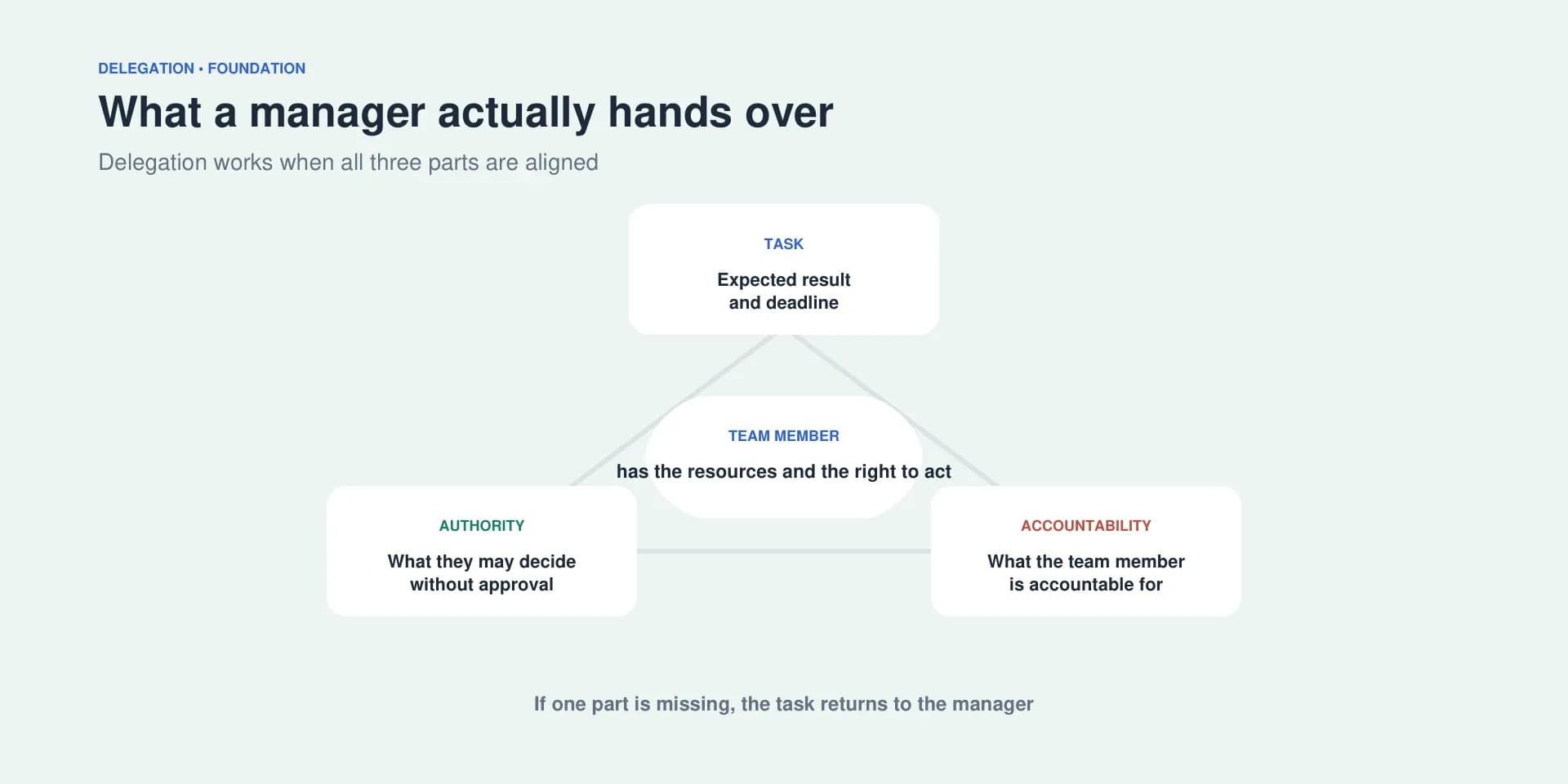
Three parts of delegation
Delegating vs assigning vs outsourcing
| Assigning an action | Assigning a task | Delegating | Outsourcing | |
|---|---|---|---|---|
| What's handed over | One action | A task with a result | An area of work with decision rights | A whole function to another company |
| Example | "Send the invoice to the client" | "Prepare a quote for client X by Friday" | "You own quotes for new clients" | "An outside firm runs our bookkeeping" |
| Who decides how | The manager | Partly the team member | The team member, within limits | The vendor |
| How long | Once | Until the task is done | Ongoing or until reviewed | Per contract |
Assigning a task is part of delegation, but not all of it. For how to write the task so it's understood the first time, see how to assign tasks to your team.
Why delegate
For the manager — time for work only you can do. Say an agency owner spends 3 hours a week on quotes, 2 on client reports and 2 checking small design files. That's 7 hours a week, or more than 300 hours a year — almost two months of work. That time could go to dozens of meetings with prospects or closing a key hire.
For the team member — growth. New tasks and authority are the shortest path from doer to team lead. People who are trusted with decisions are less likely to leave to find somewhere that will trust them.
For the company — resilience. If one person makes every decision, their vacation, illness or resignation stops the work. Delegation spreads knowledge and decisions across the team.
For clients — speed. An account manager who can approve a small change replies within an hour. One who waits for the boss replies in two days.
Why managers don't delegate
The reasons are usually psychological, not organizational. Here are the most common ones and what to do about them.
"It's faster to do it myself." Once, yes. But the task comes back every week. Do the math: if training someone takes 3 hours and the task takes you 1 hour a week, you break even in a month.
"They'll do it worse." At first, maybe. Start with tasks where mistakes are easy to spot and fix, at a lower level of authority. Quality catches up within a few rounds.
"I don't know if it'll be done on time." That's a control problem, not a trust problem. A written deadline, check-in points and a visible task status solve it.
"I enjoy doing this." A fair reason. Keep one or two such tasks if they don't crowd out your main work. Hand off the rest.
"I'm afraid of becoming unnecessary." Managers are valued for their team's results, not for how many tasks they close themselves. A manager whose team runs without them can take on a bigger scope.
"There's nobody to delegate to." Sometimes that's true, and then the problem is hiring, not delegation. More often, someone is ready to grow if you add more support at the start.
Which tasks to delegate: audit your week
Start not with whom to delegate to but with where your time goes. The simplest way is to log every task you do for a week and how long it takes. Then sort the list with three questions:
- Does this task repeat?
- Does it need my specific knowledge, position or decision?
- Could someone on the team do it as well after some training?
| Task | Hours per week | Repeats? | Needs me? | Who could do it | Decision |
|---|---|---|---|---|---|
| Quotes for new clients | 3 | Yes | No, there are templates and rates | Account manager | Delegate, level 3 |
| Weekly client reports | 2 | Yes | No | Project managers | Delegate, level 4 |
| Reviewing small design files | 2 | Yes | No | Art director | Delegate, level 5 |
| Negotiating with key clients | 4 | No | Yes | — | Keep |
| Hiring team leads | 3 | No | Yes | — | Keep |
| Daily "how's it going" stand-up | 2.5 | Yes | No | — | Drop, replace with task statuses |
The last column is what matters. Some tasks shouldn't be delegated at all — they should be dropped.
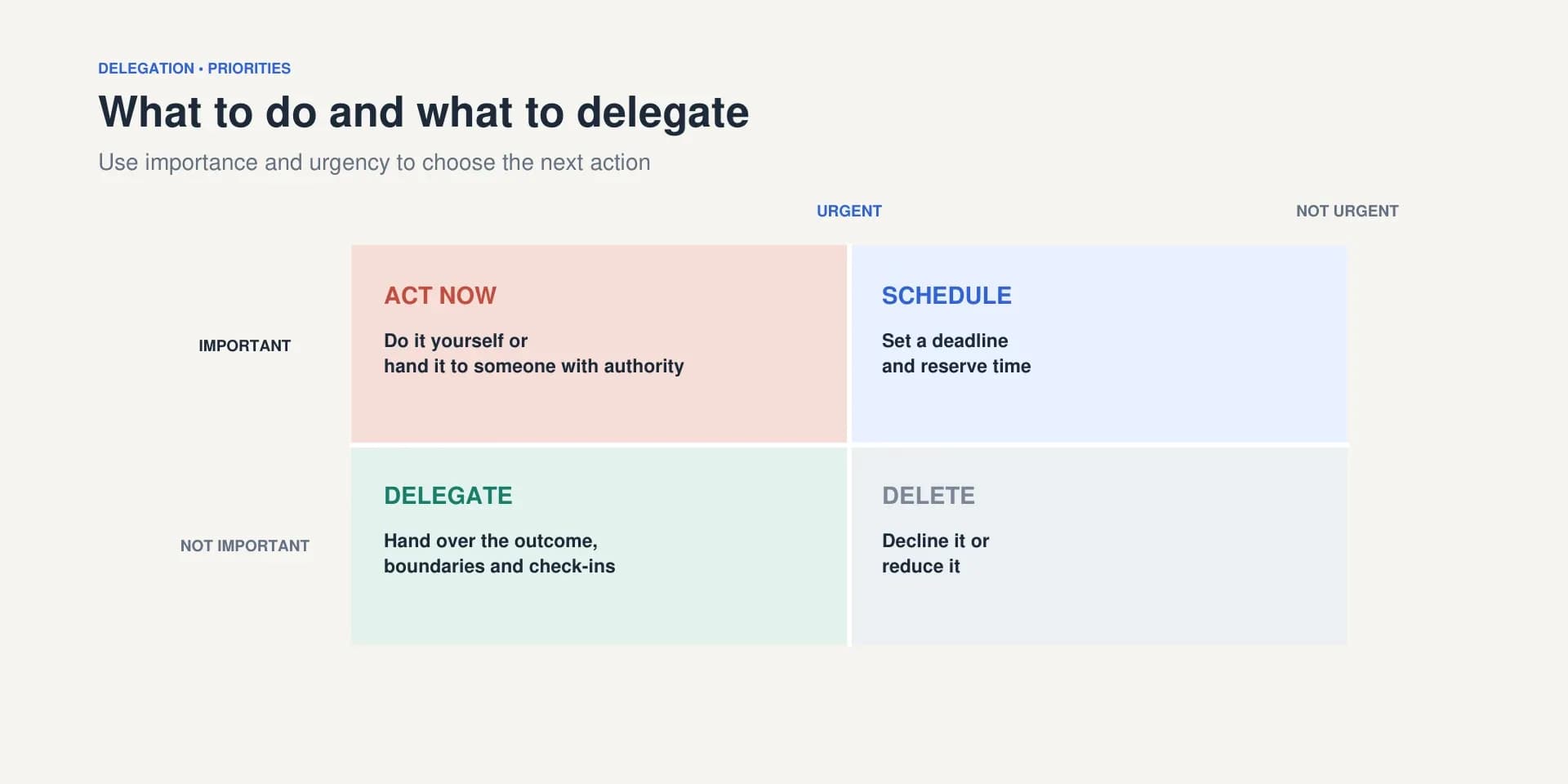
Priority matrix: what to act on, schedule, delegate or delete
This is the logic of the Eisenhower matrix. Important and urgent: act now, either yourself or through someone with the skills and authority. Important but not urgent: schedule it. Urgent but not important for you personally: delegate. Neither: delete.
What to delegate
- recurring work: reports, quotes, onboarding, document preparation;
- tasks someone on the team does as well as you or can learn in a few tries;
- tasks that help a team member grow into their next role;
- operational decisions within an approved budget and rules;
- research and preparing options for you to choose from.
What to keep
- decisions on strategy, pricing and key hires;
- conflicts, performance reviews and termination conversations on your team;
- tasks involving confidential data the person shouldn't access;
- crises where the client expects to hear from you;
- recognizing and motivating the team — that's the manager's job.
Whom to delegate to
Choose the person by three criteria: skills, motivation and workload.
Skills. Can the person do this work or something close to it? If not, how long would it take to train them?
Motivation. Do they want to grow in this direction? A task seen as extra load will be done to the minimum.
Workload. Do they have time? The most common mistake is giving the task to the most reliable person, who is already at 120% capacity.
Skills and motivation also shape how you delegate. The situational leadership model by Hersey and Blanchard helps here: the manager's style adapts to the person's readiness.
| Team member's readiness | Manager's style | How to delegate |
|---|---|---|
| Little experience, high enthusiasm (a keen new hire) | Directing | Detailed instructions, frequent check-ins, level 1–2 |
| Some experience, motivation dipped (first setbacks) | Coaching | Explain the why, discuss decisions together, level 2–3 |
| Experienced but lacking confidence | Supporting | Fewer instructions, more support and discussion, level 3–4 |
| Experienced and motivated | Delegating | Set the result and limits, step in rarely, level 4–5 |
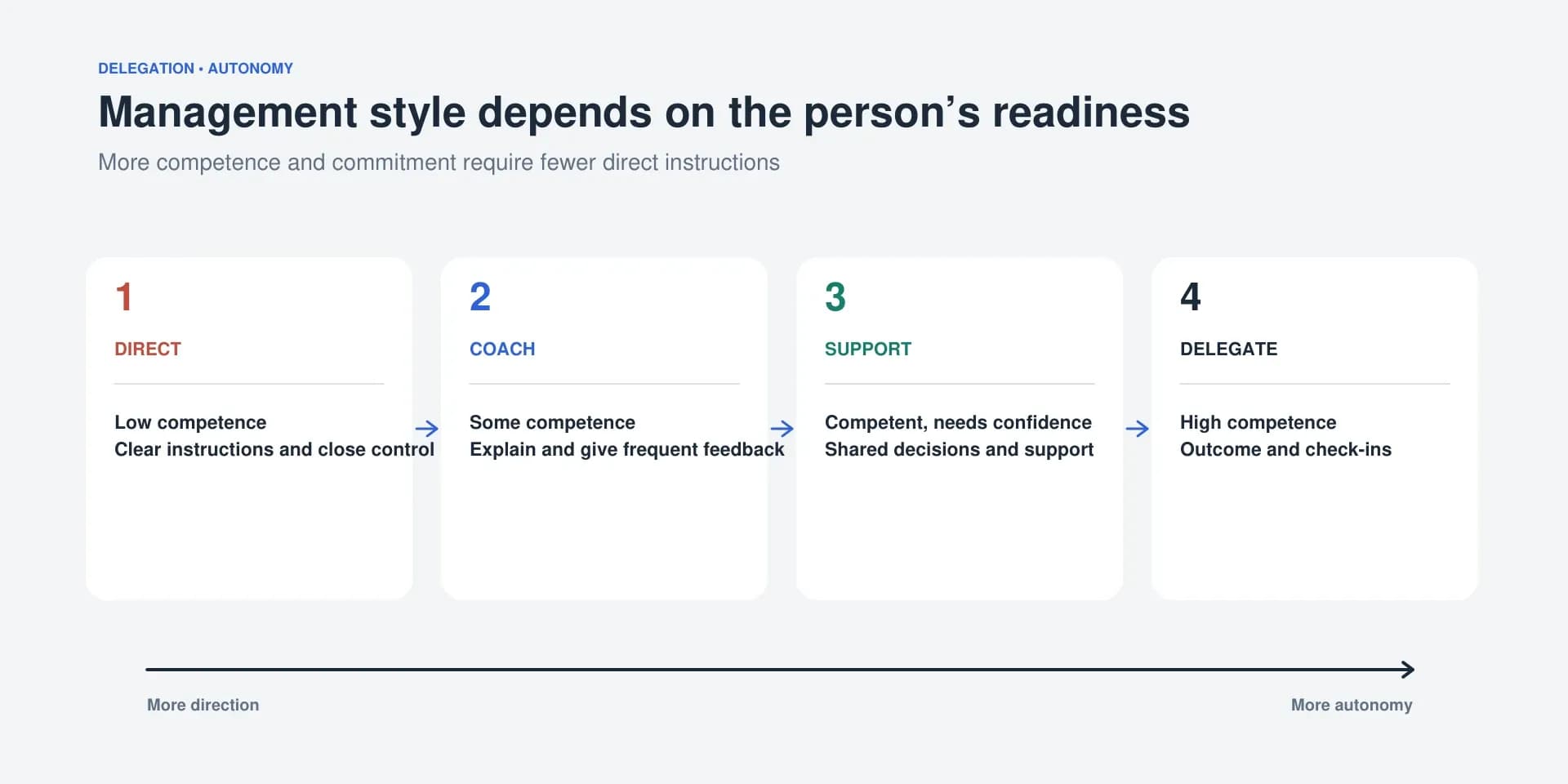
Management style by the team member’s readiness
The same person can be at different levels for different tasks. An experienced designer works at "delegating" level on layouts and at "directing" level on their first client quote.
Principles of delegation
- One task, one owner. If two people own it, each waits for the other when something goes wrong. There can be several participants, but one owner.
- Authority matches accountability. You can't hold a manager responsible for an on-time launch and deny them the right to move internal deadlines or bring in help.
- Results, not methods. Describe what should come out and the constraints. How to get there is the person's call within their level of authority.
- Room to make mistakes. At first, the person will do things differently from you. If a mistake isn't critical, let them fix it.
- Don't go around the delegate. If you delegated to a team lead, don't give instructions to their team directly. The lead loses authority, and the team doesn't know whom to follow.
- In writing. The task, deadline, owner and limits should be written where both of you can see them.
Levels of delegation
Delegation isn't a switch between "I do it" and "you own it." There are levels in between. Name the level when you hand over a task, so the person knows where their freedom ends.
| Level | What you say | Who decides | Example |
|---|---|---|---|
| 1. Follow instructions | "Do it exactly this way" | Manager | A new hire prepares a report from a template |
| 2. Research and report | "Gather options, I'll decide" | Manager, based on the team member's input | Compare three CRMs in a table |
| 3. Recommend | "Suggest what to choose, I'll approve" | Team member proposes, manager approves | Draft a quote for sign-off |
| 4. Decide and inform | "Act, then tell me" | Team member; manager learns after | An account manager approves small client changes |
| 5. Decide | "This is your area" | Team member | A team lead distributes tasks within the team |
Start at a lower level and move up once the person has handled it a few times. You risk little, and they gain freedom step by step.
Say the move out loud: "Your last three quotes needed no changes from me. From now on, approve quotes up to $10,000 yourself and show me the bigger ones." The person knows they're trusted with more and where the new limit is.
How to delegate tasks in 6 steps
To delegate effectively, go through six steps, from choosing the person to reviewing the result.
1. Choose the task and the person. Weigh skills, motivation and workload. Check how many hours they already have planned this week.
2. Explain the result and why it matters. Not "do the quote" but "prepare the quote for client X by Friday so we can send the proposal on Monday; they're comparing us with two other agencies, so the price breakdown needs to be clear." Context lets the person make decisions when something unexpected happens.
3. Set the limits. Level of authority, budget, who they can approve things with, what can't change. For example: "You can offer up to a 10% discount yourself; anything more, check with me. Rates come from the price list, timelines from our template."
4. Provide resources. Access, templates, contacts, examples of similar work. Without them, the person spends time looking for things you already have.
5. Agree on check-in points. Not "show me when it's ready" but "show me the structure on Wednesday and the final version on Thursday." The number of check-ins depends on the person's experience and the risk of the task.
6. Review the result. What worked, what to change next time, what level of authority they get next time. Praise something specific so they know what to repeat. If a client praises the work, say who did it. If something went wrong, discuss it privately and focus on the process, not the person.
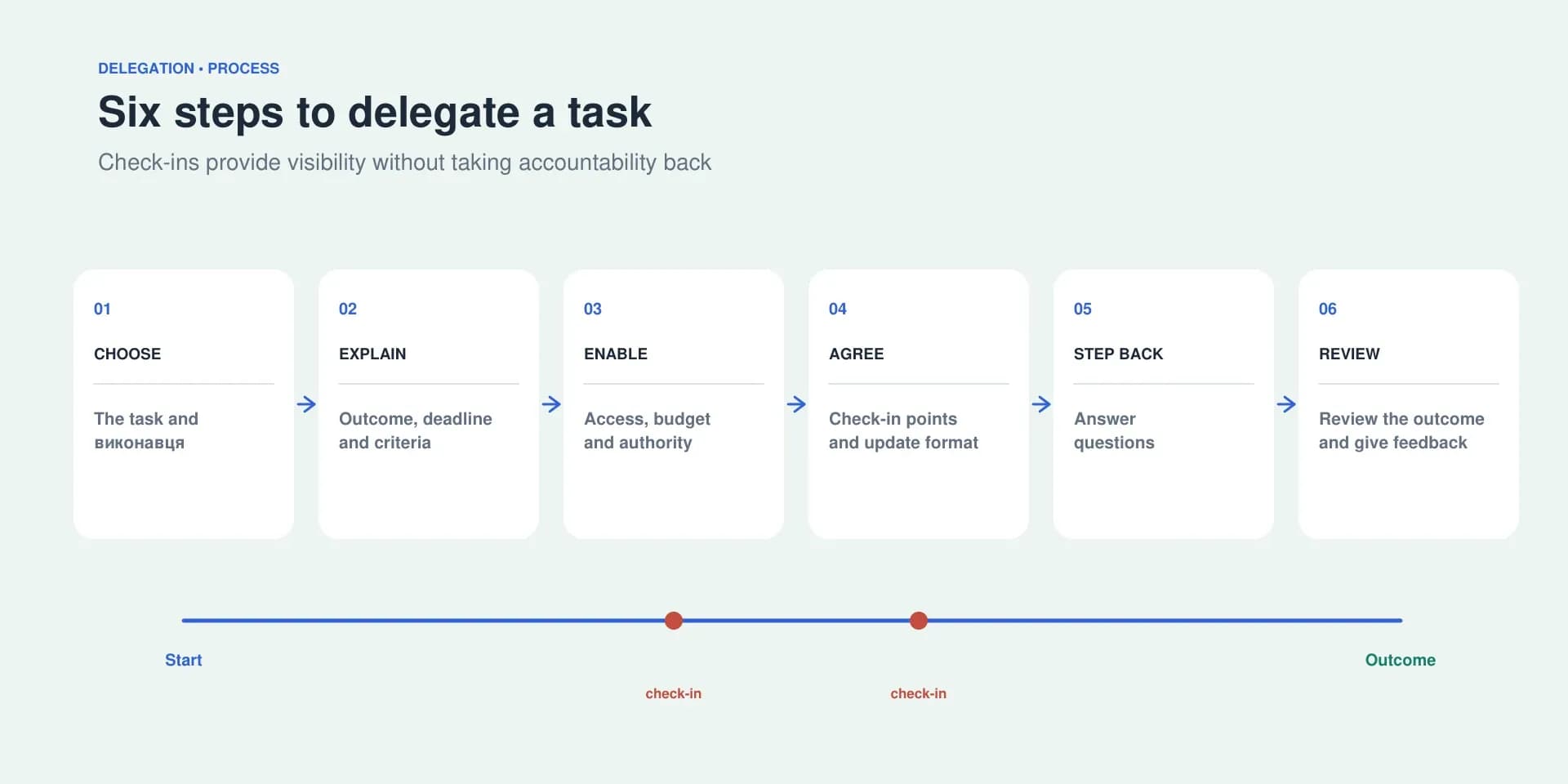
Six steps to delegate a task
Delegation brief template
Copy the delegation brief template in Google Docs and fill it in every time you hand off a task. It also includes the week audit table and the levels of authority. Five minutes on the brief saves hours of back-and-forth.
- Task: what needs to be done.
- Result: what "done" looks like and what the client or manager receives.
- Why: context and what the result affects.
- Deadline: the final date.
- Level of authority: 1–5, and what exactly the person decides alone.
- Limits: budget, what can't change, whom to check with.
- Resources: templates, access, contacts, examples.
- Check-in points: dates and what to show at each.
- Owner: one person.
How to stay in control without micromanaging
Micromanagement is controlling the process instead of the result: the manager checks every step, asks for hourly updates and redoes the work. The person stops thinking for themselves, and the manager doesn't free up any time — they're doing the same work through someone else's hands.
Signs you're micromanaging:
- you ask to see progress more often than agreed;
- you rewrite work that meets the criteria because "I'd have done it differently";
- you need to be cc'd on every client email;
- the team makes no decisions without you.
To control the result, not the process:
- agree on what "done" means before work starts;
- check task status and deadline in a shared system instead of asking in chat;
- step in at check-in points or when a task is overdue;
- discuss in task comments so decisions stay on record.
How many check-in points to set:
| Person's experience with this task | Risk | Check-in points |
|---|---|---|
| First time | High | At every stage |
| Done a few times with corrections | Medium | Draft and final |
| Done reliably without corrections | Low | Final only, or spot checks |
| Task fully in their area | Any | Periodic results review |
Who does what: RACI for delegated work
When a task has several people, spell out the roles. The RACI matrix helps:
- R (Responsible) — does the work;
- A (Accountable) — owns the result; one per task;
- C (Consulted) — gives input;
- I (Informed) — is kept up to date.
Agree on R and A for each task. Decision-making freedom does not automatically determine these roles: a team member can choose how to do the work while the manager remains accountable for accepting the result. More in our guide to the RACI matrix.
Example: how an agency owner delegated quotes
An illustrative case. The owner of a design agency writes every quote for new clients herself: 3–4 a week, about three hours. Clients wait 3–5 days for a quote because she has no time.
Week 1, level 2. She asks the account manager to collect the client's requirements and estimate hours from a template. She still writes the final quote, but from ready data. Saving: about an hour a week.
Weeks 2–4, level 3. The account manager writes the full quote and shows it before sending. The first two need corrections: hours for revisions and project management are too low. They go through the reasons and update the template.
Month 2, level 4. The account manager sends quotes up to $15,000 directly and lets her know. Larger ones still go through her. She spot-checks.
Result. Clients get a quote in 1–2 days instead of 3–5. The owner gained about three hours a week. The account manager learned project economics and six months later took over the client team.
Common delegation mistakes
- Delegating only boring work. If people only get routine tasks, they don't grow and burn out faster. Mix in work that develops them.
- Skipping the why. Without context, the person can't make a decision when something unexpected happens and comes back with a question.
- Taking the task back. The manager sees the work going differently and finishes it. Next time the person won't try as hard: the manager will redo it anyway.
- Delegating verbally. No deadline, no owner, no record. A week later nobody remembers what was agreed.
- Overloading your best people. The most reliable person gets everything until they start missing deadlines.
- Responsibility without authority. The person owns the result but has to get approval for every detail. The task stalls and the manager gets frustrated.
- Never raising the level. The person stays at "recommend, I'll approve" for years when they could have been deciding long ago.
How to tell delegation is working
Signs you're delegating well:
- the team makes small decisions without you, and they match what you would have decided;
- you have time for clients, hiring and strategy, not just day-to-day tasks;
- fewer tasks come back for revision;
- people offer to take on new areas;
- work doesn't stop when you're on vacation.
What you can measure:
| Metric | What it shows | Where to find it |
|---|---|---|
| Share of tasks returned for revision | Quality of briefs and delivery | Task and project reports |
| Overdue tasks by owner | Whether people have enough time and authority | Task list filtered by overdue |
| Manager's hours on operational tasks | How much time you've freed up | Your own time tracking |
| Client response time | Whether delegation sped things up | CRM, email, chat |
If people come to you every day with questions they could answer themselves, raise their level of authority or clarify the limits.
Delegating in a remote team
Remote teams can't "just ask," so everything that would be said out loud in an office needs to be written down.
- The delegation brief goes in the task, not a voice message.
- Check-in points are dates in the task or subtasks, not "let's stay in touch."
- Status lives in a shared system so nobody has to ask in chat.
- Decisions go in task comments so you can find out a month later why it was done that way.
More on running a distributed team in our guide to remote work management tools.
How to delegate tasks in if.team
if.team is a system for managing projects, tasks and finances in a service business. Here's how to run delegation in it, following the steps above.
1. Check workload before you delegate. The workload view shows each person's planned and tracked hours for the week, so you don't hand a task to someone who's already overloaded.
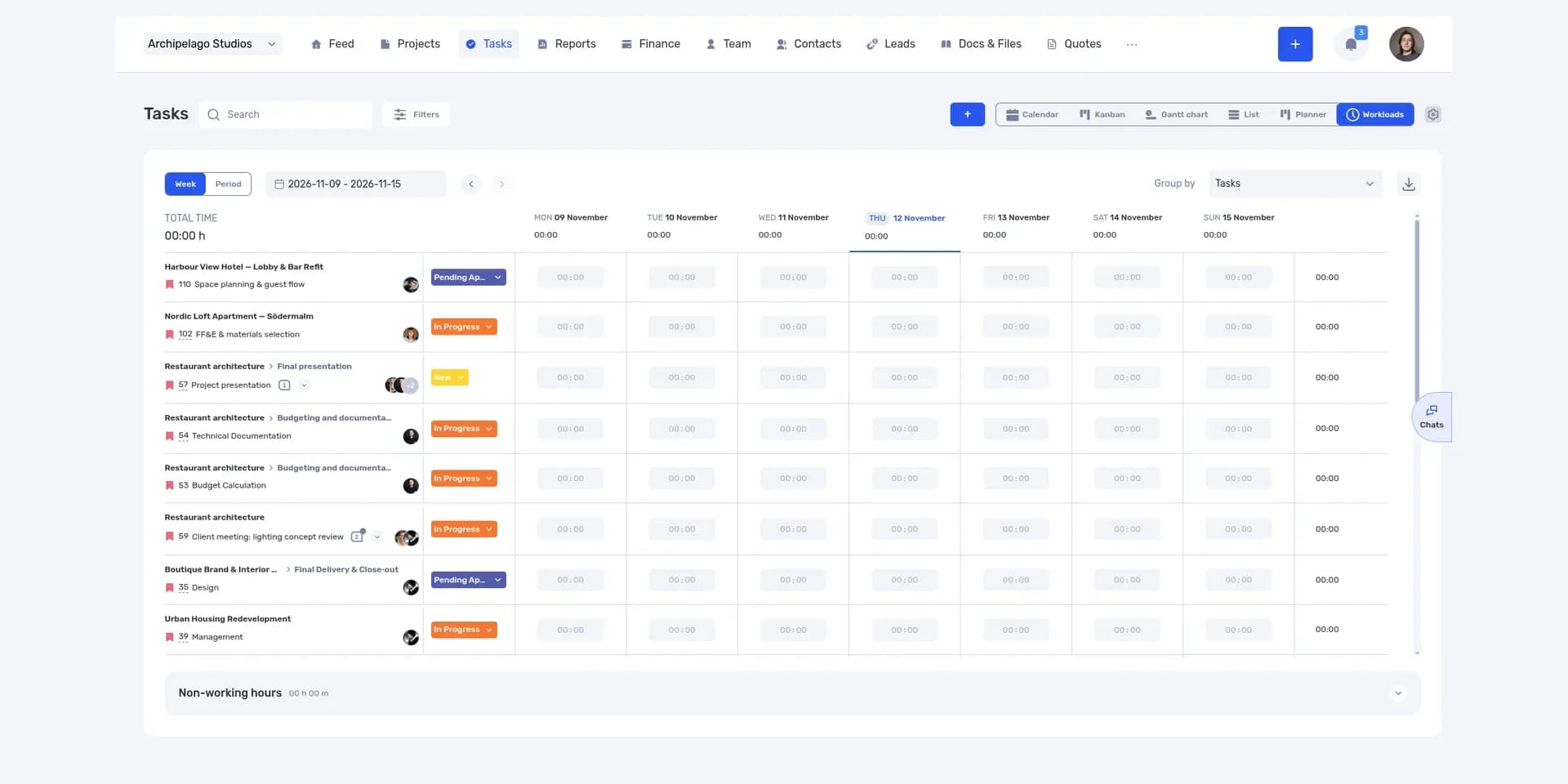
Team workload by task and day of the week
2. Create a task with a brief. The "Assigner", "Assignees" and "Participants" fields on the task card show who delegated the task and who owns it. The description holds the brief: result, why, limits, level of authority. Attach files and templates to the task.
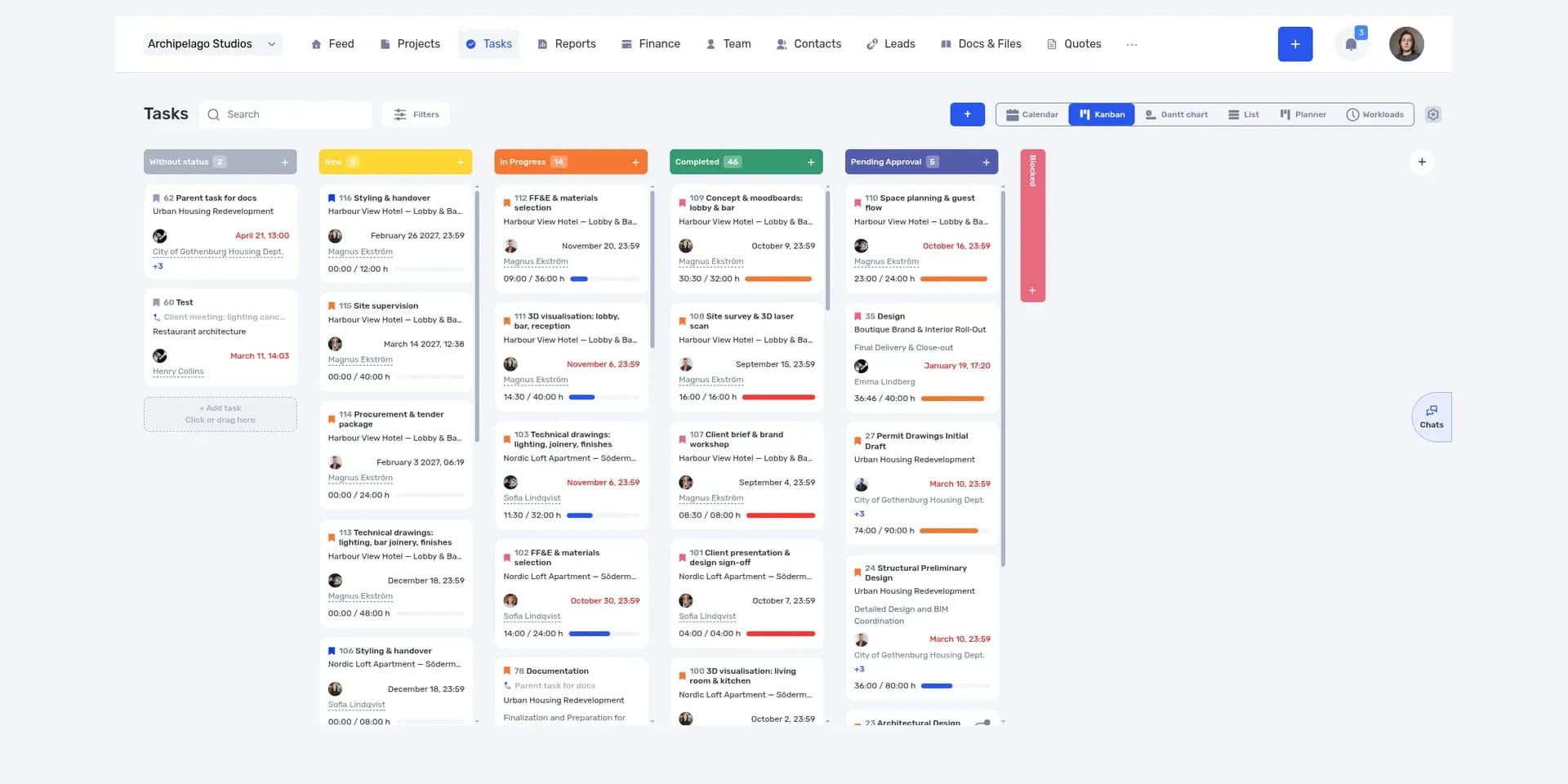
Task cards show the owner, deadline, status and planned versus actual time
3. Set the definition of done. A checklist in the task lists the criteria you'll accept the result by. The person sees them from the start.
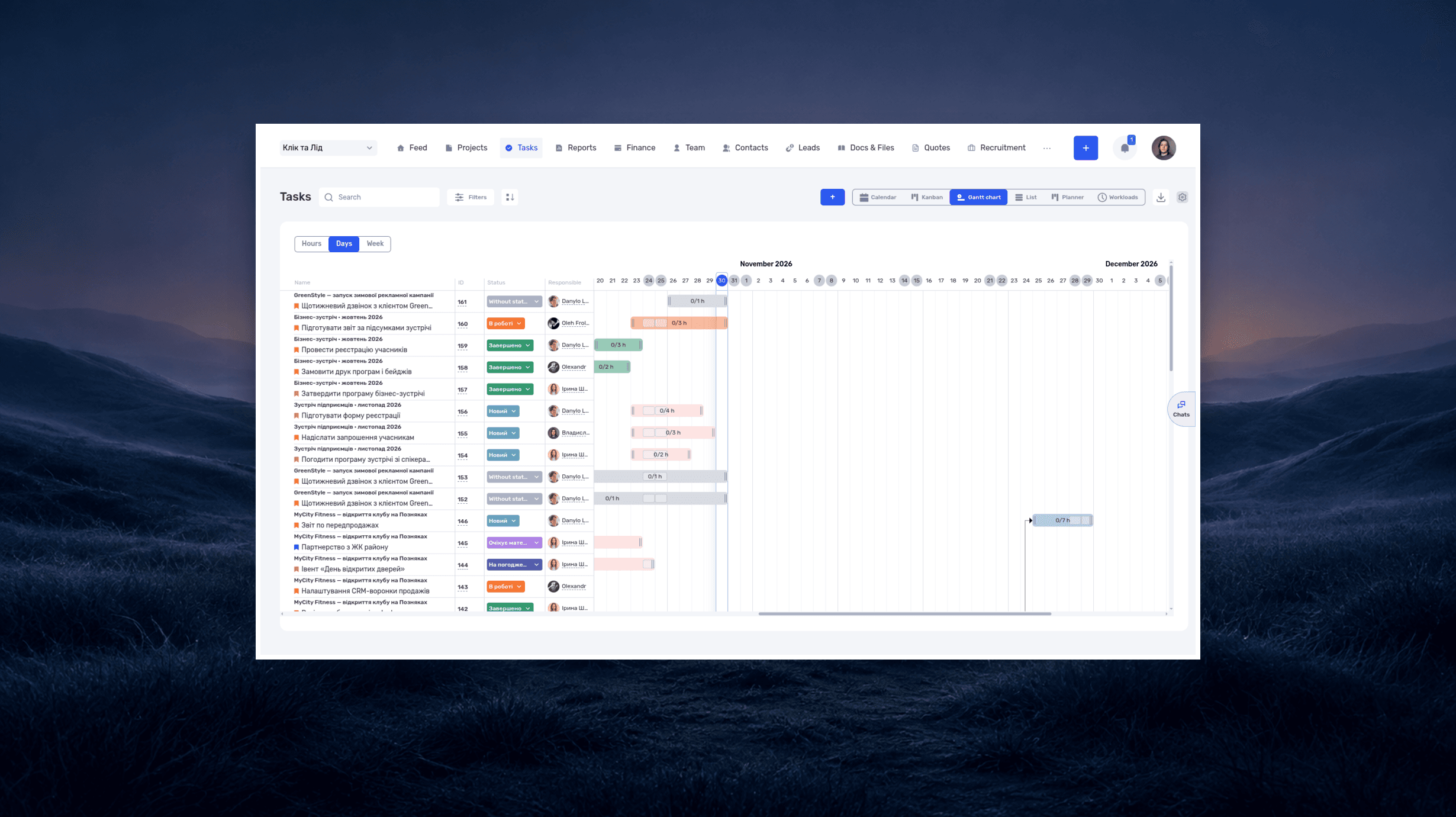
4. Break it into check-in points. Subtasks work well as check-ins: each has its own assignee, deadline and planned time. Progress shows on the parent task.
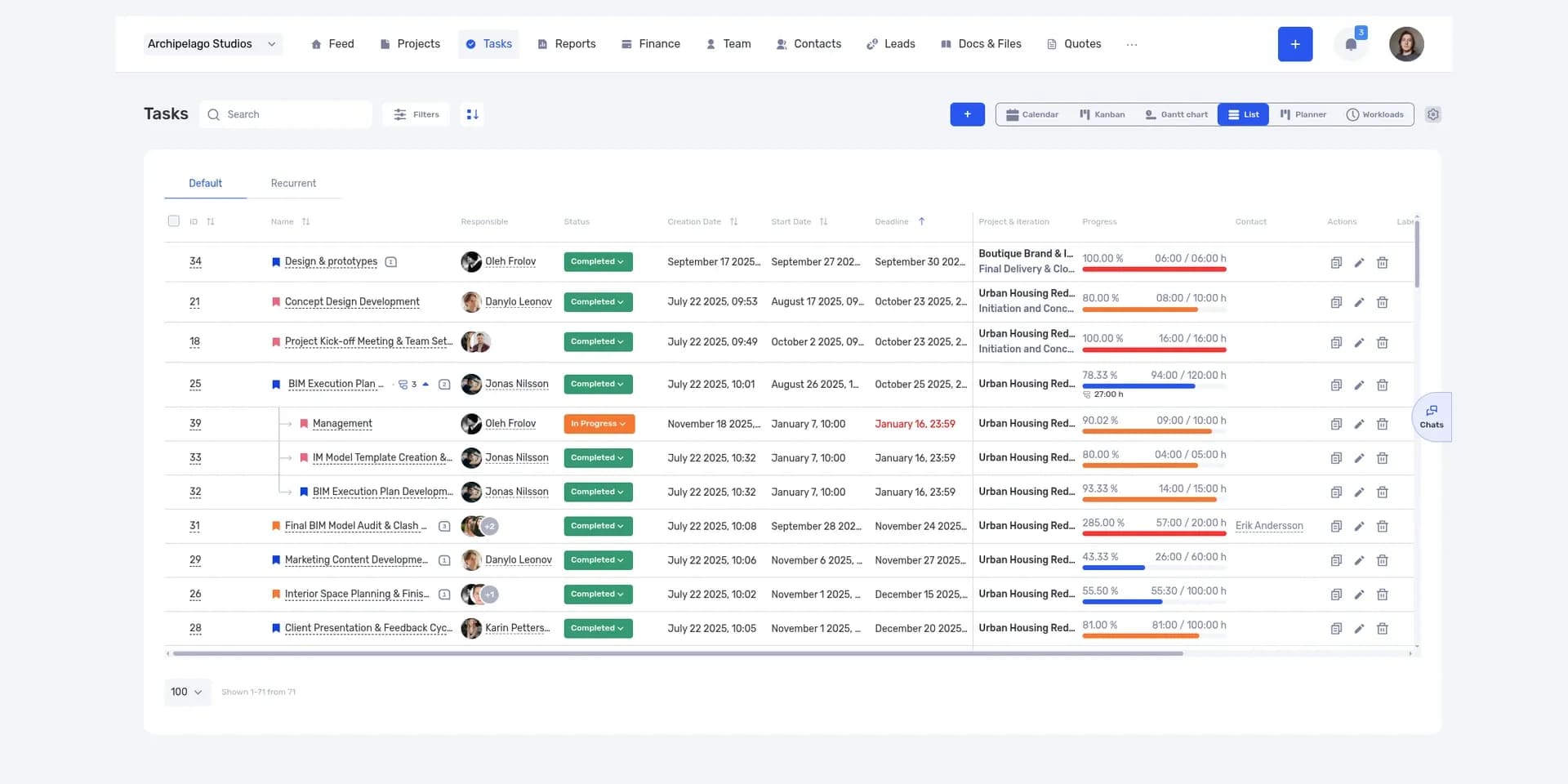
Parent tasks and subtasks with owners, deadlines and progress
5. Watch status, not process. Status and time spent are visible in the task, on the Kanban board and in the list. Comments keep the history of decisions, so you don't need to ask in chat.
6. Check delegation quality in reports. In Reports → Tasks, the totals row shows three numbers: total tasks, the share completed and the share returned for revision at least once, regardless of current status. Filter the report by assignee or project to see it for a specific person. If that share grows, the problem is usually in the brief or the limits of authority.
7. Automate what repeats. Recurring tasks are created on a schedule, and a standard set of subtasks can be saved as a task template. You delegate the weekly report once.
Team workload shows planned and actual hours, so you can see who has room for more and who is already overloaded.
Delegation checklist
- The task repeats or takes time you need for other work.
- One owner is chosen, with the skills, motivation and time.
- The result is described so it can be checked.
- You've explained why the task matters.
- The level of authority and limits are named: budget, approvals, what can't change.
- Templates, access and contacts are shared.
- Check-in points have dates.
- Everything is written in the task, not in chat.
- After delivery: a review and a decision on the next level.
FAQ
What is the difference between delegating and assigning?
Assigning hands over a specific action: "send the invoice." Delegating hands over an area of work with the right to make decisions: "you own client invoices this month."
What should you do if the person fails?
Find out where it went wrong: they misunderstood the result, lacked resources, or lack the skills. In the first two cases, fix the brief. In the last, go back to a lower level of authority and add check-in points. Don't take the task back for good after one failure.
How many tasks can you delegate to one person?
As many as fit into their working hours with room for the unexpected. Check their workload for the coming week before you delegate.
Can you delegate responsibility?
You can delegate the work and the decisions. Accountability to the client and owner for your team's results stays with you.
What if the person turns the task down?
Find out why. If they lack time, help remove another task. If they lack skills, lower the level and add support. If the task doesn't fit their role or interests, it may belong with someone else.
How do you delegate in a very small team?
In a team of 3–5, delegation matters even more: the owner often does everything. Start with one task for one person at level 2–3. Some work can go to freelancers or be automated.
What's the hardest part of delegating?
For most managers, it's letting the person do it differently. If the result meets the criteria, a different method isn't a mistake.
Key takeaways
- Delegation is a task, authority and accountability together. Without authority, the person can't work without you.
- Start by auditing your week: what repeats and doesn't need you. Some tasks should be dropped, not delegated.
- Adapt your style to the person's experience. Raise their level of authority step by step, from 1 to 5.
- Control results at check-in points, not the process every hour.
- Write down the task, deadline, owner and limits where both of you can see them.
Author
Vladyslav ChesnokovPublished
Nov 25, 2026
More articles to read
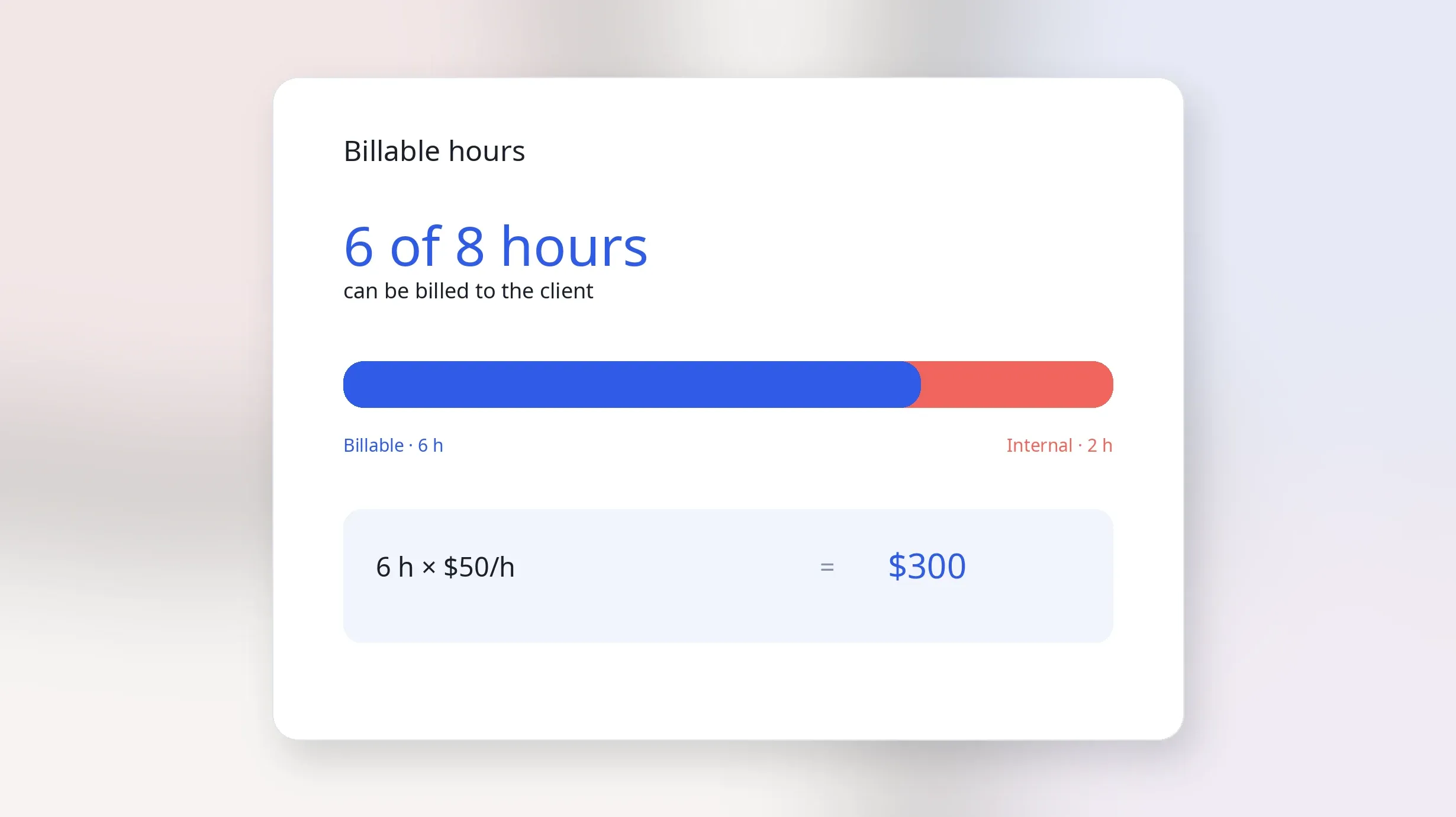
Billable hours: what they are, how to calculate and track them
Billable hours are time spent on client work that you can charge for under your agreement. For an agency, consultancy, law firm or IT team that bills by the hour, they are the revenue: an hour that wasn't tracked or couldn't be billed is income lost. Even on fixed-fee work, billable hours show…
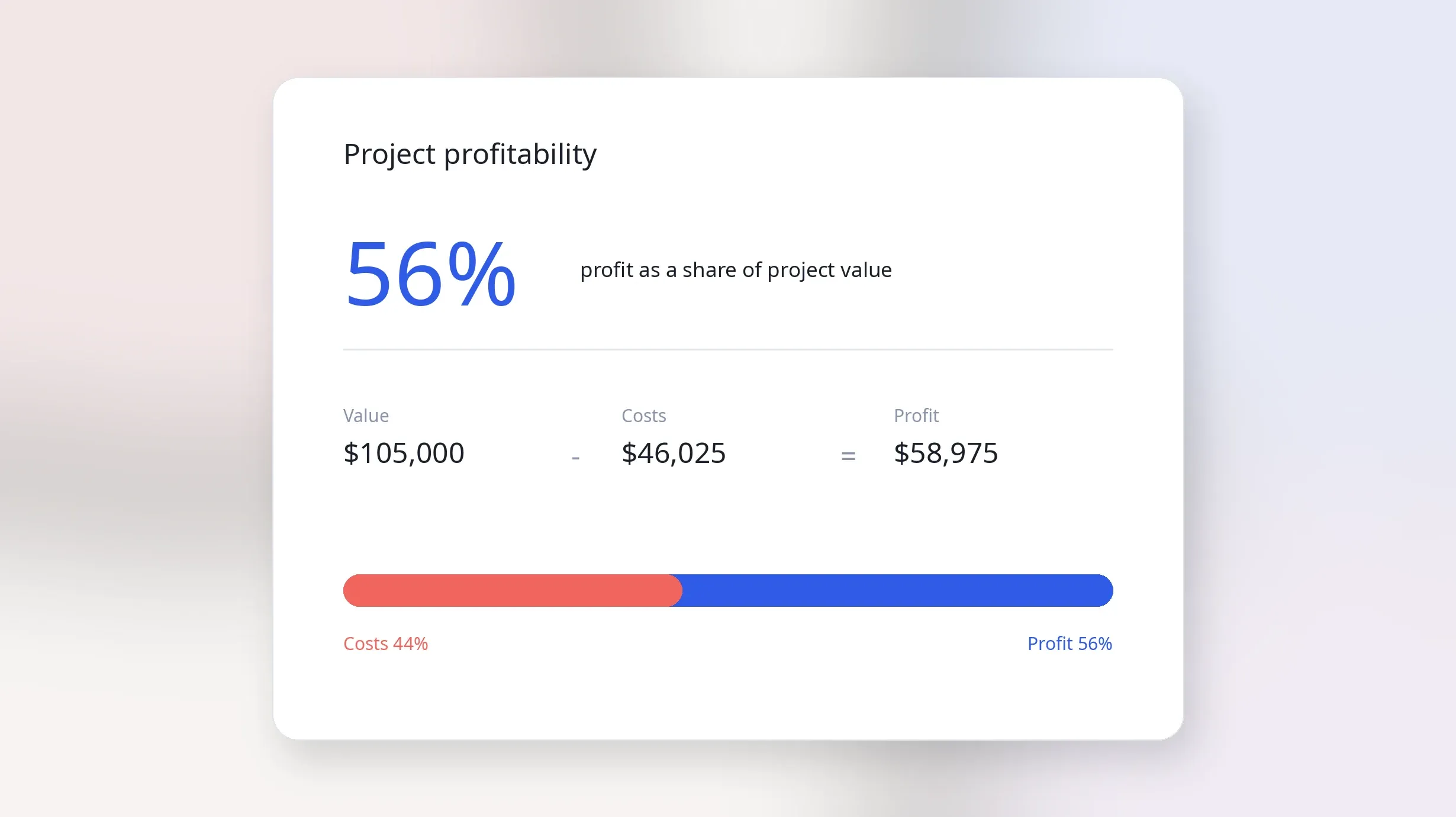
Project profitability: how to calculate it and keep projects profitable
Project profitability shows how much profit a project earns for every dollar the client pays. For a service business, it matters more than the company total: overall profit can look fine while two projects out of ten quietly lose money and eat into what the others earn.
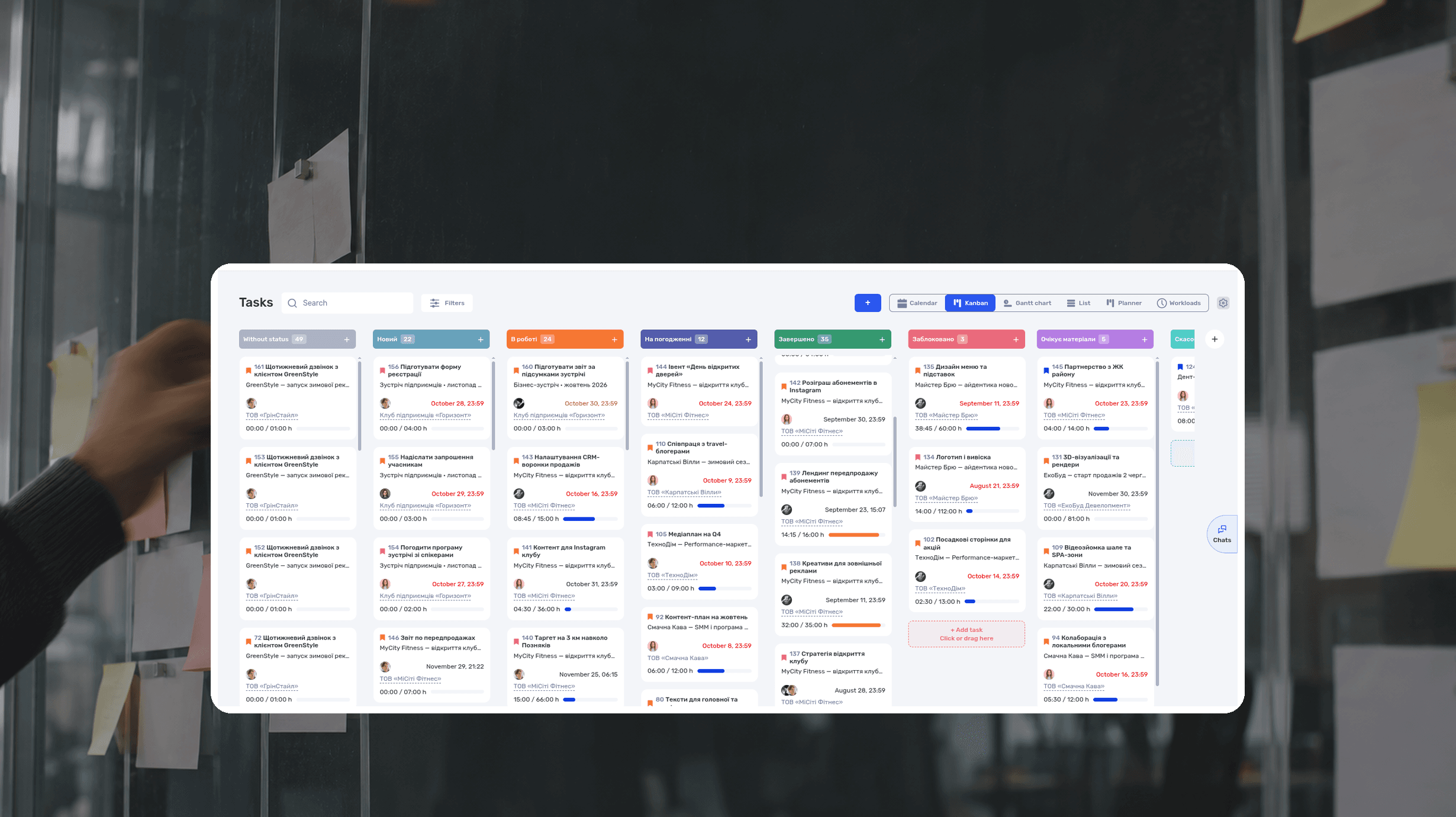
What Is a Kanban Board? Definition, Examples, Setup
A Kanban board is a visual workflow tool that represents work as cards moving through columns. The columns show each stage of the process, while work-in-progress limits control how many items a team handles at once. The board makes blocked work, queues, and delays visible.

RACI Matrix: Definition, Free Template and Example
A RACI matrix is a table that shows who does the work on a project, who accepts the result, who gives input, and who gets updates. The name comes from the four roles: Responsible, Accountable, Consulted, Informed. Rows are deliverables or decisions, columns are people or roles.
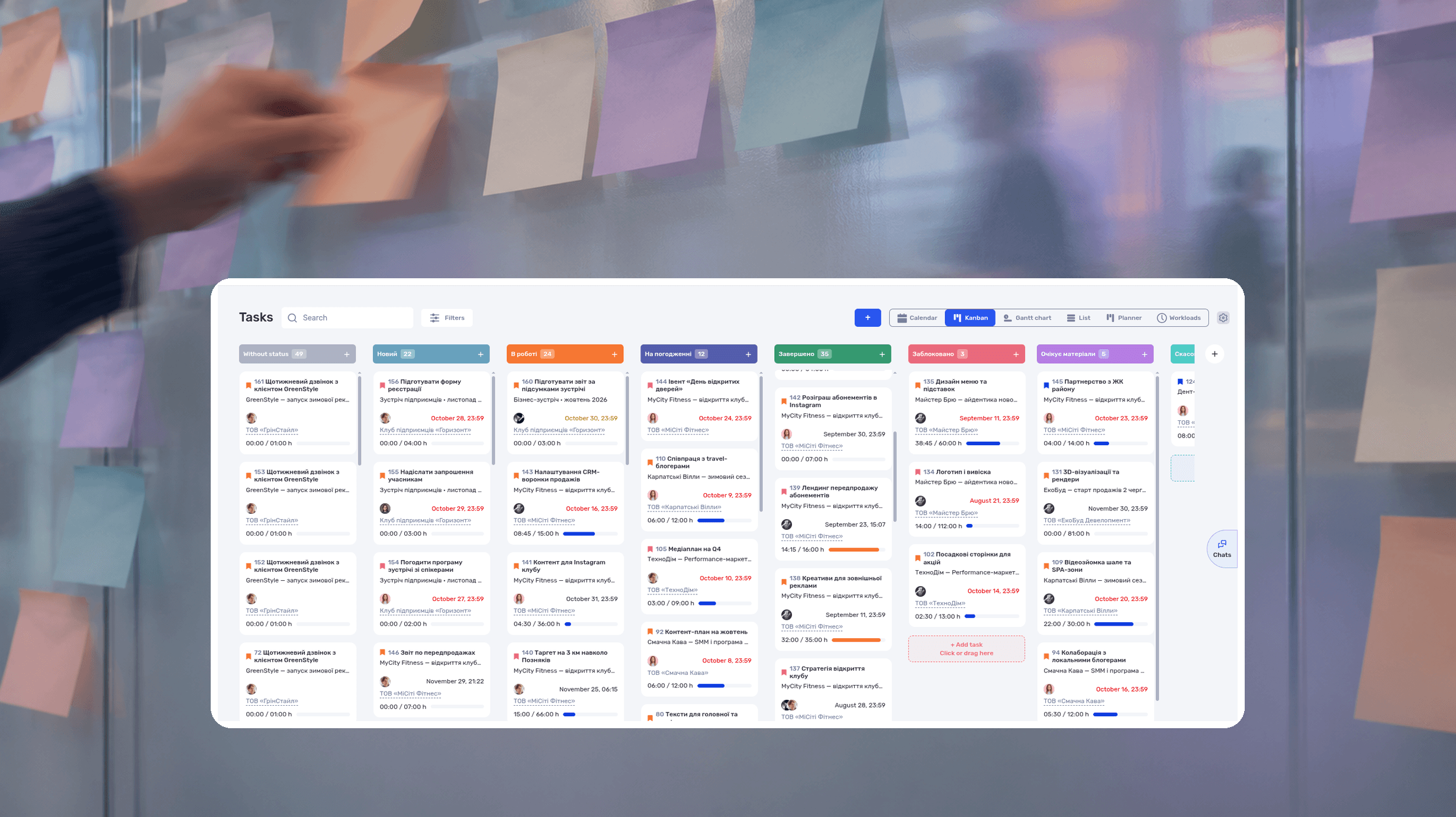
Agile Methodology: What It Is, Principles, Example
Agile methodology is an approach to project management in which a team delivers results in short cycles, shows them to the client and adjusts the plan based on feedback. Instead of one big six-month plan, agile project management works in a series of small, tested steps.
What is a deadline? How to set and meet realistic deadlines
Why six hours of work can take several days—and how to build a schedule around availability, review, and revisions. With a practical if.team walkthrough.
See if.team in action for your company
We’ll show how projects, team time and finances connect in one system, using your processes as an example.