
How Meta Team Academy Automated Poker Academy Operations with if.team
As the number of players and operational complexity grew, the company needed to bring all processes into a single system in order to manage operations centrally and get real-time financial visibility.
Meta Team Academy is a poker academy operating on a staking model.
As part of its daily operations, the team works with a large volume of data: game results, financial calculations, operational expenses, partner payouts, player acquisition processes, and internal team workflows.
As the number of players and operational complexity grew, the company needed to bring all processes into a single system in order to manage operations centrally and get real-time financial visibility. They chose if.team for this purpose. More on that throughout the case study below.
About the Client
Meta Team Academy is a poker academy with a contract-based staking model, where players participate under individual terms, and their results directly affect the company’s financial performance.
The model is built around a large number of players, each operating as a separate operational unit with their own accounts, game history, and financial metrics. All of this information is constantly updated and requires accurate tracking and aggregation.
The client came with a request for a system that could unify key operational processes within a single environment: player and contract management, game result tracking, financial accounting, and academy-wide P&L management. A separate requirement was linking player results to the company’s overall finances, including expenses and partner payouts.
There was also a need to implement a player acquisition process through a CRM funnel and external communication channel integrations, as well as organize internal task management for the team.
Due to the specifics of the model and the large volume of data, standard solutions could not connect gameplay data, finances, and operational processes within a single system. That’s why the team turned to if.team to develop custom logic that unified all of these processes into one environment.
Further in this case study, we’ll take a closer look at how this was implemented in practice and how operations are structured inside if.team.
How Meta Team Academy Uses if.team to Manage Its Poker Academy
Вся система побудована навколо гравців як ключових операційних одиниць, через яких проходять усі ігрові, фінансові та управлінські процеси академії. Дані по кожному гравцю напряму пов’язані з фінансовою моделлю та внутрішніми процесами компанії.
Custom Player and Contract Management Module
Meta Team Academy needed a unified environment for managing players and contracts, so we developed a dedicated module in if.team that became the foundation of this process.
All player-related operations inside the academy are built around player profiles in if.team. Each player exists in the system as a separate user (project) through which all operational interactions take place.
Once a player joins the academy, their profile is created and linked to a contract containing the terms of cooperation. These terms become the basis for future calculations and determine how the system processes that player’s results.
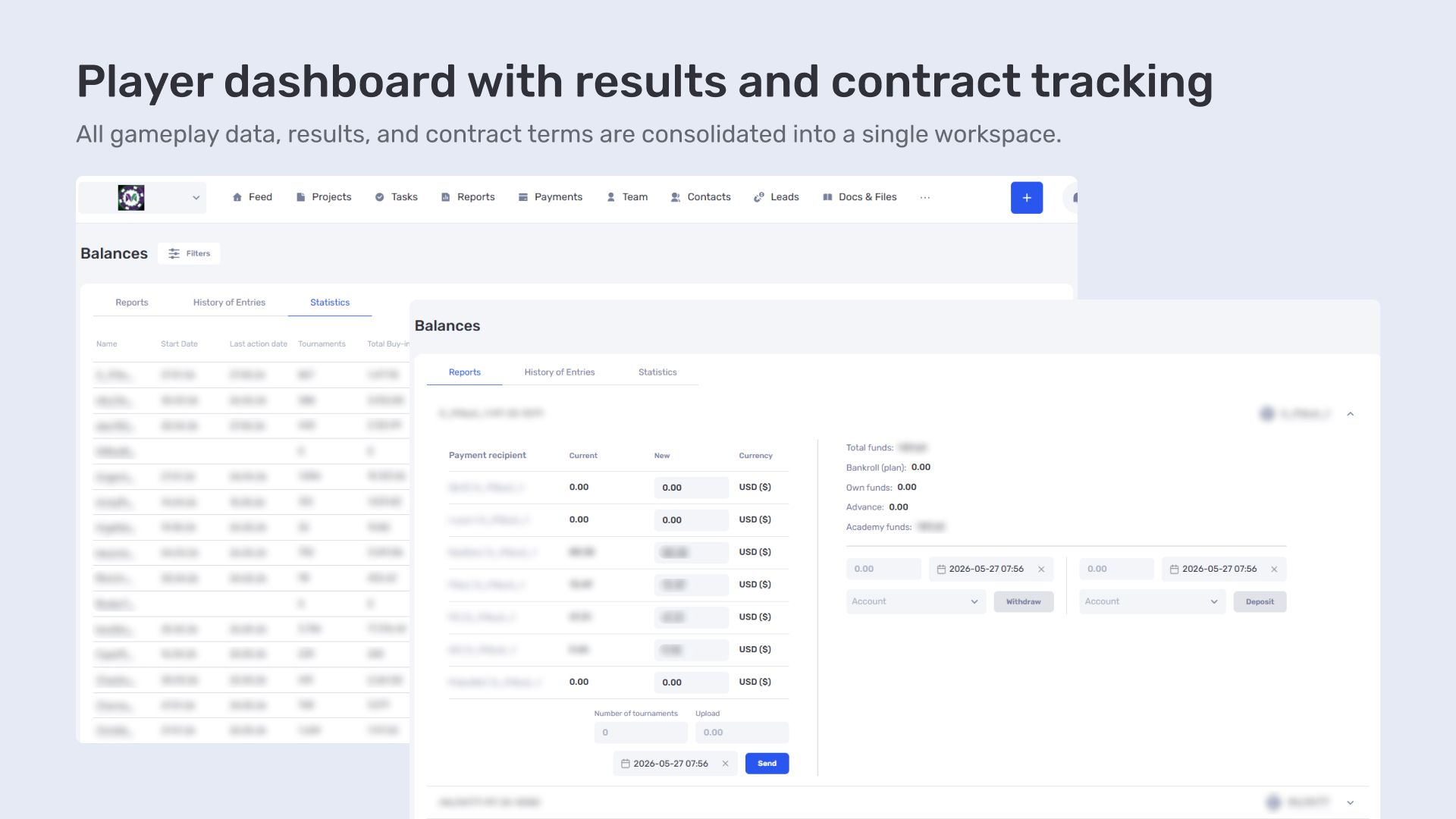
Players interact with everything they need through their personal dashboard: they can view their data, game session history, and regularly submit game results. All interaction with the academy happens through a single interface.
Each game session is logged as a short entry through a simple form. It is designed for regular use and naturally becomes part of the post-game workflow.
All player-related data — results, history, and contract terms — is stored together, forming a complete operational picture for each participant in the system.
Academy Finances, Real-Time P&L, and Cash Flow
The financial side of the system is built around the connection between player results and the academy’s overall revenue and expense model.
The system simultaneously manages a large number of player accounts — more than 500 active accounts, each generating financial activity based on game results and contract terms.
All of this data is continuously synchronized and consolidated into a single financial model that combines individual player performance, payouts, distributions, and operational expenses.
Based on this, the academy’s P&L (profit and loss) is generated. It represents the overall financial result of the academy and shows how much the business earns or loses, taking into account all players, expenses, and partner payouts.
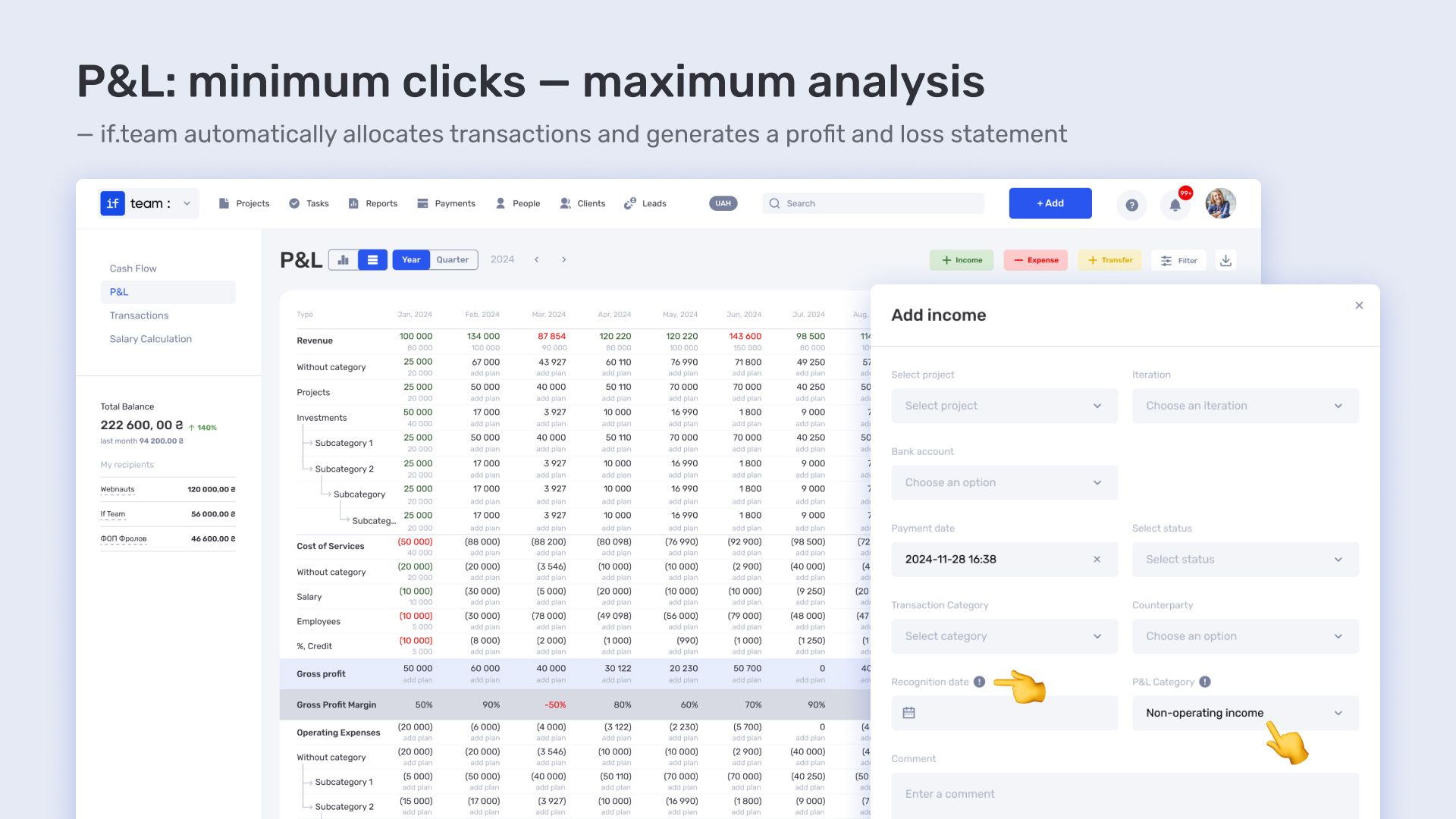
The P&L updates in real time and provides an up-to-date view of the business’s financial state automatically, without any manual calculations.
At the same time, the system generates cash flow reporting — the movement of funds within the system. It shows how money moves between players, the academy, and partners, including payouts, accruals, and expenses.
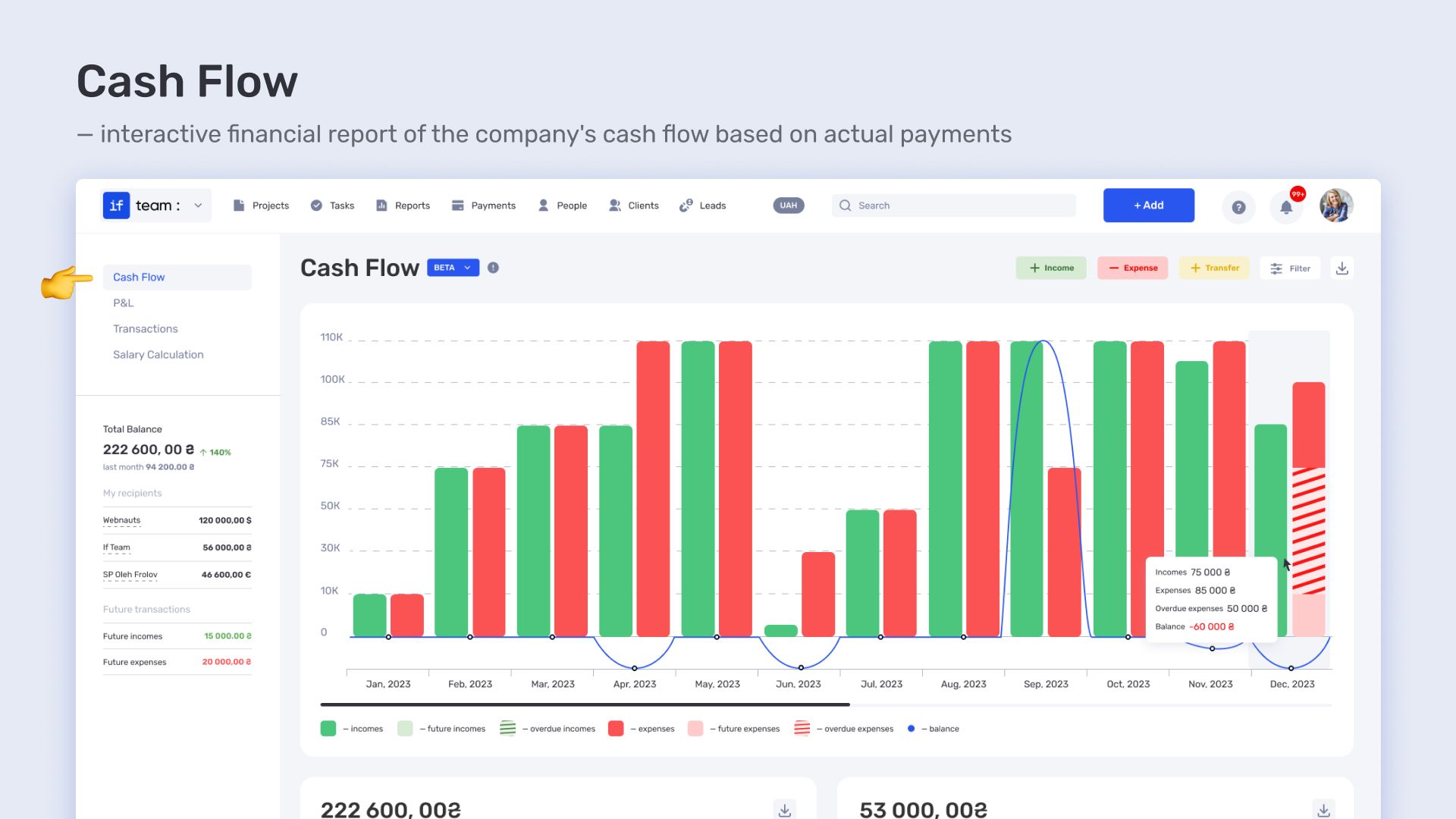
This makes it possible to see not only the financial result (P&L), but also the real movement of money over time.
CRM для робота з лідами
The CRM part of the system is built around player acquisition and full control over the journey from the first contact to onboarding into the academy.
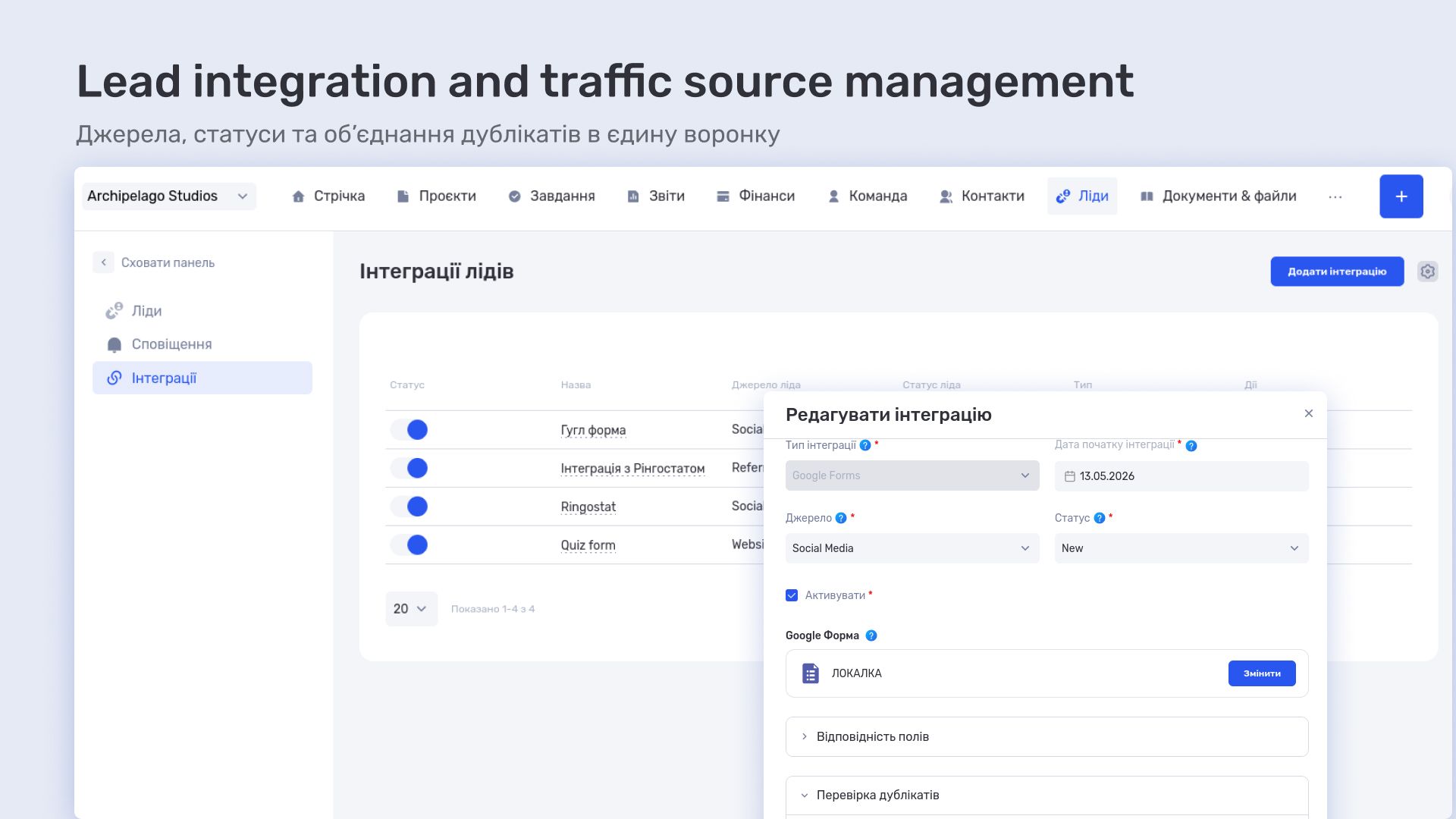
Leads enter the system from multiple sources — including Discord, Google Forms, and other registration channels. For this purpose, a dedicated Discord integration flow was developed, allowing applications to be sent directly into the CRM and communication to stay synchronized within the system.
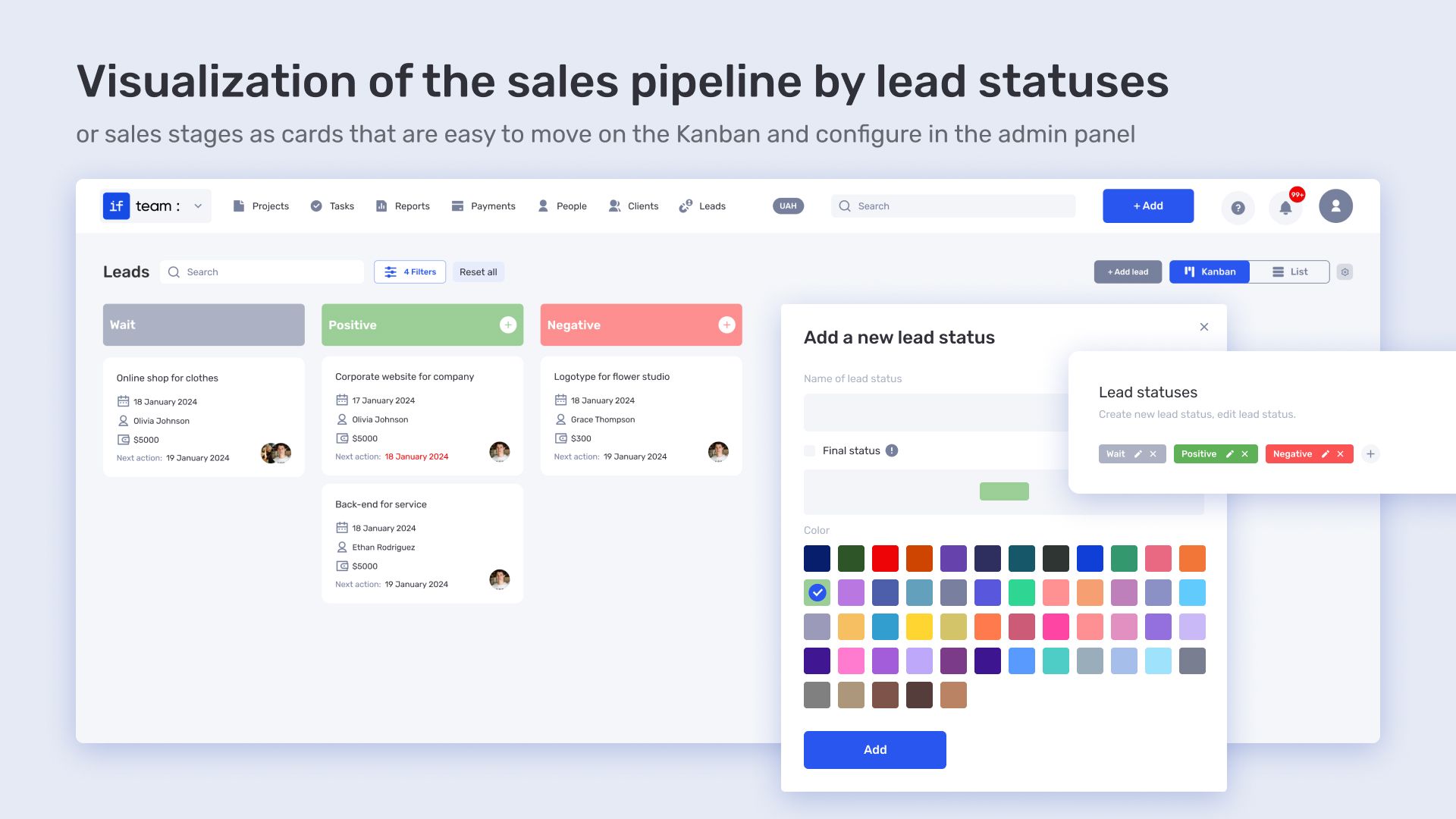
All applications are collected into a shared funnel, where the system merges duplicate submissions and adds new data to existing leads. This creates a unified lead profile with a complete interaction history.
At every stage, the lead moves through the funnel and is eventually converted into a player profile in if.team, after which it becomes part of the operational side of the system.
The CRM also tracks traffic sources: UTM tags, acquisition channels, and affiliate directions. This makes it possible to see where players come from and how partner-driven acquisition performs at the level of each individual lead.
Internal processes and task management
In addition to CRM and finance, the system is also used for full internal team task management.
Tasks are created directly within the system and can include subtasks, deadlines, assignees, and additional parameters for execution tracking. This makes it possible to structure work at the level of individual processes.
Different task views are available depending on the workflow: task lists for quick reviews, Kanban boards for visual process control, and Gantt charts for timeline planning.
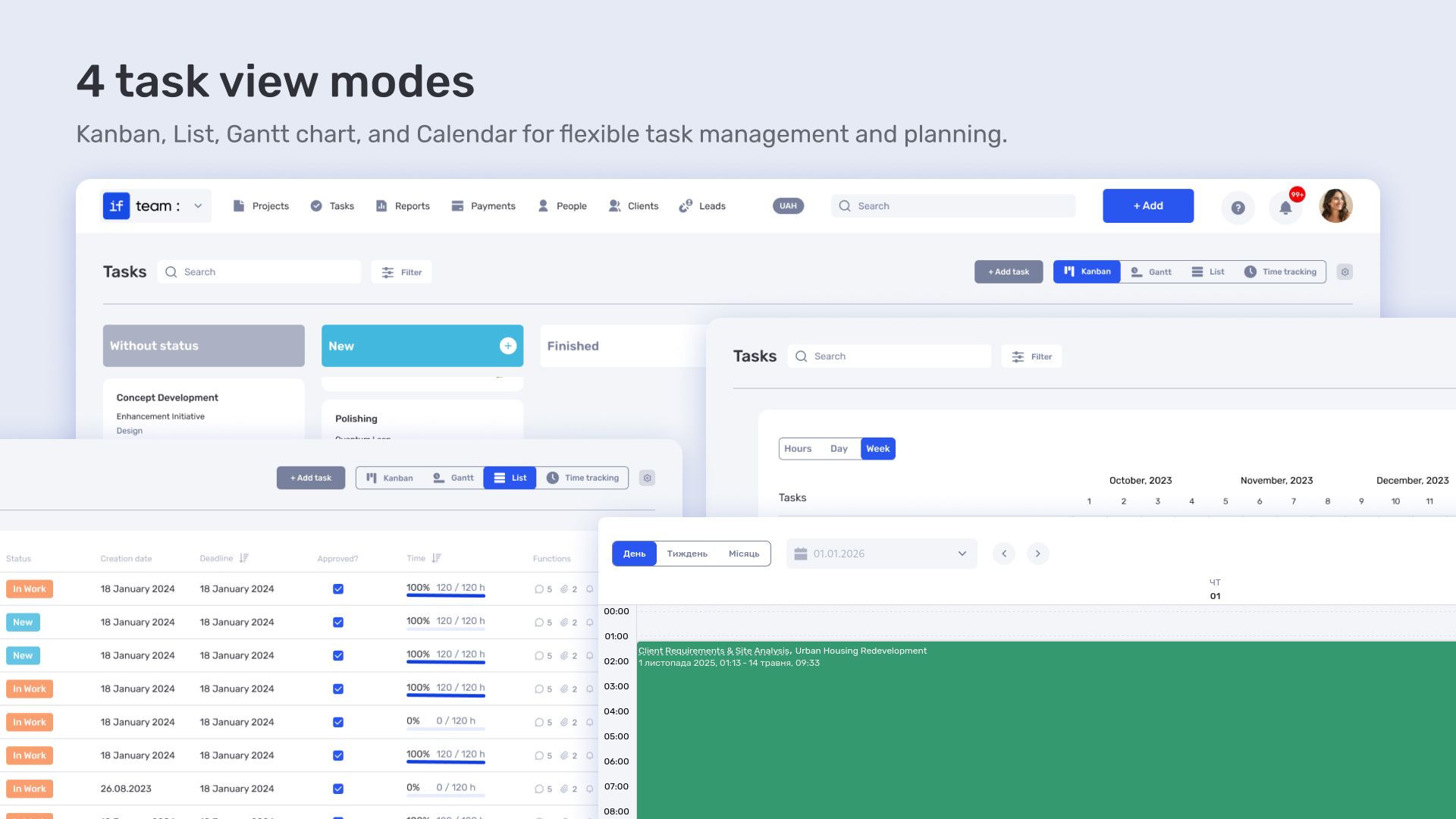
The system also allows the team to track workload distribution by showing how many tasks are assigned to each team member and how work is distributed across the organization.
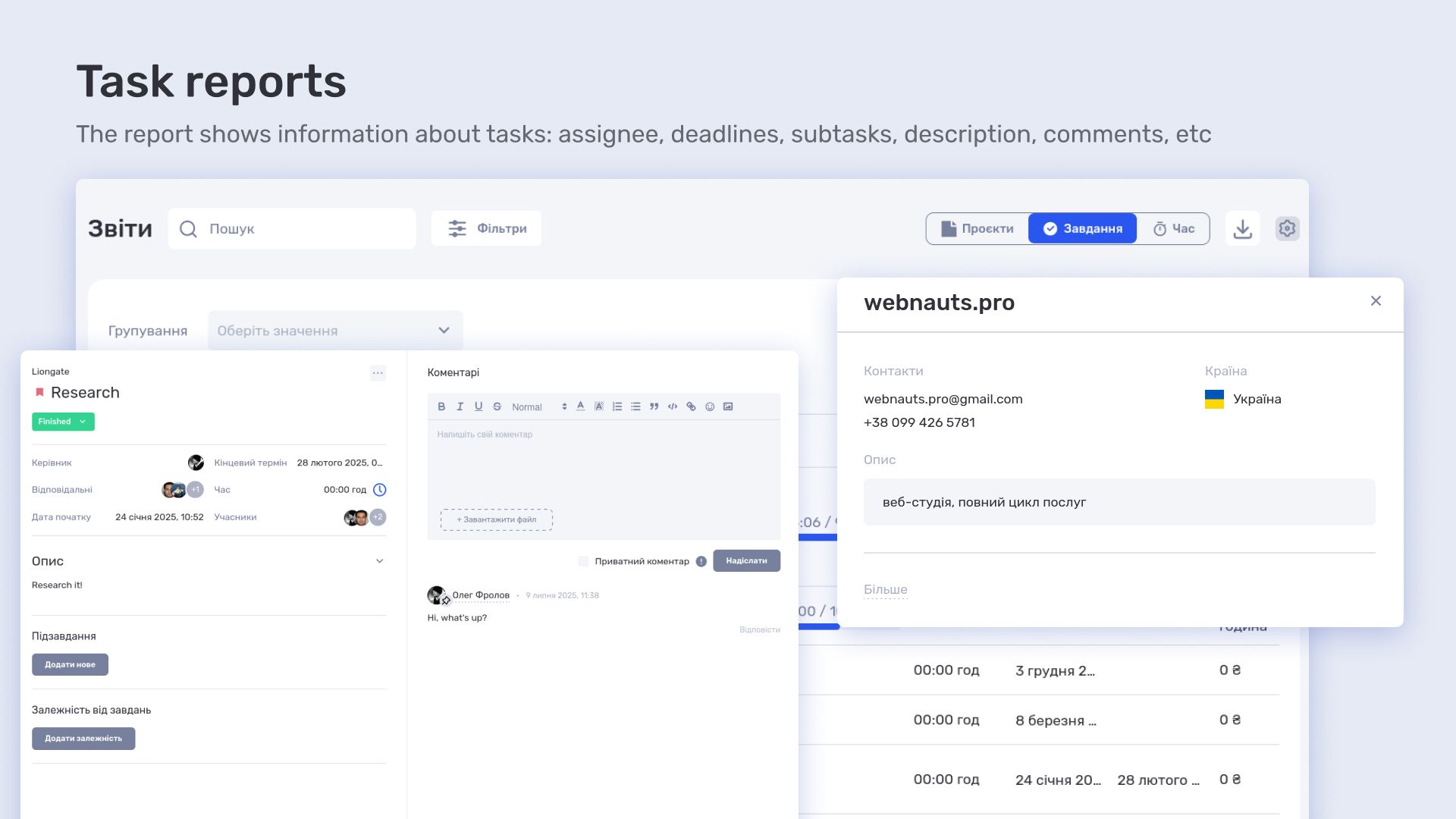
All employee activity data is consolidated into reports used for performance evaluation, compensation tracking, and payroll calculations.
What Meta Team Academy’s Operations Look Like After Moving to if.team
After implementing if.team, Meta Team Academy transitioned to operating within a single unified system where all core academy processes are centralized.
The operational model was rebuilt around one environment: players, finances, CRM, and internal tasks now work within a connected structure where data instantly enters the system and is used operationally without additional manual consolidation.
As a result, the academy gained a centralized management system in which financial metrics, player performance, and operational processes form a unified view of the business and allow the team to manage operations in real time.
Author
Vladyslav ChesnokovPublished
May 27, 2026
More articles to read

How KiwiParty manages inquiries, prepares estimates, and organizes events in if.team CRM for event agencies
How if.team CRM for event agencies helps KiwiParty manage inquiries from Instagram, Telegram, and WhatsApp, prepare estimates, and plan turnkey events.
How Creatura manages event projects, budgets, and finances in if.team ERP for event companies
How if.team ERP for an event company helps Creatura manage event projects and budgets, receive transactions from PUMB, and automatically create folders in Google Drive.

How BigShow manages concert projects and finances in if.team ERP for event agencies
How if.team ERP for a concert agency helps BigShow manage concert projects, preparation stages, contractor agreements, and the finances of concerts and the orchestra.
How a Ukrainian charity foundation manages projects and finances in if.team ERP
In a Ukrainian charity foundation, finances are closely tied to individual projects. Funds come in for different initiatives, expenses have their own structure, and the team needs a clear view of both each project budget and the foundation’s overall cash flow.

How Ukrainian Business Brotherhood manages members, subscriptions, and business club operations in if.team
A business club revolves around its members. The team maintains the member database, tracks subscriptions, organizes events, coordinates internal tasks, and keeps information about how people take part in the life of the community.

How Urban Reform Manages Projects, Teams, and Finances with if.team ERP for Nonprofits
Ukrainian nonprofits often begin with a small team and one specific problem they want to solve. Some support internally displaced people and veterans, while others work in education, culture, or community development. As they grow, so does the volume of day-to-day operational work.
Start your free 7-day trial
No credit card required. Get full access to all features and see how if.team can transform your team's workflow.