
How the electrical engineering company LedLab built a full workflow from leads to company finances using if.team
To build this chain as a unified system, the company implemented if.team as its core management platform. Our team supported the setup and implementation of processes.
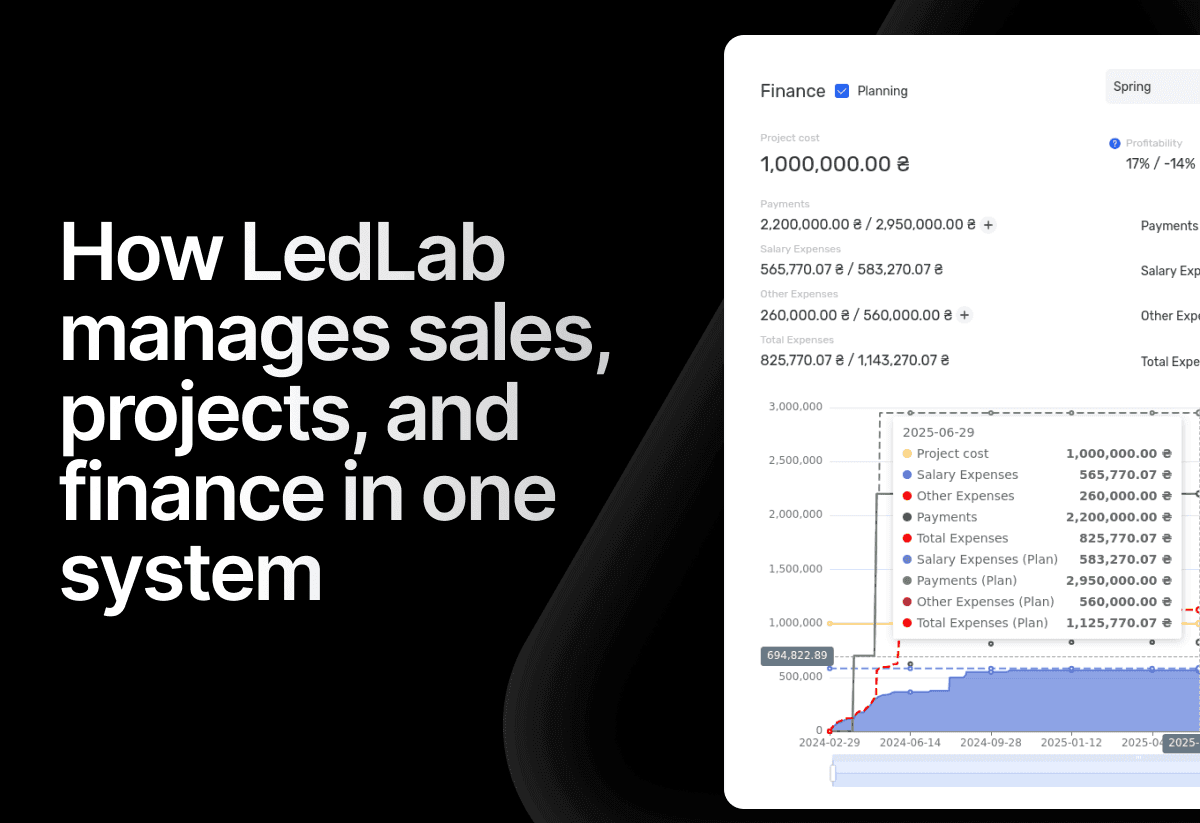
At LedLab, sales, project work, and finance are connected into a single process — from the first client contact and commercial proposal creation to project execution and the company’s financial results.
To build this chain as a unified system, the company implemented if.team as its core management platform. Our team supported the setup and implementation of processes and acted not only as a software provider, but also as part of the solution for organizing the company’s operations.
As a result, sales, projects, and finance were combined into one end-to-end workflow inside a single system. Below is a more detailed breakdown.
About the client
LedLab is a full-cycle electrical engineering company specializing in the design, manufacturing, and installation of electrical and engineering systems. The company works on large-scale projects across Ukraine and participates in the implementation of complex engineering solutions.
The company’s operations are built around a full cycle: from the initial client request and preparation of a commercial proposal to project execution and financial accounting.
LedLab approached us with the need to connect these stages into a single system and eliminate the gap between sales, project delivery, and financial results. The main focus was to bring commercial proposals, project execution, and company economics into one controlled process within a single platform.
As a result, if.team became the primary system used by LedLab.
How LedLab uses if.team in sales, projects, and finance
We helped LedLab build their workflow in if.team as a single end-to-end cycle: from sales and commercial proposal creation to project delivery and financial results. Commercial proposals became the central element of the process and the transition point from sales to projects. After that, the project moves through execution stages, forms its economics, and ultimately translates into the company’s financial performance.
How we approached implementation at LedLab
In many installation companies, the main challenge appears when transferring real business processes into a stable daily workflow within a system. The gap between how processes are designed and how they are used in practice often completely blocks adoption.
In the case of LedLab, we worked closely with the team and helped build the processes from scratch into a working model. A business analyst was involved in the project, working with the team daily and adjusting the system logic to real operational needs.
We supported both system setup and daily adoption so that LedLab could use if.team as their core operational tool.
Leads as the entry point into the system
In if.team, LedLab’s work starts with leads. These are records linked to a client and the full interaction history. This keeps all context before the sale and consolidates client information in one place.
The team uses leads as the first step of interaction. This is where requests are recorded, communication is handled, and client needs are clarified.
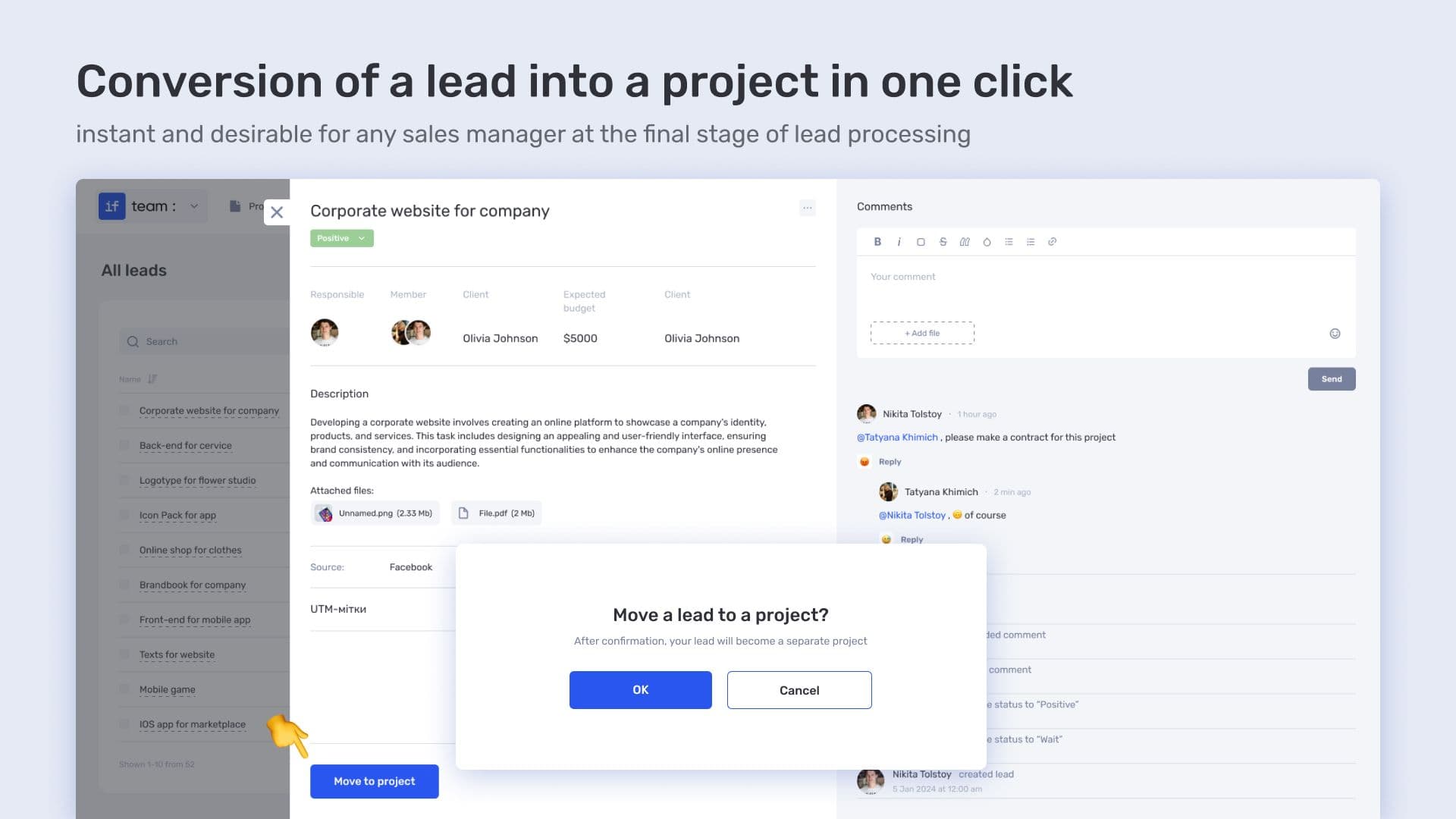
After that, a decision is made whether the lead moves into a project. At that point, it becomes the starting point for execution work.
Commercial proposals as a sales tool
In if.team, commercial proposals are built from an internal catalog of goods and services, where each item represents a specific type of work or solution.
At LedLab, commercial proposals are used to prepare client offers. The team selects the required items, builds the structure, and calculates the total cost directly in the system.
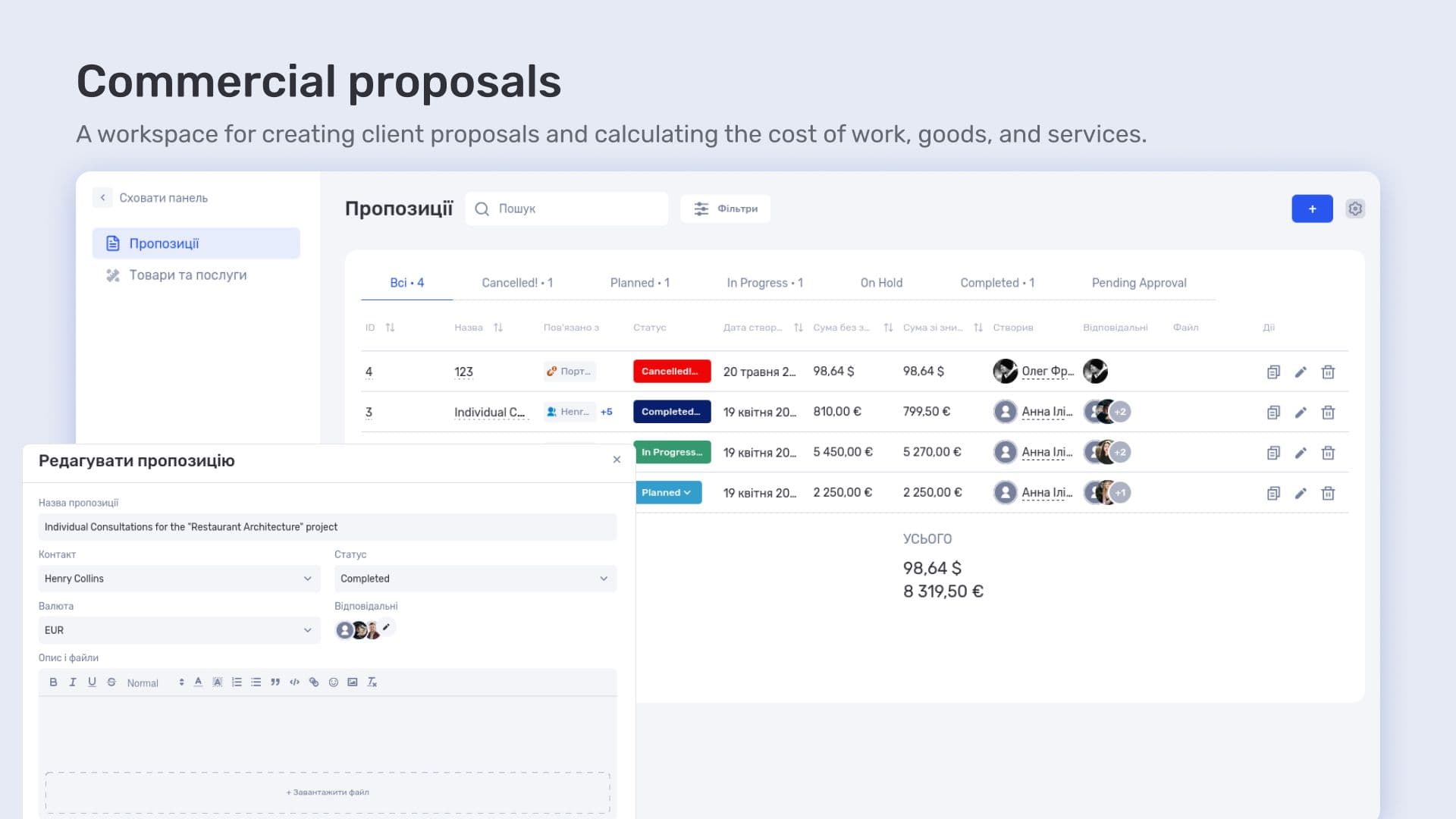
After approval, the commercial proposal can be used as the basis for financial planning of the future project.
Project as the core unit of work
A project in if.team is the main unit of work. It contains stages, team members, time tracking, and financial data. It shows both the structure of work and its real-time status.
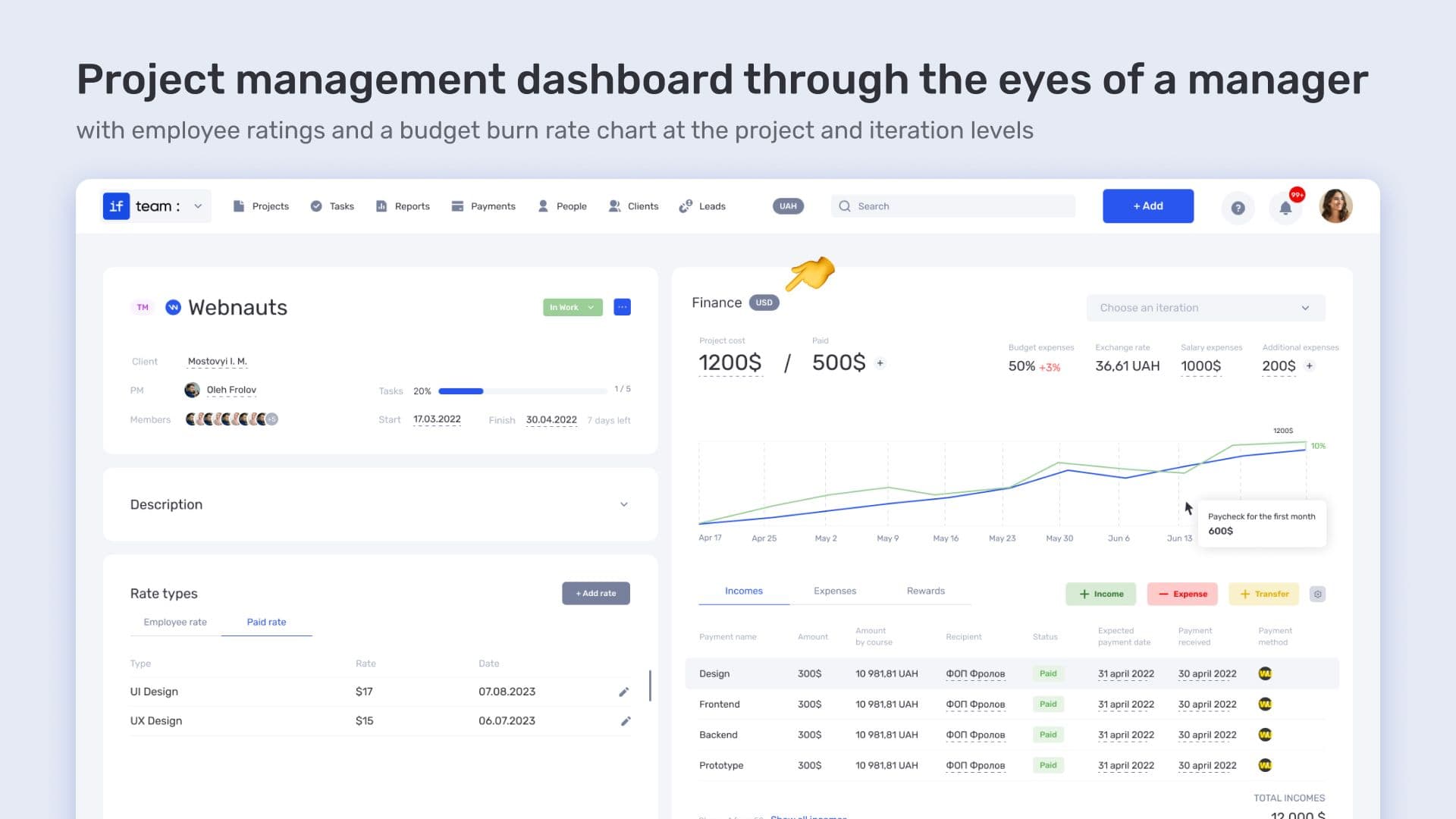
At LedLab, a project becomes the working space after the sale. The team manages the project, tracks progress, and monitors the financial aspect of each stage.
Project economics
Project economics is built from system data. It includes revenue, costs, and the value of team time linked to work execution.
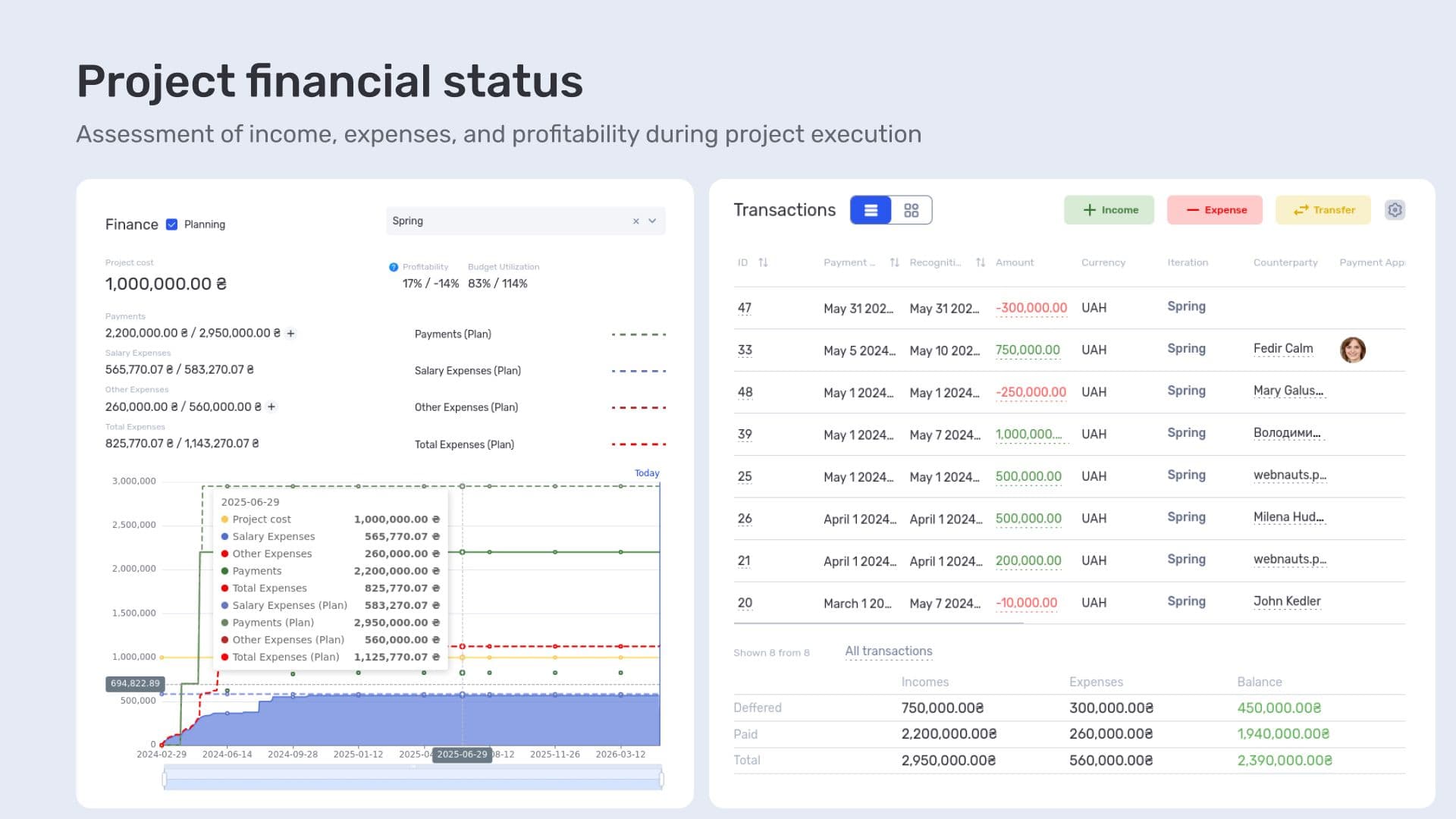
For LedLab, this provides visibility into results while the project is still in progress. It becomes possible to evaluate project efficiency during execution, not only after completion.
Finance and transactions
Finance in if.team is based on transactions. These include all incoming and outgoing payments recorded in the system and linked to projects.
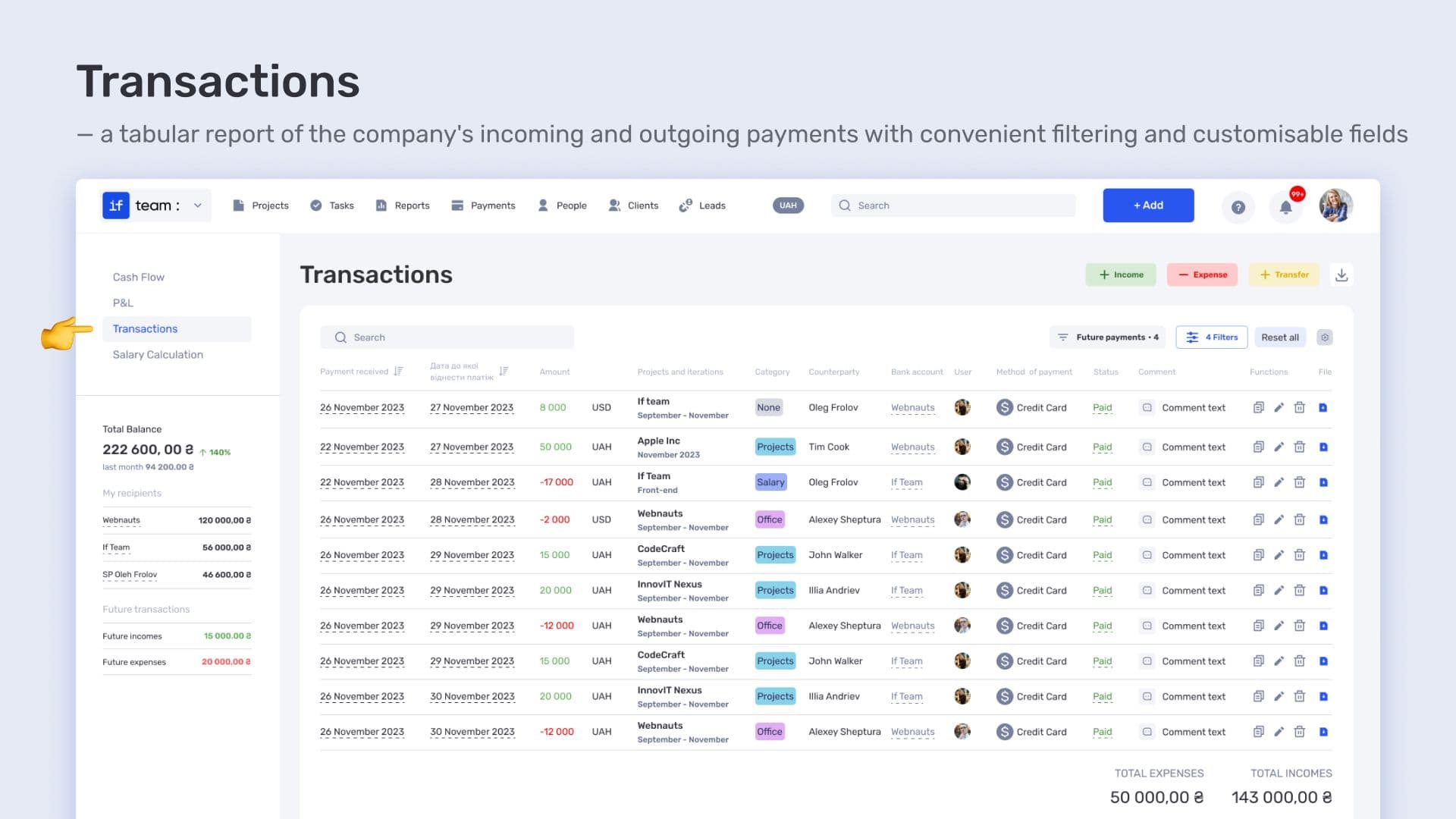
LedLab uses this to track expenses and revenue per project as well as the overall company picture.
Cashflow
Cashflow shows the movement of money over time. It displays actual payments as well as planned expenses and incoming funds.
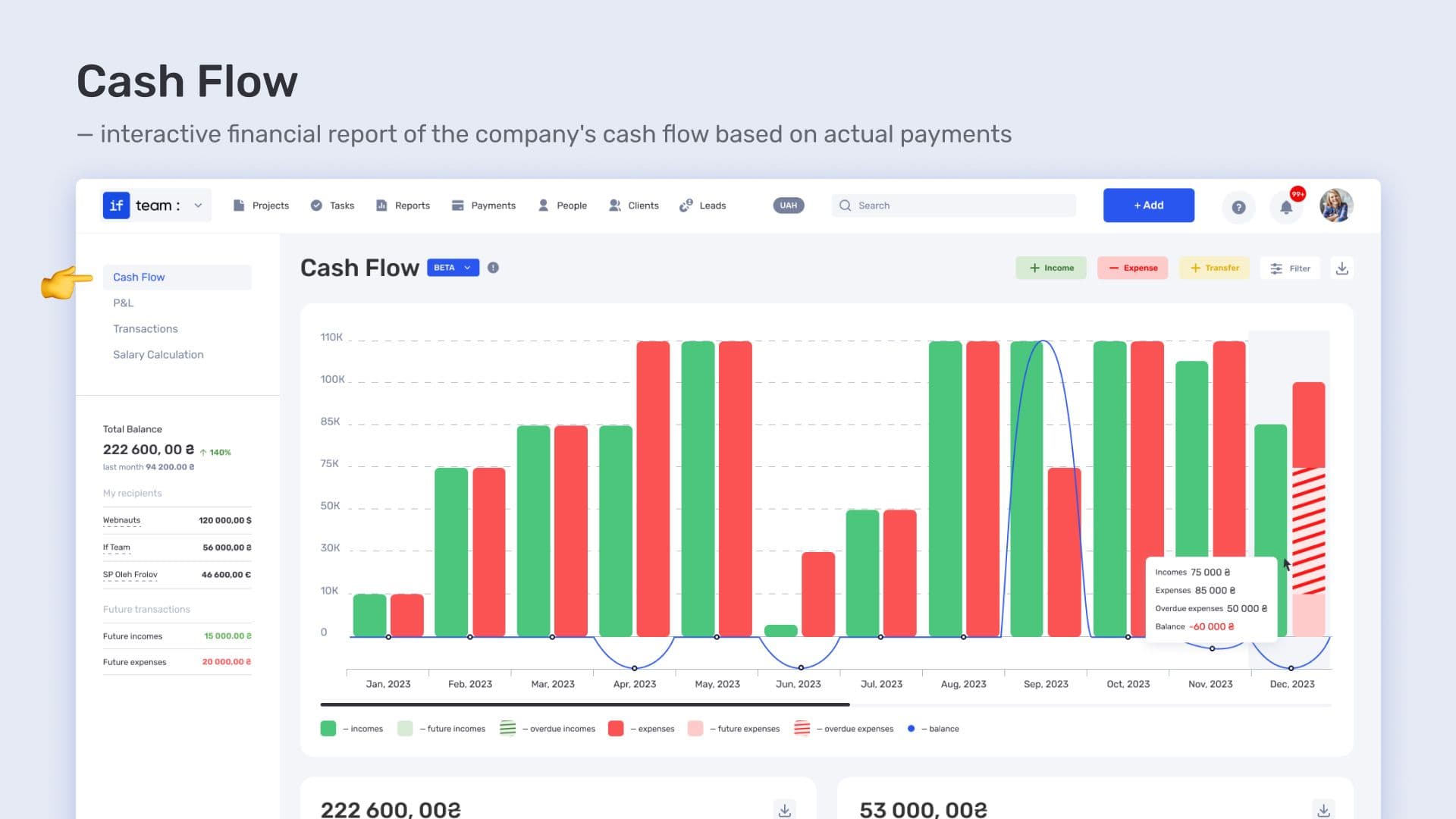
LedLab uses this to understand when peak expenses occur and how the company’s financial dynamics look over time.
P&L
P&L is a management report on income and expenses. It is generated automatically based on transactions and can be analyzed by project or time period.
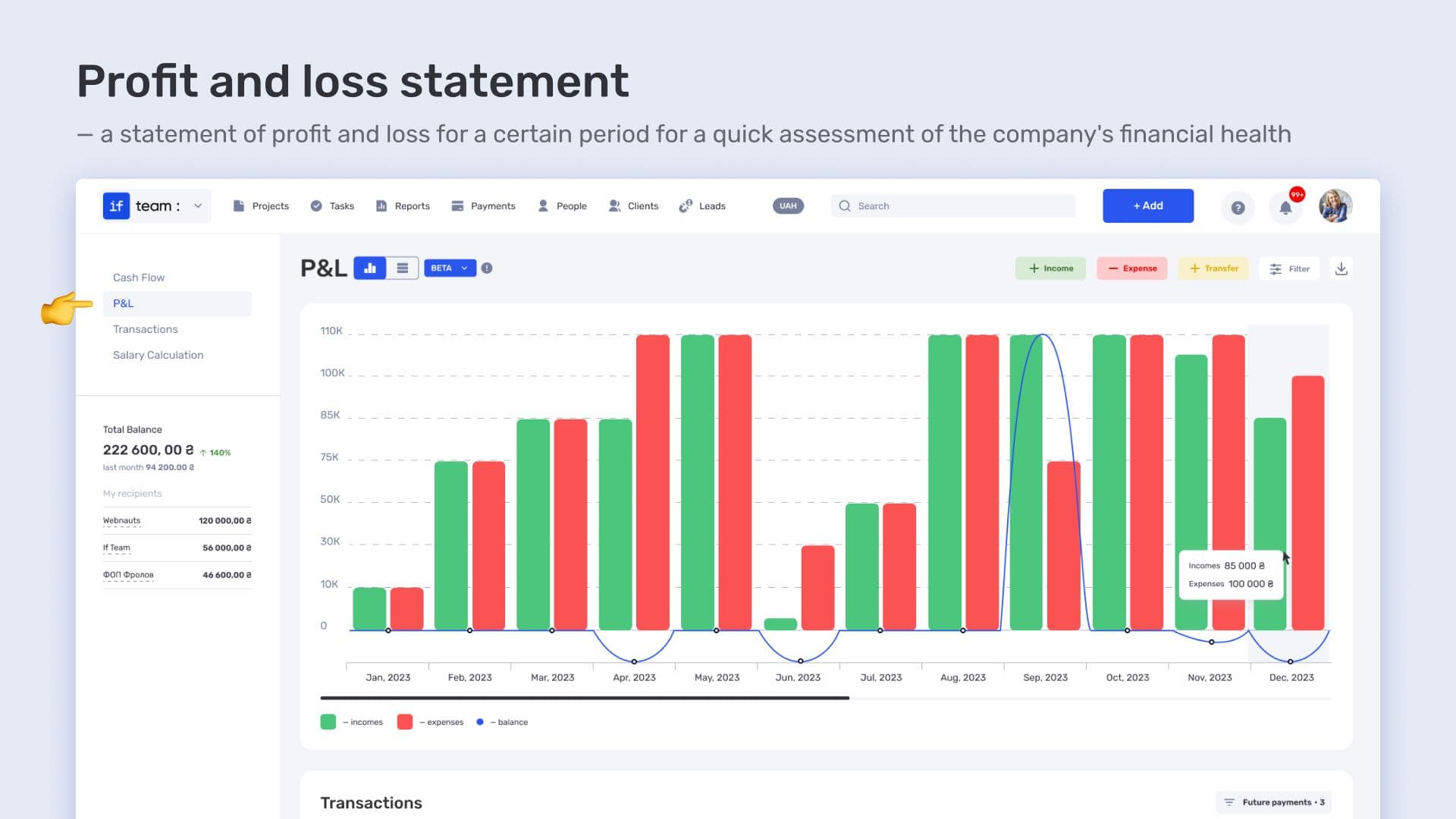
For LedLab, it is a way to evaluate business performance and make decisions based on data rather than assumptions.
How if.team changed the way LedLab works
At LedLab, if.team became a single model where sales, projects, and finance are connected.
All client work — from lead and commercial proposal to project delivery — takes place in one environment. Data is not transferred between systems or duplicated manually; it is generated as part of the workflow.
The financial layer is built on the same data as operations. Costs, revenue, and transactions are directly linked to projects, so financial results are visible without additional consolidation.
For LedLab, each project becomes both a working process and a financial outcome. It is possible to see not only what is being done, but also its impact on the company’s economics.
As a result, if.team covers the full workflow for LedLab — from the first client contact to the final financial result — in a single system without gaps between sales, projects, and finance.
Learn more about features and other cases in this industry on the ERP for architecture firms page. Other industries: all if.team industries.
Author
Vladyslav ChesnokovPublished
May 26, 2026
More articles to read

How Oasis Comfort manages HVAC and plumbing projects in if.team
Oasis Comfort handles inquiries in the CRM, schedules site stages and teams on a shared Gantt chart, and compares planned and actual financial performance of its HVAC and plumbing projects in if.team.

How Lvivbud tracks the financial performance of construction projects in if.team
Lvivbud, a general contractor from Lviv, manages each construction site as a separate project in if.team and tracks its budget, costs and financial result.

How engineering company ALMIS plans design work and manages project finances in if.team
ALMIS Engineering Center plans design work, assigns tasks to engineers and tracks the costs and payments of each site in if.team, with an API integration to 1C.

How architectural design studio Replus implemented if.team and built a project and financial management system in two years
This case shows how their current workflow is structured and how an ERP system connected operational processes with the economics of the business.
ERP for Managing Architectural Projects: YOD Group Experience
In this case, we talk about YOD Group — an architectural agency that uses ERP to manage complex projects in hospitality and commercial design.
CRM for the Solar Business: How if.team Helped TIM Energy Optimize Project Management
The implementation of if.team CRM for the solar business helped reduce manual data management, improve financial control accuracy, and speed up team workflows. Now every project has a clear structure with attached proposals, expenses, and revenues — all in one place.
See if.team in action for your company
We’ll show how projects, team time and finances connect in one system, using your processes as an example.