
Custom terminology in if.team: rename projects, iterations, and leads
For one team an iteration is a stage, for another it is a phase, milestone, or sprint. You can now rename projects, iterations, sub-iterations, leads, and quotes in the company settings, and the system uses those names across related sections.
Use the names your team already knows
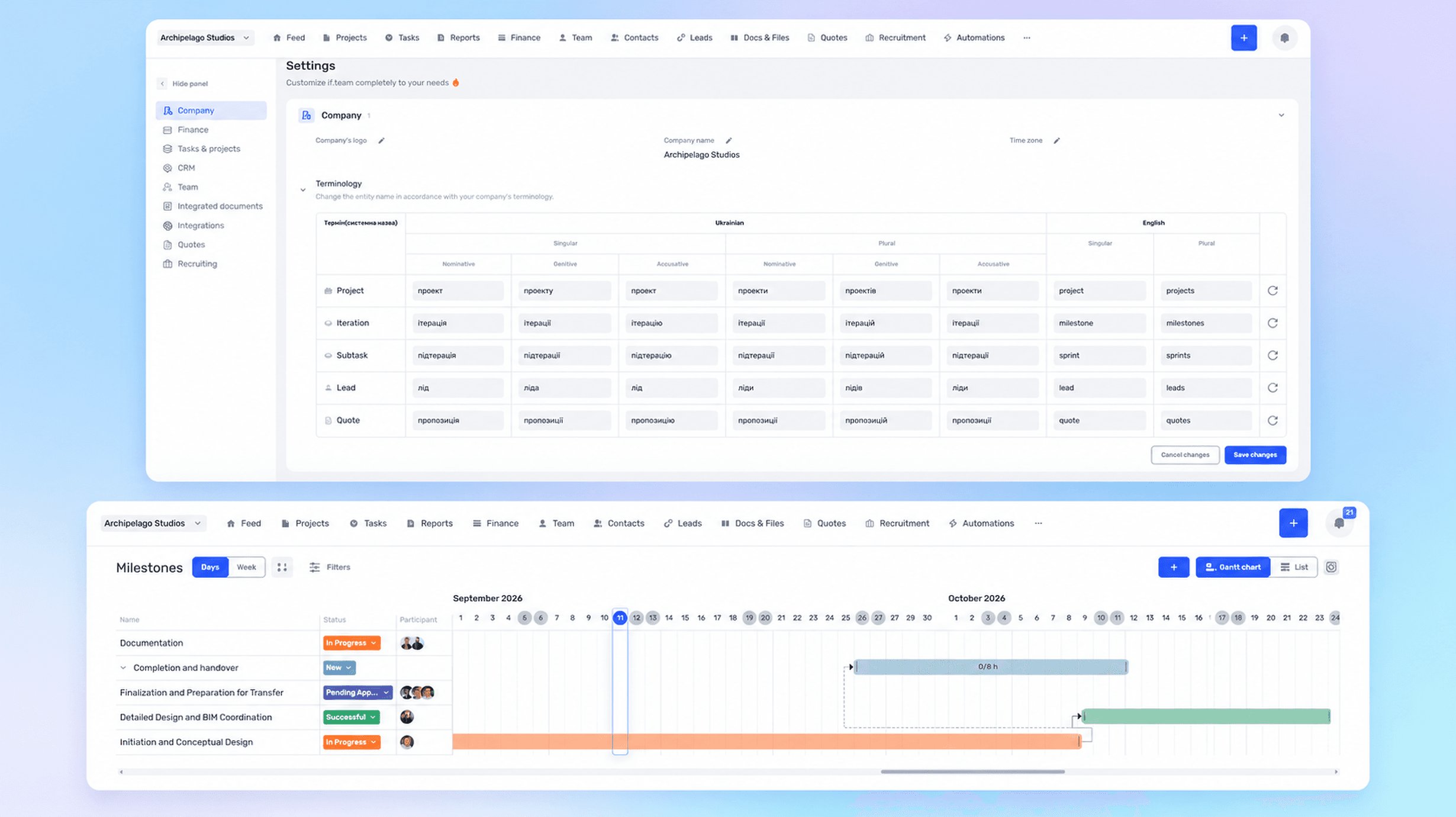
A Terminology block is now available in the company settings. It changes the names of projects, iterations, sub-iterations, leads, and quotes.
An architecture or production team calls iterations stages and sub-iterations phases. In an IT team the same entities are milestones and sprints. A sales team says “request” or “inquiry” instead of “lead.”
The difference looks minor, but this is exactly where confusion starts. When the terminology in the system matches the language the team already uses, less time goes into explaining what each entity means.
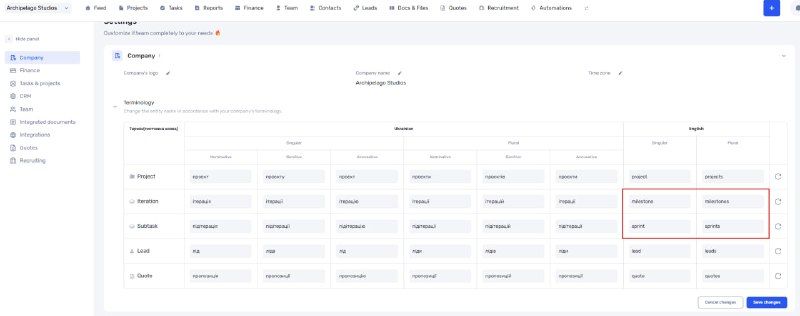
The Terminology block in the company settings
Ukrainian names follow grammatical cases
In Ukrainian, replacing a single word is not enough: the same word appears in different cases and in singular or plural throughout the interface.
That is why the forms are set separately. A custom name stays natural everywhere in the system instead of looking like a mechanical text replacement.
English uses singular and plural
In the English version each entity has two forms. Iteration becomes Milestone, Iterations becomes Milestones, and sub-iterations can be Sprint and Sprints.
Ukrainian and English terminology are configured independently, so a bilingual team does not have to find one universal term for both languages.
New names appear in working sections
After saving, the terminology is used beyond the settings. If iterations are renamed to milestones, that name shows up in the project and on the Gantt chart.
For companies with established procedures, templates, and training materials, this means the internal methodology does not have to be rewritten to match the system.
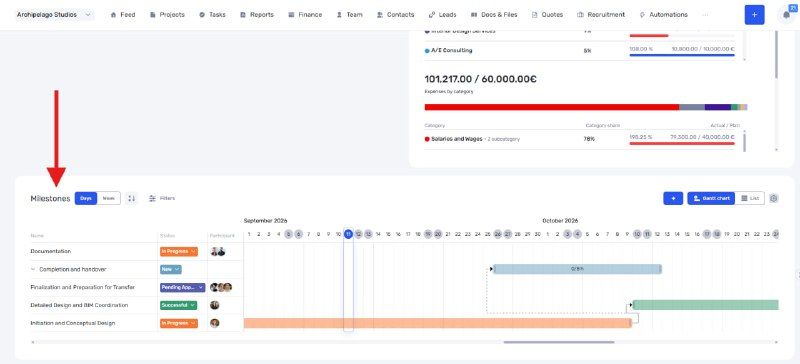
The custom Milestones name on the Gantt chart
if.team speaks your team’s language
The update removes the gap between how a team describes its work internally and what it sees in the system.
Stages, milestones, sprints, or inquiries move into if.team without rebuilding processes — and the working language stays the same in documents, conversations, and the system itself.
Author
Vladyslav ChesnokovPublished
Sep 11, 2026
Was this update helpful?
Your feedback helps us prioritise what to ship next.
Start your free 7-day trial
No credit card required. Get full access to all features and see how if.team can transform your team's workflow.